CDL Direct Blog
OTR Drivers – How to Combat Driver Fatigue
Long hours, changing schedules, nighttime driving, and life on the road can make fatigue one of an OTR driver's biggest challenges. Knowing how to recognize fatigue and what to do about it is an essential part of being a safe and professional CDL driver. The goal isn't to find a trick that lets you drive while tired, but to get enough rest so you can drive safely. Here are some practical tips to stay sharp on the road.
1. Start With Quality Sleep
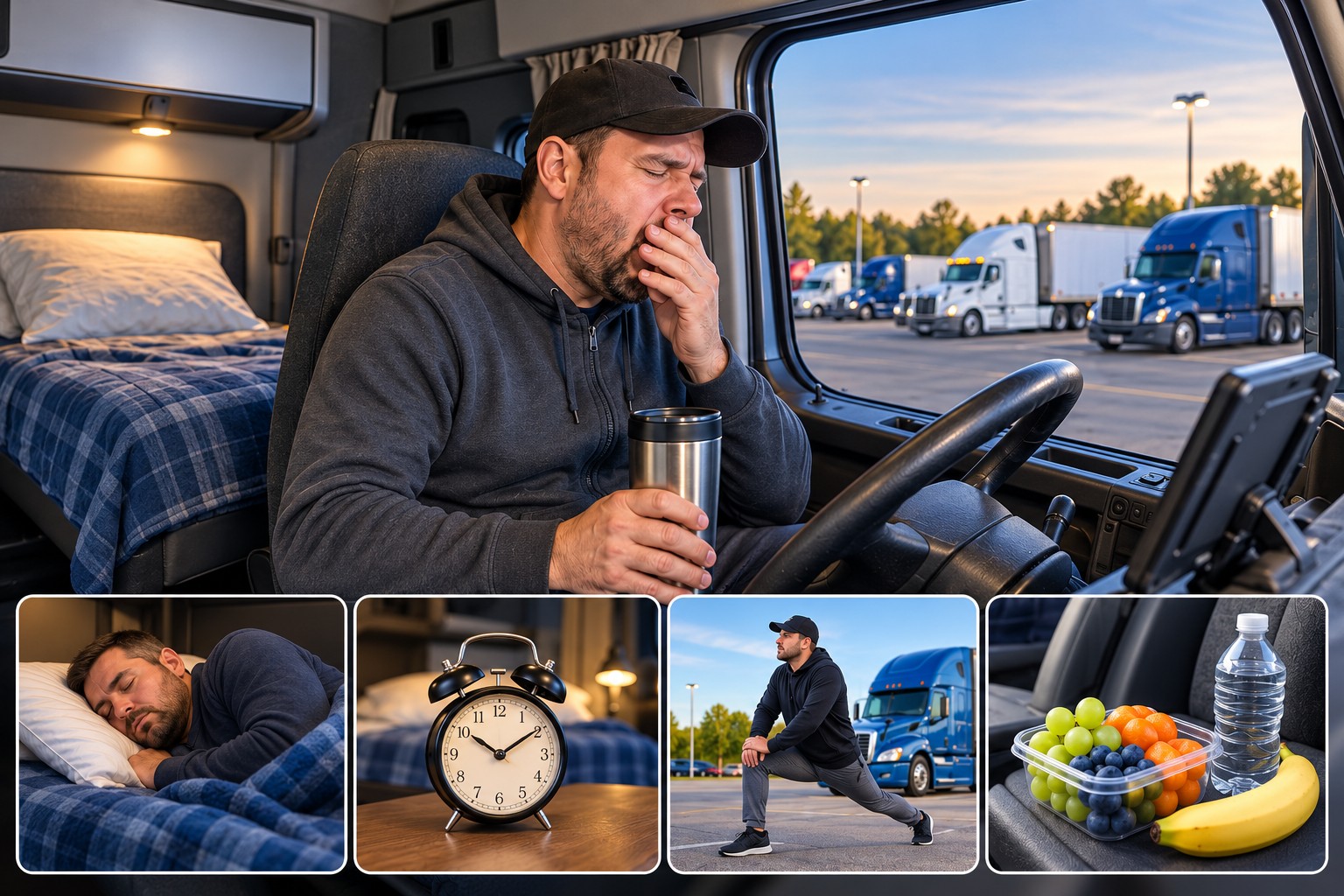
The best defense against fatigue is getting enough sleep before you drive. FMCSA notes that drivers are naturally more prone to drowsiness during certain times of the day, particularly from midnight to 6 a.m. and from 2 p.m. to 4 p.m. When possible, plan your schedule around your body's natural sleep cycle.
Pro Tip: Make your sleeper as comfortable and dark as possible, maintain a consistent sleep schedule when your work allows, and avoid sacrificing sleep just to make up miles.
2. Follow Your Hours of Service Rules
The Hours-of-Service (HOS) rules are designed in part to help prevent fatigued driving. For most property-carrying drivers, federal rules generally allow up to 11 hours of driving after 10 consecutive hours off duty, within a 14-consecutive-hour driving window. Drivers must also take a 30-minute break after 8 cumulative hours of driving if they have not had at least a 30-minute interruption from driving.
Pro Tip: Your ELD helps track your duty status, but it can't tell you when you're too tired to drive. If you're struggling to stay awake, don't try to "beat the clock." Find a safe place to stop and rest.
3. Use Breaks to Actually Recover
Fatigue doesn't always begin with falling asleep. Watch for frequent yawning, heavy eyelids, difficulty focusing, wandering thoughts, slower reactions, or drifting within your lane. FMCSA warns that fatigue can reduce attention, reaction time, judgment, and awareness, so it’s important to take these warning signs seriously. Experienced drivers often recommend using breaks to get out of the cab, stretch your legs, walk around, eat something light, and reset before continuing.
Pro Tip: If you're genuinely sleepy, a nap is one of the most useful tools available. Keep in mind that you may experience “sleep inertia,” or temporary grogginess, after waking. FMCSA recommends allowing time to become fully alert before getting back behind the wheel.
4. Learn From Drivers Who Do This Every Day
Experienced OTR drivers develop routines that help them recognize when they're reaching their limits. Common suggestions from include planning sleep around the shift you'll actually be driving, combining fuel and meal stops with short breaks, keeping healthy snacks and water available, and pulling over when fatigue starts affecting concentration.
5. Don't Depend on "Wake-Up Tricks"
Cold air, energy drinks, opening the window, or turning up the radio may make you feel more stimulated temporarily, but they don't replace adequate sleep. If you're fighting to keep your eyes open, the safest solution is to stop driving and rest.
6. Watch for Medications That Cause Drowsiness
Some prescription and over-the-counter medications can make you sleepy or affect your ability to drive safely. Cold and allergy medications are common examples. Read medication warnings carefully and talk with your healthcare provider or pharmacist if you're unsure how a medication may affect your driving.
Pro Tip: “Over the counter” doesn't automatically mean “safe behind the wheel.” Check the label before taking a medication when you know you'll be driving.
At CDL Direct, we don’t just prepare you to pass the exam. Our course is designed to prepare you for real-world situations—inspections, roadside stops, crashes, and the decisions and driving techniques that protect your livelihood.
OTR Drivers – Adapting to Changing Laws Along Your Route
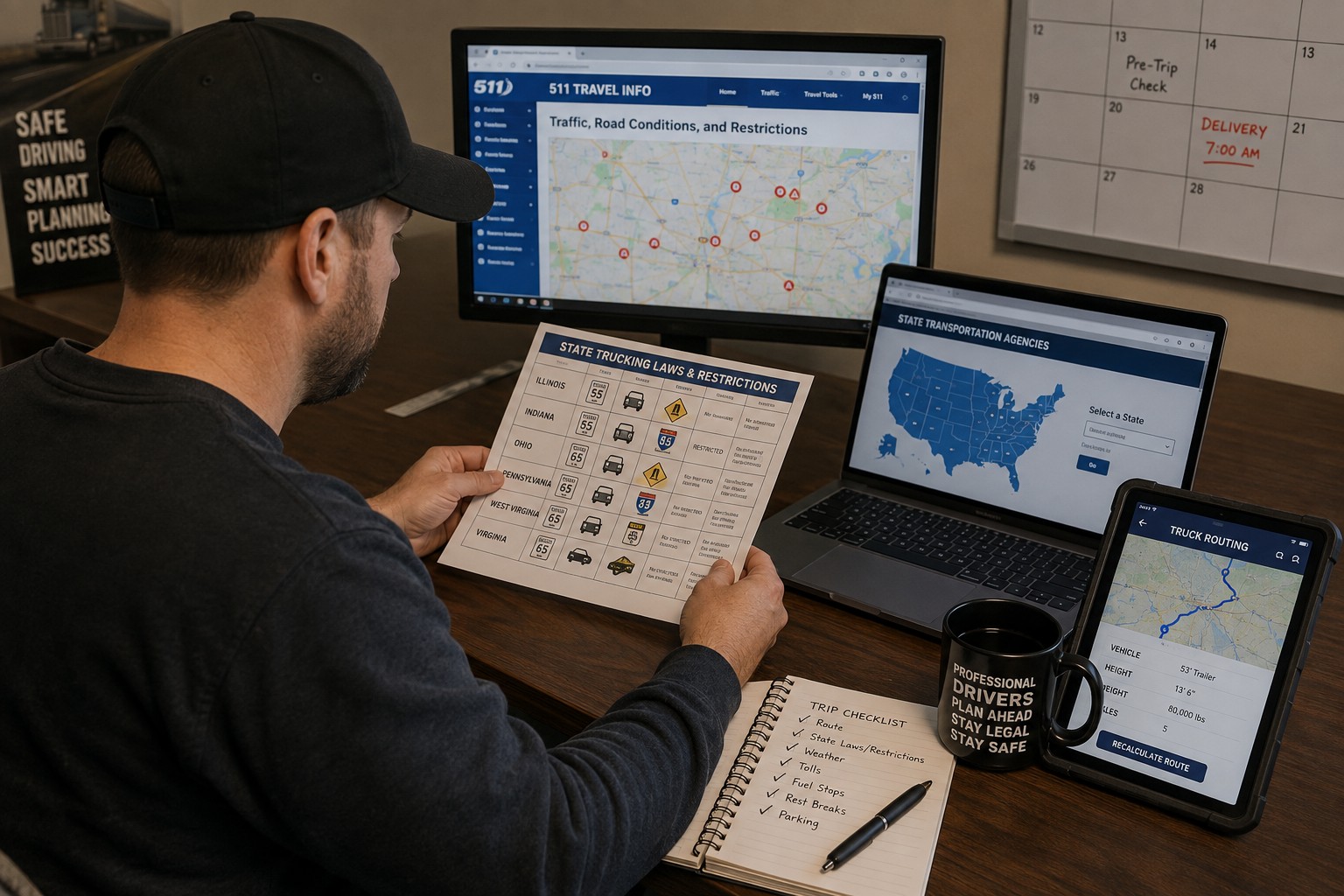
Crossing state lines means more than watching the scenery change. It can also mean adapting to different laws, restrictions, and operating requirements. For OTR drivers, planning a trip isn't just about choosing the fastest route. It's about knowing what rules may affect your truck before you enter the next state. From truck routes restrictions, permits, and speed limits to size restrictions and temporary weather requirements, professional drivers need to stay informed and ready to adjust. Here are some tips to help you stay ahead of the changes.
1. Research Your Route Before You Leave
Federal regulations create nationwide standards, but states and local jurisdictions can have additional rules that affect how and where commercial vehicles operate. A route that is legal for your truck in one state may have restrictions after you cross the next state line. Before starting an OTR trip, review every state and major jurisdiction along your planned route. Look for rules and restrictions that could affect your truck, trailer, or cargo. If an FMCSA regulation establishes a higher standard, the federal requirement applies.
Pay attention to:
* Truck-specific speed limits
* Restricted truck routes
* Height, weight, and size restrictions
* Low-clearance roads and bridges
* Toll requirements
* Seasonal or weather-related restrictions
* Temporary road closures and construction restrictions
Pro Tip: Develop the habit of checking the rules that apply to your specific trip before you travel.
2. Check for Changes Before and During the Trip
Rules and restrictions aren't always permanent. Construction, severe weather, emergencies, and seasonal conditions can change how commercial vehicles are allowed to travel. Check for updates before departure and continue monitoring conditions during a long trip. If your original route changes, check the new route before taking it. Don't assume a detour recommended by a regular GPS is appropriate for a tractor-trailer.
Pro Tip: Use reliable sources such as your carrier, dispatcher, commercial navigation system, and official state transportation or enforcement resources when checking restrictions.
3. Pay Attention to Signs Even When Your GPS Says Otherwise
Technology is an important planning tool, but it does not replace the driver's responsibility to follow applicable laws and posted restrictions. Watch for signs involving: height and clearance, weight limits, truck prohibitions, hazardous-material restrictions, chain or traction requirements, and lane restrictions.
Pro Tip: If a sign restricts your vehicle, don't assume your GPS knows better. Stop safely when necessary and contact your dispatcher or carrier for help planning a legal alternative.
4. Plan Enough Time to Stay Compliant
Changing laws and restrictions can mean changing your route, and changing your route can affect your schedule and available driving hours. Therefore, build extra time into your trip. A longer legal route is better than an illegal shortcut, and losing time is never a reason to speed or violate Hours-of-Service rules.
Pro Tip: Plan your route, fuel stops, breaks, and parking around your available HOS time. If changing conditions require a detour, reassess your plan before you run short on legal driving time.
5. Make Staying Informed Part of Being a Professional Driver
The best OTR drivers don't try to memorize every regulation in the country. They know how to find reliable information and when to check for updates. Before every trip, ask yourself: What states am I entering? What restrictions could affect my truck or cargo? Has anything changed since the route was planned?
Pro Tip: Remember FMCSA provides driver and carrier resources to help operators understand applicable federal safety requirements, while state agencies maintain their own state-specific transportation and licensing information.
At CDL Direct, we don’t just prepare you to pass the exam. Our course is designed to prepare you for real-world situations—inspections, roadside stops, crashes, and the decisions and driving techniques that protect your livelihood.
Big Rigs - Nighttime Driving
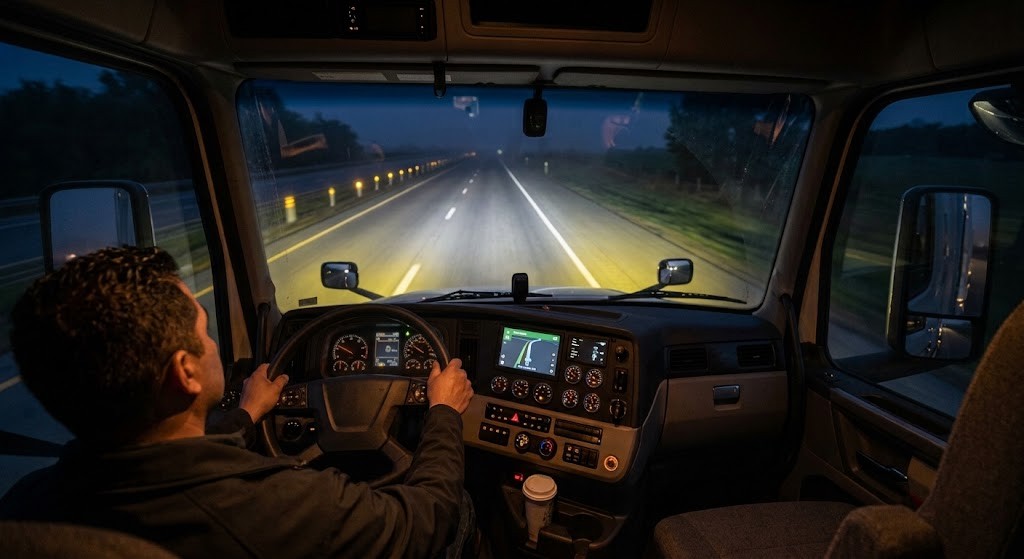
There are both rewards and challenges for nighttime driving as a CDL driver. You may prefer driving when the roads are less crowded, you may get higher pay, experience faster turnaround times, and have zero-delays. While these rewards are very attractive, they aren’t the only consideration for nighttime driving.
Challenges include reduced visibility, greater fatigue risks, glare, and more difficulty spotting hazards. For CDL drivers, learning how to safely operate a big rig after dark is an essential professional skill. The following preparation and habits can help make nighttime driving safer, so you can enjoy the rewards without falling victim to the pitfalls.
1. Start With Your Lights
Federal regulations require commercial motor vehicles to have specific lamps and reflective devices, and drivers cannot operate a CMV when required lamps or reflective material are obscured by dirt, cargo, or other equipment. Make it a habit to check your headlights, taillights, brake lights, turn signals, clearance lights, and reflective devices, before heading out. When cleaning your headlights, mirrors, windshield, and camera lenses, keep in mind, dirt, bugs, and streaks can make nighttime glare worse and reduce visibility.
Pro tip: Keep dashboard lights dimmed to maximize outer night-vision responsiveness.
2. Slow Down for What You Can See
At night, you simply cannot see as far ahead as you can during the day. Your speed should allow you enough time and distance to recognize a hazard and react safely. FMCSA reminds drivers that large trucks have long stopping distances and that drivers should operate at a safe speed for the road, weather, and traffic conditions and not just at the posted speed limit.
Pro tip: Standard low-beam headlights project roughly 250 feet. At 65 mph, a fully loaded 80,000 lb tractor-trailer requires over 500 feet to stop. Therefore, keep extra space around your trailer and never outrun your headlights.
3. Stay Alert to Fatigue
Night driving can work against your body's natural sleep cycle. FMCSA identifies the period between midnight and 6 a.m. as a time when many people are naturally more drowsy and less alert. Know the warning signs, including frequent yawning, heavy eyes, blurred vision, wandering thoughts, or difficulty staying focused. If you become too tired to drive safely, find a safe place to stop and rest. Some may try turning up the radio or opening a window to stay awake, but these cannot substitute for sleep.
Pro tip: Maintain strict daylight sleeping habits with blackout curtains and consistent sleep hygiene.
4. Know Your Hours of Service
Night driving does not change the federal Hours-of-Service limits. For most property-carrying CDL drivers, HOS rules limit driving time and require qualifying off-duty periods and breaks. Your ELD records your driving and duty time, but you are still responsible for planning your trip and staying within the applicable limits. While these rules may seem to hold you back, they are designed help drivers get the rest needed to remain alert and keep you and others safe.
Pro tip: Plan ahead for fuel, rest breaks, and safe parking. Don't wait until you're almost out of available hours to start looking for a place to stop.
5. Watch for Nighttime Hazards
After dark, hazards can appear with less warning. Watch carefully for pedestrians, cyclists, wildlife, disabled vehicles, work zones, and drivers who may be impaired or fatigued. FMCSA recommends regularly checking mirrors and looking ahead for developing traffic problems, work zones, and other hazards. Make sure to give yourself extra following distance so you have more time to react.
Pro tip: Many newer trucks have thermal night-vision sensors to give night drivers maximum situational awareness.
6. Keep Distractions Out of the Cab
Nighttime requires even more concentration. Set your GPS and route before moving, put away your phone, and avoid activities that take your attention away from driving. Federal regulations prohibit commercial drivers from texting while driving and restrict the use of handheld mobile phones.
Pro tip: If something needs your attention, pull over safely before dealing with it.
At CDL Direct, we don’t just prepare you to pass the exam. Our course is designed to prepare you for real-world situations—inspections, roadside stops, crashes, and the decisions and driving techniques that protect your livelihood.

The Pros and Cons of Driving a School Bus
Some people pursue a CDL due to specific scheduling needs. Perhaps you're a parent who needs to be home with your children at certain times, a student pursuing higher education who needs time for classes and studying, or someone with other responsibilities that require a flexible schedule.
School bus driving can be a surprisingly good fit for people who want professional driving experience while maintaining a more predictable schedule and avoiding weeks at a time on the road. However, it isn't for everyone. Before deciding to become a school bus driver, take a realistic look at both the rewards and the challenges.
The Pros: A CDL Career With a Different Lifestyle
You can often be home every day. School bus routes are usually local and follow the school calendar. Many positions offer morning and afternoon routes, making them attractive to parents, retirees, students, and people looking for part-time work.
Training may be paid. Many school districts and private transportation companies recruit people with no previous bus-driving experience and provide or pay for CDL training. Some employers also offer health insurance, retirement benefits, paid time off, referral bonuses, or opportunities to earn additional money through field trips, athletic events, substitute routes, or summer work.
Sign-on bonuses can be substantial. Incentives vary widely by employer and location. A recent example includes $2,500–$5,000 sign-on bonuses for eligible school bus drivers. Other employers may offer paid training instead or additional retention incentives. Always check the conditions, as bonuses may require completion of training, specific endorsements, or staying employed for a certain period.
You make a difference. You're responsible for getting children to and from school safely every day. For drivers who enjoy working with young people and becoming part of their community, that can be one of the most rewarding parts of the job.
The Cons: It's More Than Just Driving
Student behavior can be the biggest challenge. Kids may get loud, argue, stand while the bus is moving, bully others, get into fights, or even disrespect you. The driver still has to maintain control of the vehicle and keep their attention on the road.
Experienced drivers frequently recommend establishing expectations early, learning students' names, using consistent rules, assigning seats when appropriate, and working with school administrators when behavior becomes a safety issue. One important safety principle should never change: If student behavior becomes unsafe, the driver should prioritize controlling the bus and getting everyone safely stopped rather than trying to manage the situation while driving. Experienced drivers report that consistency and clear boundaries can make difficult routes much more manageable.
The schedule can be split. A typical route may involve an early-morning run followed by several hours before the afternoon route. That can be a benefit if you want flexibility and a part-time schedule, but can also be a disadvantage if you need a traditional full-time, continuous workday.
You are taking on a serious responsibility. A school bus can carry dozens of children, and they and their families are relying on you to get them home safely. You must constantly watch traffic, mirrors, railroad crossings, students entering and exiting the bus, and changing road conditions. Patience and defensive driving aren't optional.
Is School Bus Driving Right for You?
School bus driving may not be the right choice if you become easily distracted by noise, dislike working with children, have difficulty enforcing boundaries, or want long-distance driving and extended time on the road.
However, it could be a great fit if you don't mind a split schedule during the day, are patient and comfortable working with children, can stay calm when things get noisy or unpredictable, and take safety rules seriously. If that sounds like a responsibility you're ready to take on, earning your CDL and the required endorsements can open the door to a career that's local, meaningful, and in demand.
At CDL Direct, we don’t just prepare you to pass the exam. Our course is designed to prepare you for real-world situations—inspections, roadside stops, crashes, and the decisions and driving techniques that protect your livelihood.

5 Steps to Prepare for an OTR Trip
Before you jump in your truck for a long over-the-road (OTR) trip, you might prepare emotionally and mentally by saying your goodbyes to your family. Perhaps you give a round of hugs and reassure them that you will be back before they know it. You promise to call every day.
In addition to getting yourself in the right mindset, there are some steps you can take to prepare. These can mean the difference between a smooth run and hours lost to breakdowns, bad weather, traffic, parking problems, or an avoidable HOS violation. Here are some of the steps experienced drivers use to get ready.
1. Know Your Route Before You Roll
Don't simply enter the destination into your GPS and go. Review the entire trip, including major cities, construction zones, mountain grades, toll roads, truck restrictions, fuel stops, and parking areas before you encounter or need them. There are specialized commercial vehicle GPS apps that you can use to plan your route. This can help you avoid passenger-car navigation apps that may send a CMV onto roads with low bridges, weight restrictions, or other limitations. Many OTR drivers also find it helpful to have a primary route and a backup route to save time if they are faced with last-minute changes.
Professional tip: Carry what your company permits and what you realistically may need on the road such as appropriate clothing for changing weather, food and water, phone chargers, basic personal supplies, and any company-required emergency equipment.
2. Check the Weather Along Your Route
Weather can change dramatically during a multi-state trip. Check conditions along the entire route, especially when traveling through mountain passes, areas prone to snow and ice, severe thunderstorms, flooding, high winds, or extreme heat. Under the FMCSA's "adverse driving conditions exception", qualifying unforeseen adverse conditions can extend the driver's normal driving window by up to two hours. However, this does not automatically give a driver two additional driving hours simply because a trip is running late. The conditions generally must have been unforeseen when the trip began.
Professional tip: Don't use an HOS exception as a trip-planning strategy. If conditions become dangerous, slow down, find a safe location, and communicate with your carrier.
3. Know the Rules of the Road Across State Lines
When driving OTR, you'll cross through multiple states, and some rules can vary by state. Crossing a state line doesn't mean the federal rules disappear but you may have additional state and local requirements to follow. Before your trip, check for state-specific requirements such as speed limits, truck routes, weight restrictions, chain requirements, and road closures. When in doubt, follow the posted restriction and ask your carrier for guidance.
Professional tip: Your carrier, dispatcher, state transportation agency, truck-specific GPS, and official state resources can all be useful to check for current truck restrictions and road conditions before entering a new state.
4. Inspect the Truck and Trailer
A good OTR driver doesn't treat the pre-trip inspection as a formality. Many experienced drivers recommend making sure to "look close" during a thorough walk-around. Make sure to check the tires, wheels, brakes, lights, mirrors, windshield, wipers, coupling equipment, hoses, belts, fluids, emergency equipment, and other required components. FMCSA regulations require drivers to be satisfied that the vehicle and equipment are in good working order before operating it. If you have a specialized load, make sure your cargo is secured according to the applicable requirements.
A written report is not generally required specifically for the pre-trip inspection under §392.7, but defects discovered during operations must be handled according to the applicable inspection and reporting requirements.
5. Know Your Hours of Service (HOS)
Before you start your trip, know how many hours you can legally drive and when you need to take breaks and rest. Plan your trip around your available driving hours and not just the number of miles you'll be driving. Remember to leave enough time for traffic, weather, loading delays, fuel stops, and finding a safe place to park. For most property-carrying drivers, federal HOS rules include an 11-hour driving limit within a 14-hour work window, a 30-minute break after 8 cumulative hours of driving, and at least 10 consecutive hours off duty before starting a new driving period.
Most drivers required to maintain records of duty status must use an FMCSA-registered ELD. Drivers should know how to operate their device, review their logs, make appropriate annotations, and handle an ELD malfunction.
At CDL Direct, we don’t just prepare you to pass the exam. Our course is designed to prepare you for real-world situations—inspections, roadside stops, accidents, and the decisions and driving techniques that protect your livelihood.

Owner-Operator: Steps to Getting Your Business Off the Ground
Perhaps you are just starting out, or maybe you’ve been driving trucks for a while and now want to invest in starting your own business where you are the boss. As an owner-operator, you decide which loads to haul, who you work with, and how you grow your business. This can be one of the most rewarding careers in trucking, but it requires planning, discipline, and a commitment to safety. These key attributes can make the difference between simply owning a truck and building a profitable trucking business. The most profitable owner-operators are business owners first and drivers second. If you're thinking about making the leap, here's a practical roadmap to help you get started.
1. Start With a Strong Foundation
Before investing thousands of dollars in equipment, build your driving experience. Many successful owner-operators recommend spending at least one to three years driving for an established carrier. During that time, pay attention to freight lanes, fuel costs, maintenance expenses, customer service, and how dispatch works. Consider this as part of your training and preperation for owning your own company later on. Experienced drivers often say, "Learn the business while someone else is paying for your mistakes."
Freight markets, technology, FMCSA regulations, insurance costs, and customer expectations continue to evolve. The most successful owner-operators stay current through continuing education, safety training, industry publications, and networking with other professionals.
2. Create a Business Plan
Many new owner-operators underestimate how much cash they need during the first several months. Successful drivers recommend having enough savings to cover several months of operating expenses in case freight slows down or you face unexpected repair costs. When drafting your plan, make sure it includes startup costs to cover monthly operating expenses, insurance premiums, a fuel budget, costs for maintenance and repairs, taxes, and some emergency savings. Then compare all that to your expected revenue.
Also try to have a plan of who you will market to and work for so your work stays relaible. A key to making this process successful is networking with freight brokers, direct shippers, dispatch services, repair shops, tire dealers, fuel discount programs, and factoring companies (if needed). An added benefit is that networking with other experienced drivers can also provide valuable advice on freight markets, maintenance, and avoiding costly mistakes
Many owner-operators operate as an LLC or corporation, although the best choice depends on your individual financial and tax situation. Before filing paperwork, consider speaking with a qualified accountant or business attorney who understands the trucking industry.
3. Obtain Your Operating Authority
Before you can haul freight under your own authority, you'll generally need to:
- Obtain a USDOT Number
- Obtain FMCSA Operating Authority (MC Number), if required
- File proof of insurance
- Designate a process agent (BOC-3 filing)
- Register for Unified Carrier Registration (UCR), when applicable
- Meet state registration requirements such as IRP and IFTA if operating across state lines
New interstate motor carriers also enter FMCSA's New Entrant Safety Assurance Program, which includes a safety audit during the first 12 months of operation. Good recordkeeping from day one makes this process much easier.
4. Understand Your FMCSA Responsibilities
If you operate under your own authority and employ yourself as the CDL driver, you have responsibilities as both the employer and the driver.That means you're responsible for complying with Federal Motor Carrier Safety Regulations (FMCSRs). One area that surprises many new owner-operators is the FMCSA Drug and Alcohol Clearinghouse. FMCSA requires owner-operators to designate a Consortium/Third-Party Administrator (C/TPA) to perform required Clearinghouse functions and drug and alcohol program responsibilities. Besides the Drug and Alcohol Clearinghouse, you will also have to comply with Hours-of-Service regulations, ELD requirements, Driver Qualification Files, all vehicle records, annual inspections, cargo securement regulations, and accident register requirements.
5. Buy the Best Truck For Your Business
Veteran owner-operators consistently recommend purchasing a truck that fits your business model rather than buying the newest or most expensive model available. It is always a good rule of thumb when purchasing a commercial motor vehicle (CMV) to consider fuel economy, maintenance history, parts availability, warranty coverage, payload capacity, reliability, and resale value. A truck that's paid off often generates more profit than an expensive truck with large monthly payments.
6. Stay on Top of the Math
Gross income doesn't equal profit. So while your total income may seem a lot on paper at first, make sure you also track key business metrics like cost per mile, fuel cost per mile, deadhead percentage, maintenance cost, gross revenue, and then net profit. Many experienced owner-operators review these numbers regularly to see how they are managing, rather then just at tax time. This can make a difference in the decisions you make as a company owner and driver.
At CDL Direct, we don’t just prepare you to pass the exam. Our course is designed to prepare you for real-world situations—inspections, roadside stops, accidents, and the decisions and driving techniques that protect your livelihood.
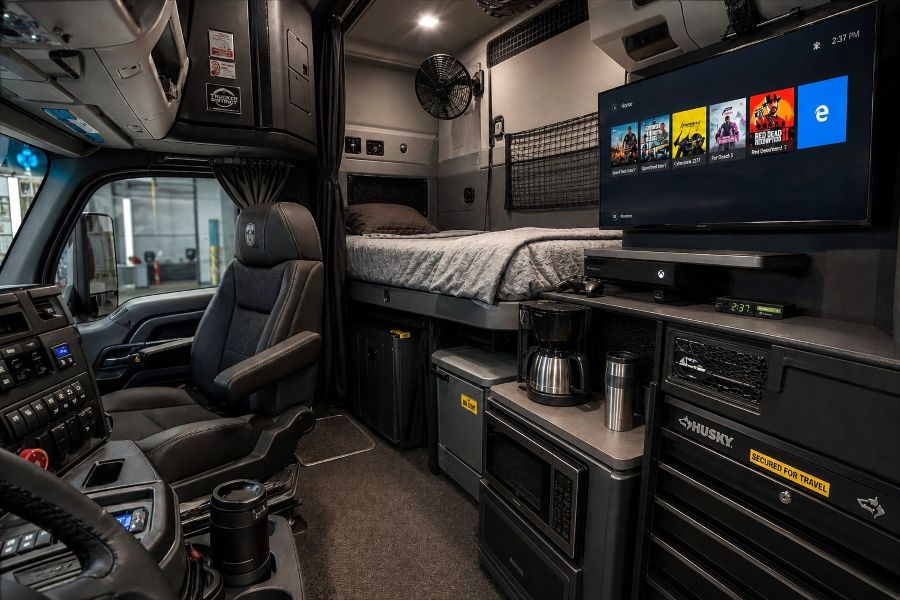
Accessories to make your CMV Comfortable
When you're on the road for long hours, you need to be comfortable. Your truck is your "home away from home". While it may cost something to upgrade, even small improvements can go far in making long trips feel shorter. When your rig becomes your office, dining room, bedroom, and your living room, it's important to fill it with practical items that will help you sleep better, stay organized, eat healthier, and reduce fatigue. Here are some of the best comfort accessories recommended by veteran truck drivers, along with important safety considerations.
Get quality sleep!
Some truck drivers say they can actually sleep better in their truck than at home due to some of the accessories they've purchased. Many recommend a memory foam mattress topper, high quality pillows like MyPillow, comfortable sheets, lightweight blankets for summer, and heavy comforters for winter. Blackout curtains can help block sunlight. Earplugs, a white noise machine, a small fan, and or noise-canceling headphones can cancel loud noises allowing you to sleep better even during the day.
Soft LED lighting makes the sleeper more inviting so many drivers install reading lights, LED strip lights, and motion-sensor lights for nighttime. Avoid lighting that reflects on the windshield or that will distract you while the vehicle is in motion.
Keep a comfortable cabin
Lumbar support cushions, cooling seat covers for summer and heated seat cushions for winter, premium truck seats, and heavy-duty suspension seats can help reduce back and hip pain, as well as fatigue and leg soreness. Making sure your seat is properly adjusted will also help improve posture and visibility.
Even with air conditioning, a small fan helps circulate air inside the cabin. This can help you have better airflow, lower humidity, keep you cool while parked, and give you white noise for sleeping. Choose fans designed for vehicle use and secure them well.
A clean cabin can provide a calming atmosphere and reduce allergens and unpleasant odors. Some helpful things to have on hand include: disinfecting wipes, glass cleaner, paper towels, trash bags, hand sanitizer, a small vacuum, and air freshener. Along with keeping the cabin clean, try to keep things organized. Many truck drivers recommend a pen organizer for your sun visor, under-bunk storage bins, car seat organizers, hanging closet organizers, and small containers to keep things close at hand and accessible.
Ensure accessories do not interfere with the mirrors, windows, vents, emergency exits, access to safety equipment, seat belts, airbags, steering, pedals, or driver controls. Keep the walkways and the sleeper area free of clutter to reduce slip and trip hazards.
Stay fresh
Having changes of clothes that fit the weather can go a long way to staying fresh. In winter, consider packing wool socks, thermal underwear, insulated gloves, knit caps, and waterproof boots. You don't want to get caught outside in an emergency without the proper clothing and a change for when you've resumed your ride. In summer, consider moisture-wicking shirts, cooling towels, breathable sleepwear, lightweight shorts and flip-flops for when you're off-duty. If you'll be crossing multiple states with different weather patterns, it may be wise to layer your clothing or bring a variety of different clothes.
Home-cooked meals on the road
Making your own food can give you a feeling of independence on the road, help you eat healthier, and save time. Popular accessories that can help are a 12-volt refrigerator, electric or ice cooler, microwave, Hot Logic oven, 12-volt lunch box stove, crock pot, and coffee maker. Many drivers also like to have simple seasonings on hand so food tastes like it does at home. Just because you are away from home doesn't mean you can't have home-cooked meals.
Safety Tip: Only operate cooking appliances according to the manufacturer's instructions. Avoid overloading electrical circuits, and never leave heating appliances unattended while operating.
Increasing your comfort in your off-duty hours
It's important to be comfortable not just when you're on the road, but also in your off-duty hours. Stretching and doing simple exercises can help reduce stiffness and fatigue, as well as aid your mental health. Some compact fitness gear you can purchase include resistance bands, a yoga mat, foam roller, massage gun, and hand grip exerciser. Even just a few minutes of stretching makes a difference.
Hobbies can also help you reduce stress, combat loneliness, and stay sharp. To make it easier to engage in hobbies on the road, some drivers install a television, video game consoles, and streaming devices. Others bring a laptop, tablet, E-readers, and noise-canceling headphones for more portable options.
Safety Tip: FMCSA regulations prohibit drivers from holding a mobile phone while operating a commercial motor vehicle. Mounts should never obstruct the driver's view of the roadway or vehicle controls. Secure all electronics before driving so they cannot move around the cab.
At CDL Direct, we don’t just prepare you to pass the exam. Our course is designed to prepare you for real-world situations—inspections, roadside stops, accidents, and the decisions and driving techniques that protect your livelihood.
5 Tips to Maximize Fuel Efficiency in a Big Rig
Fuel is one of the biggest operating costs in trucking and fuel prices seem to continue to rise with no end in sight. Whether you are a company driver trying to improve your performance score or an owner-operator watching every dollar, small changes behind the wheel can add up to thousands of dollars in savings each year. A skilled CDL driver knows getting out in front of fuel costs is about driving smarter. Here are some proven fuel-saving habits you can master.
1. Protect Fuel Efficiency Through Proper Maintenance
A fuel-efficient truck is a well-maintained truck. Things you especially want to pay attention to are: dirty air filters, engine warning lights, fuel leaks, exhaust issues, poor tire conditions, and incorrect fluid levels. A driver’s daily inspection can catch small problems before they become expensive repairs or roadside breakdowns.
Maintenance that improves fuel economy shows professionalism, responsibility, and attention to detail— qualities top carriers look for.
2. Plan Ahead
Fuel efficiency and safety go together. Drivers who manage their time correctly are less likely to rush, speed, or make aggressive driving decisions. Experienced drivers plan ahead before they leave the yard and while on the road so they are not waiting until the last second to react. This can include building momentum before climbing hills when safe, avoiding unnecessary gear changes, reducing speed before going downhill to avoid relying heavily on the brakes, and checking weather and traffic conditions before leaving. Good trip planning will also help you avoid wasted miles, unnecessary detours, and fuel-consuming delays.
A professional CDL driver knows that being efficient does not mean pushing limits—it means planning better.
3. Keep Your Tires Properly Inflated
Underinflated tires increase rolling resistance, forcing the engine to work harder. Proper tire maintenance improves fuel economy, handling, and safety. The best way to make sure your tires are working properly is during your pre-trip inspection to check for any damage, leaks, or abnormal wear, and to verify tire pressure according to the manufacturer’s recommendations. If you do notice something unusual, report it before it becomes an issue that affects fuel or even causes a breakdown.
FMCSA requires commercial motor vehicle tires to meet safety standards, including proper condition and inflation requirements under 49 CFR 393.75.
4. Use Modern Technology to Save Fuel
One example of how modern technology can help save fuel is with an idling CMV. You may already know that an idling truck burns fuel, and increases engine hours and maintenance costs. Besides shutting down the engine when permitted and making sure to follow your company policy and local laws on idling, now more than ever you have the opportunity to make use of the modern technology. Auxiliary power units (APUs) can help you stay comfortable in the cabin without requiring you to run the engine. Automatic engine shut down features can also help reduce engine idling.
Here are other examples of modern technology you can utilize to help improve fuel economy on the road:
- Automated manual transmissions (AMTs)
- Adaptive cruise control
- Predictive engine controls
- Telematics and fuel-monitoring systems
- Aerodynamic equipment such as trailer skirts and roof fairings
While many modern trucks include idle-management and other fuel-saving technology, drivers must understand their equipment and follow carrier requirements.
5. Maintain a Steady Speed
One of the easiest ways to improve fuel economy is to avoid unnecessary speed changes. Rapid acceleration, hard braking, and constantly changing speeds force the engine to work harder and burn more fuel. Therefore it’s always best to accelerate smoothly rather than aggressively, maintain a consistent following distance to reduce the need to brake, use cruise control when circumstances allow, and anticipate needs to slow down early on.
Many fleets use driver scorecards that monitor harsh acceleration, braking, and speeding because these behaviors directly affect fuel consumption and vehicle wear.
At CDL Direct, we don’t just prepare you to pass the exam. Our course is designed to prepare you for real-world situations—inspections, roadside stops, accidents, and the decisions and driving techniques that protect your livelihood.
How to Handle a CMV Breakdown
You're driving your big rig along the highway and all of a sudden you hear a loud pop and the steering wheel starts to pull. You remember your training for a blown tire and keep a firm grip on the steering wheel and maintain control until you can safely pull over. But now you have a new problem. Do you change the tire or get help? Whether it's a blown tire, a dead battery, an air leak, or an engine warning light, it's not if your CMV will break down, but when. Here are some tips to keep you safe and reduce down time.
Put Safety First
The moment you realize something is wrong, stay calm and avoid making sudden movements. If possible signal early to alert other drivers, then gradually reduce your speed when safe to do so, and pull completely onto the shoulder. Once safely out of traffic, immediately turn on your hazard flashers and set your emergency brakes. One of the biggest dangers during a breakdown is being struck by another vehicle. Therefore, stay in your seat belt until safe to exit and when exiting, do so on the side away from traffic. If you have to inspect the vehicle or wait for roadside assistance, always be alert to traffic and stay as far away from passing vehicles as possible.
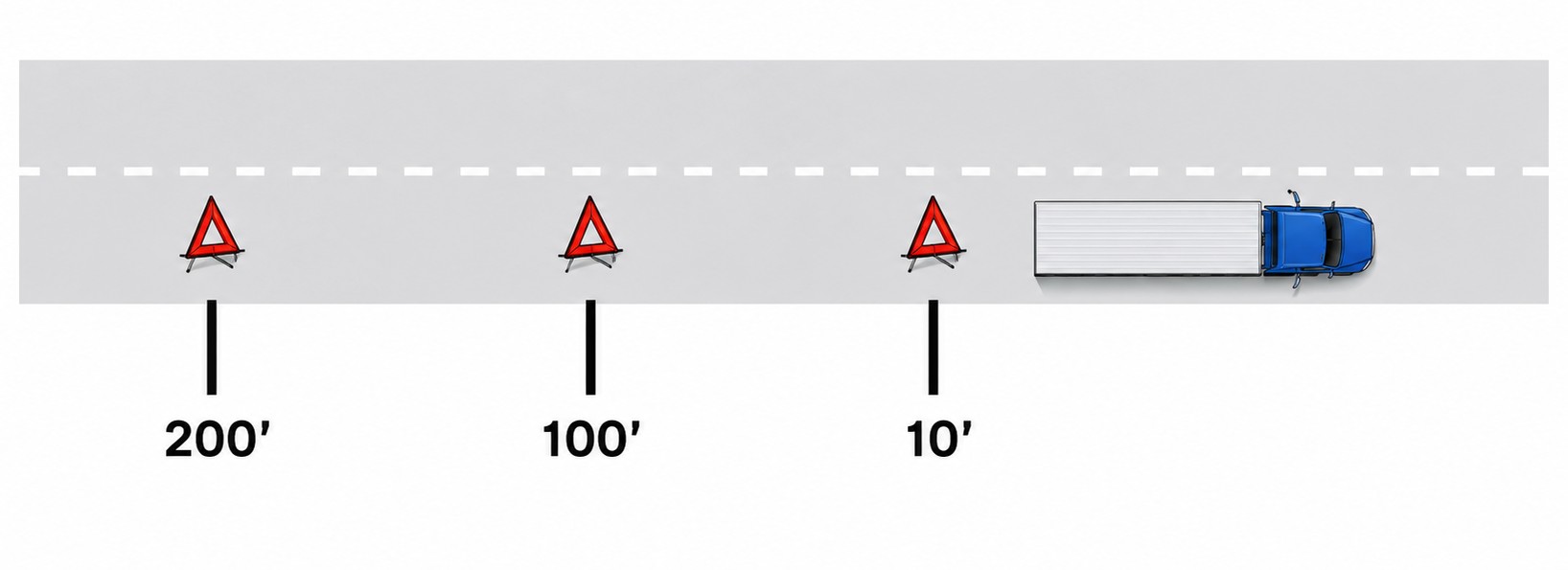
FMCSA regulations require most commercial motor vehicles to place emergency warning devices within 10 minutes. On most divided highways or one-way roadways, place one warning device approximately 10 feet behind the vehicle, one about 100 feet behind, and one about 200 feet behind. On two-way roads, place one approximately 10 feet behind, one about 100 feet behind, and one about 100 feet in front of the vehicle. On hills, curves, or areas with limited visibility, adjust the placement to give approaching traffic adequate warning.
Communicate Your Location Clearly
A driver with more than 16 years of OTR experience recommends making a habit of noting your location every 30 to 50 miles by checking the highway number, mile marker, nearby exits, county roads, cities passed, and major landmarks. Avoid relying only on your satellite location. That way, if you break down, you can give dispatch or roadside assistance a much more accurate location and help roadside assistance reach you more quickly. For example clear directions may sound something like, "I'm approximately 3 miles west of County Road 28 on Interstate 80, parked on the right shoulder."
Many fleets also use GPS and electronic logging systems that can assist dispatch in locating you quickly.
Notify the Right People
Once you're safely stopped contact your dispatcher or fleet manager. Some companies may allow you to make minor repairs yourself, while others may require you to accept assistance for even minor breakdowns, such as changing a windshield wiper or bulb. Therefore, contacting dispatch will allow you to follow your company's breakdown procedures. When talking with them, explain what happened, share your precise location, and describe any warning lights, noises, smells, or visible damage.
Before attempting any repair, know exactly what your company permits.
Carry a Basic Emergency Kit
If allowed to make minor repairs, many experienced CDL drivers keep a small maintenance kit in their truck. This can save your hours of downtime waiting for roadside assistance. Common items include basic tools, screwdrivers, adjustable wrench, socket set, pliers, flashlight with extra batteries, work gloves, safety vest, electrical supplies, spare fuses, replacement bulbs, electrical tape, wire connectors, zip ties, duct and hose tape, spare alternator belt, gear or hub oil, spare trailer light, and basic electrical repair tools. Some drivers carry a 50-ft air hose that connects to the tractor's emergency (red) glad-hand connection (if equipped) for inflating tires. You may also want to keep a gallon of engine oil with your vehicles specifications, a gallon of coolant approved for your engine, and spray grease or lubricant like WD-40.
Remember that temporary repairs are only if allowed by your company and meant to get you safely to a repair facility when permitted—not to replace proper maintenance.
Complete Your Required Inspections
One of the best ways to prevent roadside breakdowns is by performing thorough inspections. A proper pre-trip inspection can help identify problems before you leave the yard, including low tire pressure or damaged tires, fluid leaks, loose hoses, worn belts, inoperative lights, brake issues, and air system leaks. Also, during your inspections or on the road, never ignore unusual engine noises, vibrations, rising engine temperatures, oil pressure warnings, charging system warnings, or burning smells. Reporting these issues early on can help avoid downtime on the road and more expensive repairs later on.
Federal regulations require drivers to be satisfied that the commercial motor vehicle is in safe operating condition before driving.
Know When Not to Repair It Yourself
Many experienced drivers are comfortable replacing a starter, alternator, or other components. However, if the repair involves bigger issues like your brakes, steering, suspension, major engine problems, fuel system issues, or complicated electrical systems, it is safest and often required to wait for qualified maintenance workers. Trying to save time with an unsafe repair can put your job at risk, slow you down even further, and create much bigger problems.
Protect Yourself While Waiting
If it is safe to do so, move well away from traffic while waiting for roadside assistance. Stay visible by wearing a reflective safety vest, especially at night or during poor weather. Never stand between your truck and passing traffic or remain in a position where another vehicle could push your truck into you.
At CDL Direct, we don’t just prepare you to pass the exam. Our course is designed to prepare you for real-world situations—inspections, roadside stops, accidents, and the decisions and driving techniques that protect your livelihood.

CDL Tips for Sharing the Road with Four-Wheelers
There’s a lot of advice out there for four-wheelers on how they should conduct themselves around big rigs. Yet, at times it seems many just don’t get the memo. While it may be frustrating that you can’t control what others do on the road, you do have control over the situation. You can choose to stay calm and patient, recognize hazards early, and make safe driving decisions even if other drivers make mistakes. In fact, your predictable driving can reduce confusion and gives other motorists more time to react. Along those lines, here are some tips to keep yourself and others safe while sharing the road with four-wheelers.
1. Expect Four-Wheelers to Make Mistakes
Many four-wheelers don't understand how commercial vehicles operate or how their actions affect you behind the wheel. Stay positive by not taking their mistakes personal. If you expect four-wheelers to cut you off, tailgate, linger in your blind spots, honk unnecessarily, brake suddenly, change lanes without signaling, and drive aggressively, then you can drive proactively.
Rather than letting the poor decisions of others ruin your day, if you expect the unexpected it can help you stay calm, maintain a safe speed, and focus on preventing crashes—not "teaching another driver a lesson." Defensive driving often means letting someone else's poor decision stay their mistake instead of becoming yours.
2. Stay Focused
No matter how much your phone may seem to be calling your name or you’re feeling hungry behind the wheel, don’t let anything take your eyes and mind off of driving. It’s better to pull over and make a phone call or grab a bite than taking the risks associated with distracted driving. Staying focused allows you to keep your attention where it’s needs to be, on: traffic conditions, your mirrors, road signs, work zones, weather, pedestrians and cyclists, and other vehicles entering from ramps and intersections.
3. Watch Your Blind Spots Constantly
Commercial vehicles have much larger blind spots than four-wheelers. Remember you can stay in control by regularly checking and rechecking your mirrors especially before lane changes, signaling early before changing lanes, and being especially alert for motorcycles and small cars in your line of movement.
The FMCSA recommends checking your mirrors every 8 to 10 seconds while also scanning well ahead of your vehicle for developing hazards. This helps you identify vehicles entering your blind spots before changing lanes or making turns.
4. Leave Plenty of Following Distance
Professional drivers know that space equals safety. A fully loaded tractor-trailer requires much longer to stop than a passenger vehicle. Leaving adequate following distance gives you time to react if traffic suddenly slows.
The FMCSA recommends using a following distance based on vehicle length and increasing that distance in poor weather, heavy traffic, or reduced visibility.
5. Be Patient During Wide Turns
Many passenger vehicle drivers don't realize trucks need additional room to turn safely. Therefore, you can be proactive by signaling well in advance, positioning your vehicle properly, continuously monitoring your mirrors, watching for vehicles trying to squeeze between your truck and the curb, and completing the turn smoothly without rushing. Wide turns are a normal part of operating combination vehicles, and patience helps prevent crashes.
6. Expect Unsafe Merges
One of the most common hazards CDL drivers face is four-wheelers merging too closely in front of your truck. When that happens, your goal is to recreate the space cushion—not to "hold your position." Here are some steps to follow when a car enters your safe cushion:
- Ease off the accelerator if needed.
- Re-establish a safe following distance.
- Avoid sudden braking whenever possible.
- Continue scanning for additional hazards.
At CDL Direct, we don’t just prepare you to pass the exam. Our course is designed to prepare you for real-world situations—inspections, roadside stops, accidents, and the decisions and driving techniques that protect your livelihood.