
How and When Should a Commercial Truck Driver Use a Runaway Truck Ramp
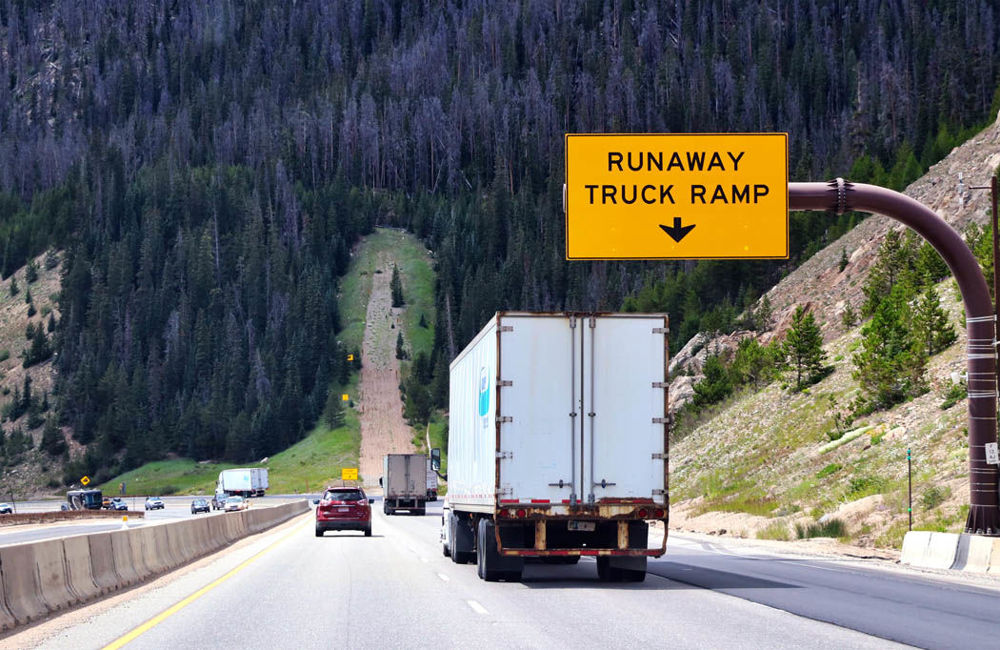
How and When Should a Commercial Truck Driver Use a Runaway Truck Ramp
Brake failure is every CDL driver’s worst-case scenario—especially on long, steep downgrades. While modern braking systems and proper driving habits make it rare, it can still happen. That’s why knowing how to recognize and use a runaway truck ramp isn’t optional—it’s a lifesaving skill.
What Is a Runaway Truck Ramp?
A runaway truck ramp (also called an escape ramp) is a designated emergency exit built to stop an out-of-control commercial vehicle safely. You’ll recognize one by: a clearly marked sign well before the entrance, a dead-end gravel or dirt lane usually angling uphill, and placement a few miles after the start of a downgrade.
These ramps have been saving lives since the 1960s and are most common in mountainous regions. Today, there are 400+ runaway truck ramps across the U.S., many located on high-risk downhill corridors.
A Real-World Example
On US Highway 16 near Dead Man’s Curve in Wyoming, one of the most used runaway truck ramps has prevented countless fatalities. Before the ramp was installed, the steep downgrade, heavy loads, and sharp turns, resulted in catastrophic crashes—including vehicles plunging hundreds of feet. Today, drivers who lose braking power on this scenic but dangerous stretch of road, have a safe way to stop and continue their journey safely.
How Runaway Truck Ramps Work
Not all ramps are the same, but most use one or more of these designs:
- Deep gravel ramps that rapidly slow wheels through resistance
- Uphill ramps that use gravity to reduce speed
- Combination ramps that use both incline and soft gravel to stop and hold the truck
Once you commit to the ramp, stay in it. The system is designed to stop you safely—even if it feels aggressive.
When Should You Use a Runaway Truck Ramp?
Preventing brake failure comes first. Runaway ramps are a last resort—not a backup plan. To reduce risk:
- Keep your vehicle maintained and do your pre-trip inspections (including checking your brakes regularly). This is federally required and non-negotiable. Improper maintenance isn’t just unsafe—it can lead to major fines, CDL suspension, or even criminal charges if it contributes to a crash.
- Never rely solely on service brakes on long downgrades. Use proper downhill braking techniques, including engine braking.
- Control your speed early before descending—not halfway down. The earlier you start braking before a downgrade, the safer you will be.
Despite your best efforts, you may still find yourself in a position where you need to slow your vehicle in an emergency. You should use a runaway truck immediately when you realize: your brakes are fading or unresponsive, your speed is increasing despite braking, and/or you can’t downshift to regain control. Do not wait. The longer you delay, the more momentum you build and the harder it becomes to stop.
If no escape ramp is available, choose the least dangerous option, such as: an uphill side road, an open field, or a route that reduces speed and avoids traffic.
Using a runaway truck ramp is never a failure—it’s a professional decision that saves lives, equipment, and careers. Every CDL driver should know how to spot one, when to use it, and why acting decisively can save your life.
At CDL Direct, our online Entry Level Driver Training (ELDT) goes beyond passing the test. We teach real-world safety knowledge—like downhill control, brake management, and emergency decision-making—so you’re prepared when it matters most.
If you’re ready to earn your CDL and drive with confidence in any condition, visit CDLDirect.com and start your journey today.