5 Tips for Commercial Drivers to Avoid Overhead Obstacles
5 Tips for Commercial Drivers to Avoid Overhead Obstacles
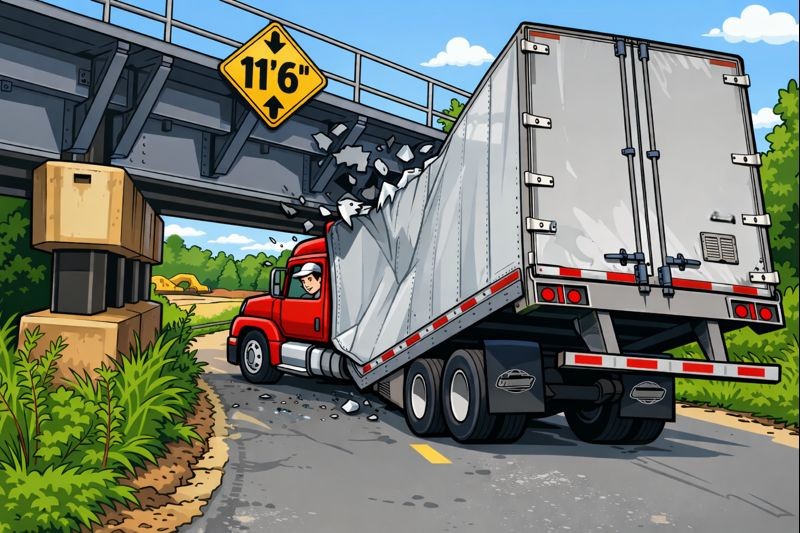
For most car drivers, bridge clearance signs barely register. For CDL drivers, they can mean the difference between a smooth run and a career-stopping accident. Strikes with bridges, overpasses, wires, and trees are one of the most expensive—and preventable—incidents in trucking.
Knowing your truck’s height and staying alert to changing conditions is critical, especially with varied loads, aging infrastructure, and construction zones everywhere.
1. Know Your Exact Height—Every Trip
- Always know your total vehicle height: including the trailer, load, tarps, and any mounted equipment.
- Remember: weight changes height: an empty or lightly loaded trailer rides higher than a loaded one. Just because you cleared a bridge loaded doesn’t mean you’ll clear it empty.
2. Don’t Trust Clearance Signs Blindly:
Clearance signs are helpful—but not foolproof. When in doubt, assume clearance is less than posted.
- Road resurfacing reduces clearance: fresh pavement, steel plates, or compacted snow and ice can reduce actual clearance below what’s posted.
- Construction zones change everything: temporary structures, detours, and scaffolding can create unexpected low points.
- Older signs may not reflect current conditions: infrastructure shifts over time.
3. Slow Down and Reroute When Unsure
- If you’re unsure about clearance, slow way down: slowing to a crawl gives you time to stop before contact.
- If you’re still uncertain—don’t chance it. Find another route: detours are cheaper than bridge strikes, cargo loss, tickets, or losing your CDL. (There are CDL apps that can help you find a route)
4. Watch for Hidden Overhead Hazards
- Low bridges and underpasses aren’t always well-marked: be especially cautious on local roads and older urban routes.
- Road tilt matters: uneven pavement or sloped roads can cause your trailer to lean, reducing side clearance near signs, trees, and bridge supports. Stay slightly toward the center of the lane when safe to do so.
- Backing up? Look up first: trees, branches, utility lines, warehouse awnings, and canopies are easy to miss in reverse—especially at night or in bad weather.
5. Use Technology—but Don’t Rely on It Alone
- Truck-specific GPS systems can help avoid low-clearance routes, but they are not perfect: always verify visually.
- Dash cams and mirror cameras improve visibility: remember, it's still important to physically check overhead space.
One strike can end a career. Overhead collisions are often classified as preventable accidents and can result in costly repairs and downtime, cargo damage, CDL violations, and lost job opportunities. Staying alert to what's above your truck is just as important as watching the road ahead.
At CDL Direct, we deliver high-quality online Entry Level Driver Training (ELDT) designed to prepare drivers for real-world challenges—like clearance awareness, route planning, and accident prevention. We also partner with behind-the-wheel schools and offer job placement assistance, helping drivers get on the road and start earning fast.
If you’re ready to build a safer, stronger trucking career, CDL Direct is here to help you move forward with confidence.