CDL Drivers — Steps to Take if You're Injured on the Job
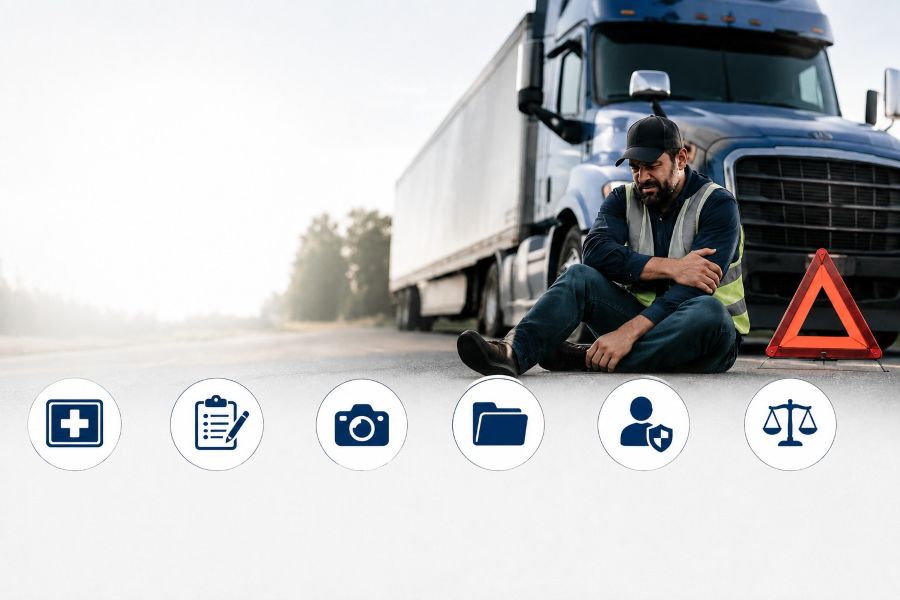
CDL Drivers — Steps to Take if You're Injured on the Job
Trucking is one of the most demanding jobs in America. Safety-conscious CDL drivers reduce injury risks by taking time to: perform proper pre-trip inspections, use safe lifting techniques, wear PPE when required, stay alert around forklifts/loading docks, and manage fatigue properly.
However, even if you do your very best to keep yourself and others safe, the unexpected can still happen. Knowing what to do after a workplace injury can protect your health, your paycheck, and your CDL career. Here are some steps to take if an injury does happen on the job.
Step 1: Get to Safety First
If you’re injured during a crash, loading accident, slip and fall, or other work-related incident, your first priority is safety.
* Move to a safe location if possible.
* Turn on hazard flashers if involved in a roadside incident.
* Set out reflective warning triangles when safe to do so.
* Call 911 immediately for serious injuries or emergencies.
If the injury involves hazardous materials, fire, or traffic danger, follow your carrier’s emergency procedures.
Step 2: Report the Injury Immediately
One of the biggest mistakes drivers make is waiting too long to report an injury. Immediately notify:
* Your dispatcher or safety department
* Your supervisor or carrier
* Emergency services if necessary
Even if the injury seems minor, report it right away. Some injuries—especially back, neck, or repetitive strain injuries—can worsen over time.
Prompt reporting is important because:
* Workers’ compensation rules often have reporting deadlines.
* Delays can complicate claims.
* Documentation protects both you and your employer.
Step 3: Seek Medical Attention
Always take injuries seriously. Emergency care may be required immediately, but even non-emergency injuries should be evaluated by a medical professional. Be honest and detailed when describing: how the injury occurred, symptoms you’re experiencing, and/or pain or limitations you have as a result of the injury.
For CDL drivers, medical documentation matters because certain injuries or medications may affect your ability to safely operate a commercial motor vehicle. If a doctor places you on light duty, driving restrictions, and/or temporary disqualification from operating a CMV, make sure to follow those instructions carefully. Some injuries may require clearance from a certified medical examiner before returning to driving.
Operating a commercial vehicle while medically unfit can:
* Violate FMCSA regulations
* Risk your CDL
* Endanger yourself and others
Keep in mind, not all injuries are physical. Serious crashes and traumatic incidents can affect: stress levels, sleep, anxiety, and your confidence behind the wheel. Professional drivers should never ignore the mental side of recovery. Seeking support after a traumatic event is part of staying healthy and safe.
Step 4: Understand Post-Accident Drug and Alcohol Testing
Under regulations from the Federal Motor Carrier Safety Administration (FMCSA), post-accident drug and alcohol testing may be required after certain crashes involving commercial motor vehicles. Testing may be required if:
* There is a fatality
* A driver receives a citation and there is bodily injury requiring immediate medical treatment
* A vehicle must be towed and a citation is issued
Alcohol testing generally occurs within 8 hours and drug testing within 32 hours if possible. It is to the drivers benefit to cooperate fully with lawful testing requirements.
Step 5: Document Everything
Good documentation protects your health and your career. Keep records of:
* Medical visits and diagnoses
* Photos of injuries or accident scenes
* Witness names and contact information
* Police reports
* Communication with your company
If you’re injured while loading, unloading, or working at a customer facility, document the environment and conditions as well.
Step 6: Understand Workers’ Compensation
In most cases, work-related injuries are handled through workers’ compensation insurance. Workers’ comp may help cover: medical treatment, lost wages, and rehabilitation costs. Rules vary somewhat by state, but the general process is similar nationwide:
1. Report the injury
2. File a claim
3. Follow approved medical treatment procedures
It is beneficial to know the coverage, benefits, and protection available to you as a CDL driver. You may also want to consult a legal professional to make sure your rights are protected as this job is your livelihood.
If you’re an owner-operator running under your own authority, coverage may depend on your insurance policies and business structure
Getting injured on the job can feel overwhelming, especially when your CDL career is involved. But staying calm, reporting the injury properly, and following the correct procedures can protect both your health and your future. The most successful CDL drivers aren’t just skilled behind the wheel—they know how to handle difficult situations professionally and safely.
At CDL Direct, we don’t just prepare you to pass the exam. Our course is designed to prepare you for real-world situations—inspections, roadside stops, accidents, and the decisions and driving techniques that protect your livelihood.