CDL Direct Blog
Blog posts of '2026' 'May'
Hazmat Cargo — How to Avoid the Risks and Hazards
Spilt milk can be an embarrassing mess to clean up. On the other hand, hazardous material spills can be deadly! That is why hauling hazardous materials is one of the most demanding jobs in the trucking industry. Hazmat drivers often earn higher pay and have access to specialized opportunities, but they also carry a greater level of responsibility. Hazmat CDL drivers must follow strict nationwide regulations set by federal agencies. Here’s what every CDL driver should know about safely reducing risks while hauling Hazmat cargo.
What Counts as Hazardous Materials?
Hazardous materials (Hazmat) include substances that could pose a risk to: health, safety, property, and the environment. Common Hazmat loads include: gasoline and diesel fuel, propane, industrial chemicals, corrosive liquids, explosives, radioactive materials, as well as certain batteries and lithium products.
Drivers hauling placarded Hazmat loads must hold: a valid CDL, a Hazmat endorsement (HME), and TSA background clearance.
Pre-Trip Inspections Matter Even More with Hazmat
Every CDL driver should perform pre-trip inspections but Hazmat loads require extra attention. Check the tires and brakes, lights and reflective markings, coupling systems and hoses, placards and markings, and cargo securement. Inspect carefully for leaks or unusual odors. Even a small equipment issue can become a major emergency when hazardous materials are involved.
Understand Placards and Shipping Papers
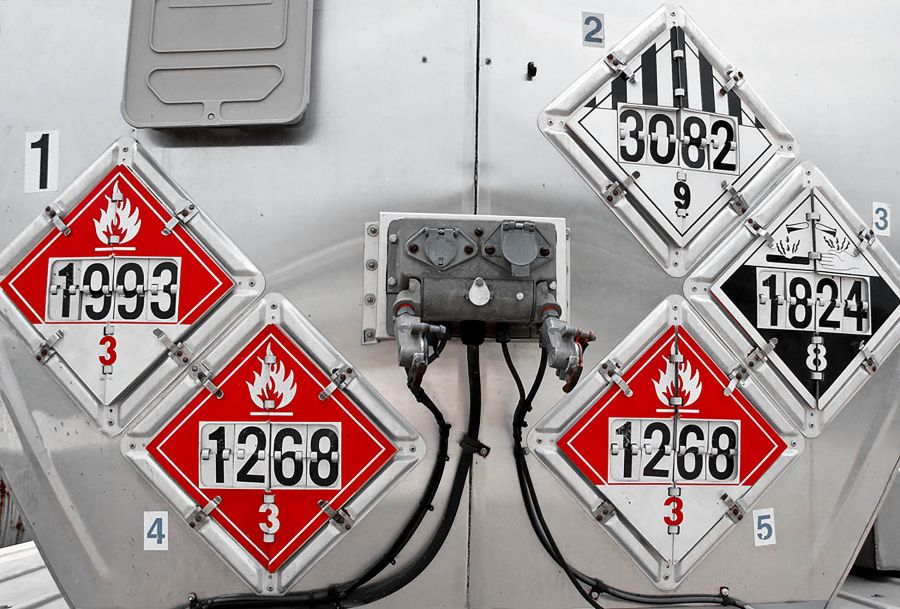
Hazmat drivers must know exactly what they’re hauling. Federal law requires properly placards displayed on the vehicle as well as accurate shipping papers that should be readily visible or properly stored in the driver-side door holder. Shipping papers contain critical information such as the hazard class, UN/NA identification numbers, and emergency response information. Why is this so important? Because emergency responders rely on this information if there is a crash or spill.
Railroad Crossing Requirements
Hazmat drivers transporting certain placarded loads must stop at railroad crossings unless an exception applies. Remember to also look and listen for trains that may be coming.
Smoking? Nope!
Never smoke near Hazmat cargo, loading areas, or fueling operations. Open flames and sparks can ignite flammable vapors instantly.
Stay Alert
Federal regulations prohibit CDL drivers from texting or using handheld mobile phones while operating a CMV. When hauling Hazmat, even a few seconds of distraction can have catastrophic consequences.
Route Planning
Some roads, tunnels, and bridges restrict hazardous materials. Therefore, never rely entirely on standard GPS systems. Truck-specific routing is essential. Professional Hazmat drivers plan routes carefully before departure, follow approved Hazmat routes when required, watch for restricted tunnels and urban areas, and monitor weather and road closures.
Safe Parking Rules for Hazmat Loads
Hazmat CDL drivers should remain alert for suspicious activity, cargo tampering, and unauthorized access attempts. Security is a major part of Hazmat transportation.
Certain hazardous materials cannot simply be parked anywhere. Always follow your carrier's policies, local restrictions, and federal regulations. When possible, use secure, well-lit truck parking areas. Depending on the cargo, parking near open flames or populated areas may be restricted and certain high-risk hazardous materials may require attendance or additional parking restrictions.
Know What to Do During an Emergency
If despite your best efforts a crash or spill occurs:
1. Secure the area safely
2. Call 911 immediately
3. Notify your carrier
4. Reference emergency response information from shipping papers
5. Avoid touching or inhaling spilled substances unless you are properly trained and equipped
At CDL Direct, we don’t just prepare you to pass the exam. Our course is designed to prepare you for real-world situations—inspections, roadside stops, accidents, and the decisions and driving techniques that protect your livelihood.
Railroad Crossings and Big Rigs
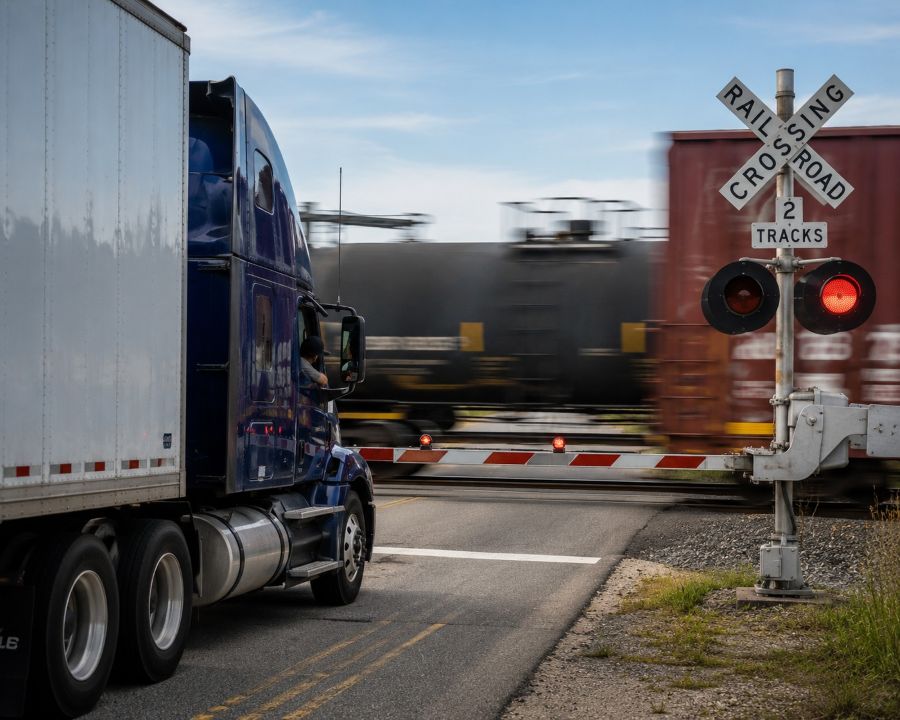
Trains cannot stop quickly. A freight train traveling at highway speed may require more than a mile to come to a complete stop after the brakes are applied. That means the responsibility to avoid a collision falls heavily on the CDL driver approaching the crossing. Commercial vehicles face: reduced stopping time and acceleration, low-clearance trailers that can become stuck, and heavy or hazardous materials cargo. That’s why the Federal Motor Carrier Safety Administration (FMCSA) has strict nationwide regulations for how commercial drivers must approach and cross railroad tracks. If you’re training for your CDL, understanding railroad crossing safety is essential—not just for passing your exam, but for protecting lives and your career.
Know Which CDL Vehicles Must Stop
Under FMCSA regulations (49 CFR §392.10), certain commercial vehicles are required to stop at all railroad crossings, unless exempted. Failing to stop when required can lead to serious violations and possible CDL disqualification. Vehicles that must stop include: passenger-carrying commercial vehicles, school buses, and vehicles transporting hazardous materials requiring placards. Drivers of these vehicles must:
* Stop within **15–50 feet** of the nearest rail
* Look and listen for approaching trains
* Proceed only when safe
Never Stop on the Tracks and Watch for Low Ground Clearance
One of the most important railroad crossing rules: Never enter the crossing unless you can completely clear it. Traffic backups are especially dangerous for large trucks. If traffic is stopped on the other side of the tracks, wait until there is enough room for your entire vehicle to clear safely. Drivers should also avoid shifting gears while crossing railroad tracks. Professional drivers select the proper gear before entering the crossing (to avoid any issues) and maintain steady movement until fully clear.This is vital because getting stuck on the tracks can turn deadly fast.
Certain trailers are at greater risk of getting hung up on raised crossings. High-risk equipment includes: lowboys, car haulers, moving vans with lift gates, long wheelbase tractors, and low-clearance trailers. If you are driving one of these vehicles, approach uneven crossings slowly and at an angle when possible to reduce the chance of bottoming out. Many crossings have warning signs marked: "Low Ground Clearance”. Never ignore them.
Be Extra Careful in Bad Weather or Low Visibility
Rain, snow, fog, or darkness make railroad crossings even more hazardous. In poor conditions:
* Reduce speed
* Increase following distance
* Stay alert for crossing signs and signals
Never rush through a crossing because visibility is poor.
What If Your Truck Gets Stuck?
If your vehicle becomes stuck on the tracks:
- Exit the vehicle immediately
- Move away from the tracks at a 45-degree angle toward the direction the train is coming from
- Locate the blue emergency notification sign near the crossing and call the emergency number posted
- Call 911 immediately
Moving toward the oncoming train direction helps protect you from debris if a collision occurs.
Railroad crossing violations are treated very seriously for CDL holders. Even first offenses can result in temporary CDL disqualification periods. Under federal regulations, drivers can face CDL disqualification for offenses such as:
* Failing to stop when required
* Failing to slow and check tracks
* Driving around gates
* Failing to clear tracks safely
Professional CDL drivers approach every crossing with caution—not assumptions. Even when crossing gates or lights are not activated, CDL drivers still use caution. Always: look both ways, roll down windows if necessary to listen, and watch out for multiple tracks. A second train may be approaching from another direction after the first passes. To be safe, make it a habit to: stop when required, scan ahead early, avoid distractions, watch traffic patterns near tracks, stay patient when traffic backs up, and always make sure there's room to clear the tracks before continuing your journey. Because when you’re operating a commercial vehicle, safety at railroad crossings isn’t just about following the law—it’s about protecting lives every single trip.
At CDL Direct, we don’t just prepare you to pass the exam. Our course is designed to prepare you for real-world situations—inspections, roadside stops, accidents, and the decisions and driving techniques that protect your livelihood.
CDL Drivers — Steps to Take if You're Injured on the Job
Trucking is one of the most demanding jobs in America. Safety-conscious CDL drivers reduce injury risks by taking time to: perform proper pre-trip inspections, use safe lifting techniques, wear PPE when required, stay alert around forklifts/loading docks, and manage fatigue properly.
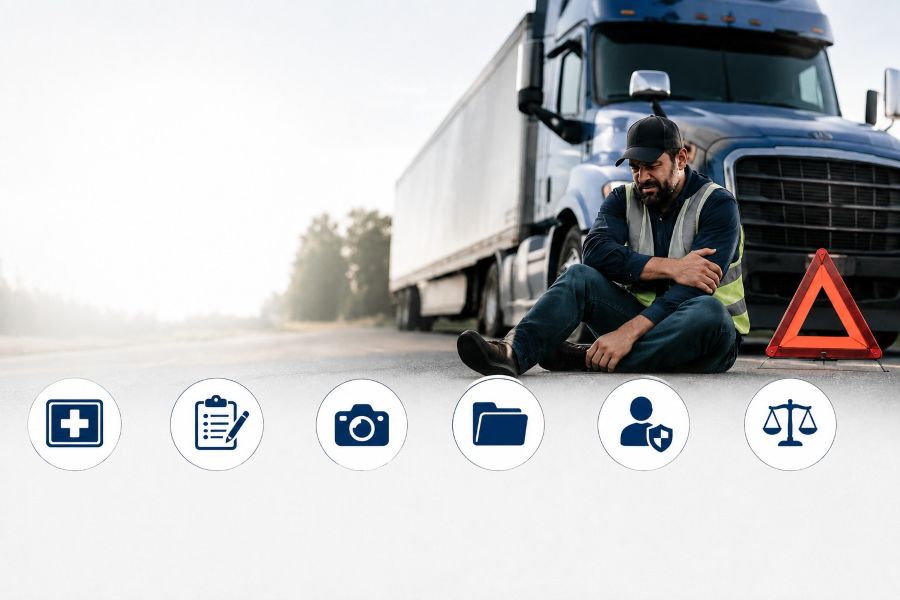
However, even if you do your very best to keep yourself and others safe, the unexpected can still happen. Knowing what to do after a workplace injury can protect your health, your paycheck, and your CDL career. Here are some steps to take if an injury does happen on the job.
Step 1: Get to Safety First
If you’re injured during a crash, loading accident, slip and fall, or other work-related incident, your first priority is safety.
* Move to a safe location if possible.
* Turn on hazard flashers if involved in a roadside incident.
* Set out reflective warning triangles when safe to do so.
* Call 911 immediately for serious injuries or emergencies.
If the injury involves hazardous materials, fire, or traffic danger, follow your carrier’s emergency procedures.
Step 2: Report the Injury Immediately
One of the biggest mistakes drivers make is waiting too long to report an injury. Immediately notify:
* Your dispatcher or safety department
* Your supervisor or carrier
* Emergency services if necessary
Even if the injury seems minor, report it right away. Some injuries—especially back, neck, or repetitive strain injuries—can worsen over time.
Prompt reporting is important because:
* Workers’ compensation rules often have reporting deadlines.
* Delays can complicate claims.
* Documentation protects both you and your employer.
Step 3: Seek Medical Attention
Always take injuries seriously. Emergency care may be required immediately, but even non-emergency injuries should be evaluated by a medical professional. Be honest and detailed when describing: how the injury occurred, symptoms you’re experiencing, and/or pain or limitations you have as a result of the injury.
For CDL drivers, medical documentation matters because certain injuries or medications may affect your ability to safely operate a commercial motor vehicle. If a doctor places you on light duty, driving restrictions, and/or temporary disqualification from operating a CMV, make sure to follow those instructions carefully. Some injuries may require clearance from a certified medical examiner before returning to driving.
Operating a commercial vehicle while medically unfit can:
* Violate FMCSA regulations
* Risk your CDL
* Endanger yourself and others
Keep in mind, not all injuries are physical. Serious crashes and traumatic incidents can affect: stress levels, sleep, anxiety, and your confidence behind the wheel. Professional drivers should never ignore the mental side of recovery. Seeking support after a traumatic event is part of staying healthy and safe.
Step 4: Understand Post-Accident Drug and Alcohol Testing
Under regulations from the Federal Motor Carrier Safety Administration (FMCSA), post-accident drug and alcohol testing may be required after certain crashes involving commercial motor vehicles. Testing may be required if:
* There is a fatality
* A driver receives a citation and there is bodily injury requiring immediate medical treatment
* A vehicle must be towed and a citation is issued
Alcohol testing generally occurs within 8 hours and drug testing within 32 hours if possible. It is to the drivers benefit to cooperate fully with lawful testing requirements.
Step 5: Document Everything
Good documentation protects your health and your career. Keep records of:
* Medical visits and diagnoses
* Photos of injuries or accident scenes
* Witness names and contact information
* Police reports
* Communication with your company
If you’re injured while loading, unloading, or working at a customer facility, document the environment and conditions as well.
Step 6: Understand Workers’ Compensation
In most cases, work-related injuries are handled through workers’ compensation insurance. Workers’ comp may help cover: medical treatment, lost wages, and rehabilitation costs. Rules vary somewhat by state, but the general process is similar nationwide:
1. Report the injury
2. File a claim
3. Follow approved medical treatment procedures
It is beneficial to know the coverage, benefits, and protection available to you as a CDL driver. You may also want to consult a legal professional to make sure your rights are protected as this job is your livelihood.
If you’re an owner-operator running under your own authority, coverage may depend on your insurance policies and business structure
Getting injured on the job can feel overwhelming, especially when your CDL career is involved. But staying calm, reporting the injury properly, and following the correct procedures can protect both your health and your future. The most successful CDL drivers aren’t just skilled behind the wheel—they know how to handle difficult situations professionally and safely.
At CDL Direct, we don’t just prepare you to pass the exam. Our course is designed to prepare you for real-world situations—inspections, roadside stops, accidents, and the decisions and driving techniques that protect your livelihood.

Pros and Cons of Owning Your Own Rig
Owning your own truck is one of the biggest goals in trucking—and one of the biggest decisions you’ll ever make as a CDL driver. Becoming an owner-operator (O/O) can mean more freedom and higher earning potential—but it also comes with real financial risk and responsibility. Before you make the jump, it’s critical to understand both sides of the business. Here’s a real-world breakdown of what it takes to run your own rig.
The Reality Check: It’s a Business, Not Just a Driving Job
When you become an owner-operator, you’re not just a driver—you’re a business owner. That means you’re responsible for:
* Equipment
* Maintenance
* Insurance (New O/O often face higher insurance premiums due to limited operating history)
* Fuel
* Taxes and bookkeeping (including self-employment tax which is more)
* Finding and managing freight
Experienced owner-operators live by this rule: “Pay your truck and expenses before you pay yourself.” If the business isn’t stable, your income won’t be either. Success depends just as much on your business skills as your driving ability.
Startup Costs and Financial Planning
Getting started isn’t cheap. Typical financial considerations include:
- Down payment: Often $20,000–$30,000+ for better financing terms
- Credit score: Strong credit helps secure lower interest rates
- Cash reserves: Many experienced O/Os recommend having significant savings
While exact numbers vary, it’s widely accepted that new owner-operators should have substantial emergency funds to cover repairs, insurance, fuel, and periods without steady income.
Major repairs can be expensive. For example engine overhauls alone can cost $15,000–$30,000+ depending on the truck. Unexpected downtime for repairs also means lost income. Therefore, some veteran drivers advise having **six figures in reserves**, especially during your first year. While that may sound high, the goal is simple: stay in business when things go wrong.
Pros of Owning Your Own Rig
1. You’re Your Own Boss—You decide: when you work, where you go, and what loads you take. That level of independence is one of the biggest reasons drivers go O/O.
2. Higher Earning Potential (Gross)—Owner-operators typically earn more **per load** than company drivers.
In strong markets or specialized freight, gross revenue may reach $8,000–$15,000+ weekly, though this varies widely depending on freight type, lanes, and experience. Specialized hauls (like livestock or oversized loads) may gross even higher.
Important: That’s gross, not take-home. Expenses come out of that.
3. Control Over Your Freight— You can book your own loads, work with brokers—or build direct customers, and choose freight that fits your personal goals. While that may seem very appealing, keep in mind, cutting out the middle layer can increase margins—but it also increases responsibility.
4. Ownership and Long-Term Value—You’re building equity in your equipment (if financed or owned outright). Some drivers aim to:
* Pay off their truck
* Expand into multiple trucks
* Transition into a small fleet operation
Cons of Owning Your Own Rig
1. High Operating Costs—You are responsible for everything:
* Truck payments (if financed)
* Insurance (often **$10,000–$20,000+ annually**)
* Fuel
* Maintenance and repairs
* Tires, brakes, breakdowns
Even a “good week” can come with heavy expenses.
2. Repairs Can Shut You Down—If your truck isn’t moving, you’re not making money.
* Engine failure can cost **$20K+**
* Transmission or aftertreatment repairs can also be significant
* Downtime = lost revenue
This is why having cash reserves is critical.
3. Inconsistent Pay Cycles—Unlike company drivers, many loads pay on net-15 to net-30 terms. That means you may wait weeks to get paid while you still have to cover fuel and expenses upfront.
Cash flow management is one of the biggest challenges new O/Os face.
4. You Have to Find Your Own Freight—It is recommended that before you even buy a truck, you make a plan:
* Will you lease onto a carrier? (more stability)
* Will you run under your own authority? (more freedom, more risk)
Building direct customers takes time. Without a plan, trucks sit—and sitting trucks don’t make money.
5. Administrative and Legal Responsibilities—If you operate as a freight broker, you’ll need to manage:
* IFTA fuel taxes
* Permits and registrations
* Possible **surety bonds** (for brokers)
* Recordkeeping and receipts
* Accounting (DIY or hired)
This is a full business operation, not just driving.
Equipment Choices Matter— Even your truck spec affects profitability. For example, long-nose trucks often look great—but can be less aerodynamic and use more fuel. Aero designs typically improve fuel efficiency over time Fuel savings add up fast when you’re paying the bill, as fuel is one of the largest expenses that consume 20–30%+ of revenue.
Should You Buy Now or Wait?
Some experienced drivers recommend:
* Gaining experience as a company driver first
* Learning lanes, freight, and industry patterns
* Saving aggressively before going O/O
Others suggest buying equipment outright if possible to avoid debt—but that requires significant capital. Either way, before jumping in, make sure you are prepared for what comes next.
Owning your own rig can be one of the most rewarding paths in trucking. It gives you freedom and independence, higher earning potential if handled correctly, and control over your business. However, it’s not easy, as there is a higher financial risk, expensive repairs, inconsistent income, and full business responsibility (especially if you are your own broker). If you do it right—with planning, discipline, and the right training—you can build a strong, profitable career. But it starts with knowing the industry, learning the skills, and preparing the right way.
At CDL Direct, we don’t just prepare you to pass the exam. Our course is designed to prepare you for real-world situations—inspections, roadside stops, accidents, and the decisions and driving techniques that protect your livelihood.