Railroad Crossings and Big Rigs
Railroad Crossings and Big Rigs
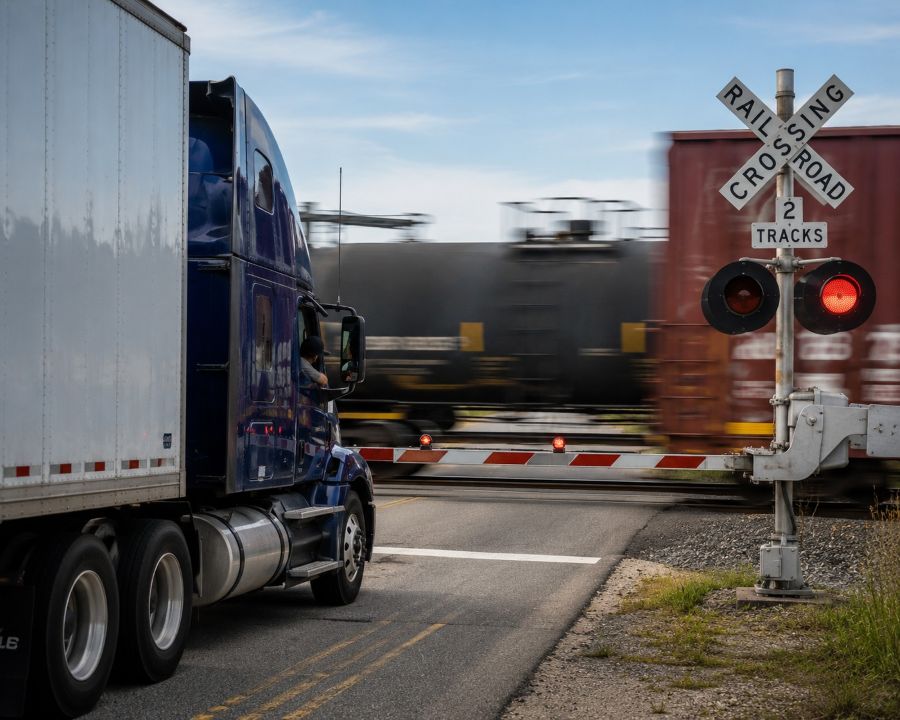
Trains cannot stop quickly. A freight train traveling at highway speed may require more than a mile to come to a complete stop after the brakes are applied. That means the responsibility to avoid a collision falls heavily on the CDL driver approaching the crossing. Commercial vehicles face: reduced stopping time and acceleration, low-clearance trailers that can become stuck, and heavy or hazardous materials cargo. That’s why the Federal Motor Carrier Safety Administration (FMCSA) has strict nationwide regulations for how commercial drivers must approach and cross railroad tracks. If you’re training for your CDL, understanding railroad crossing safety is essential—not just for passing your exam, but for protecting lives and your career.
Know Which CDL Vehicles Must Stop
Under FMCSA regulations (49 CFR §392.10), certain commercial vehicles are required to stop at all railroad crossings, unless exempted. Failing to stop when required can lead to serious violations and possible CDL disqualification. Vehicles that must stop include: passenger-carrying commercial vehicles, school buses, and vehicles transporting hazardous materials requiring placards. Drivers of these vehicles must:
* Stop within **15–50 feet** of the nearest rail
* Look and listen for approaching trains
* Proceed only when safe
Never Stop on the Tracks and Watch for Low Ground Clearance
One of the most important railroad crossing rules: Never enter the crossing unless you can completely clear it. Traffic backups are especially dangerous for large trucks. If traffic is stopped on the other side of the tracks, wait until there is enough room for your entire vehicle to clear safely. Drivers should also avoid shifting gears while crossing railroad tracks. Professional drivers select the proper gear before entering the crossing (to avoid any issues) and maintain steady movement until fully clear.This is vital because getting stuck on the tracks can turn deadly fast.
Certain trailers are at greater risk of getting hung up on raised crossings. High-risk equipment includes: lowboys, car haulers, moving vans with lift gates, long wheelbase tractors, and low-clearance trailers. If you are driving one of these vehicles, approach uneven crossings slowly and at an angle when possible to reduce the chance of bottoming out. Many crossings have warning signs marked: "Low Ground Clearance”. Never ignore them.
Be Extra Careful in Bad Weather or Low Visibility
Rain, snow, fog, or darkness make railroad crossings even more hazardous. In poor conditions:
* Reduce speed
* Increase following distance
* Stay alert for crossing signs and signals
Never rush through a crossing because visibility is poor.
What If Your Truck Gets Stuck?
If your vehicle becomes stuck on the tracks:
- Exit the vehicle immediately
- Move away from the tracks at a 45-degree angle toward the direction the train is coming from
- Locate the blue emergency notification sign near the crossing and call the emergency number posted
- Call 911 immediately
Moving toward the oncoming train direction helps protect you from debris if a collision occurs.
Railroad crossing violations are treated very seriously for CDL holders. Even first offenses can result in temporary CDL disqualification periods. Under federal regulations, drivers can face CDL disqualification for offenses such as:
* Failing to stop when required
* Failing to slow and check tracks
* Driving around gates
* Failing to clear tracks safely
Professional CDL drivers approach every crossing with caution—not assumptions. Even when crossing gates or lights are not activated, CDL drivers still use caution. Always: look both ways, roll down windows if necessary to listen, and watch out for multiple tracks. A second train may be approaching from another direction after the first passes. To be safe, make it a habit to: stop when required, scan ahead early, avoid distractions, watch traffic patterns near tracks, stay patient when traffic backs up, and always make sure there's room to clear the tracks before continuing your journey. Because when you’re operating a commercial vehicle, safety at railroad crossings isn’t just about following the law—it’s about protecting lives every single trip.
At CDL Direct, we don’t just prepare you to pass the exam. Our course is designed to prepare you for real-world situations—inspections, roadside stops, accidents, and the decisions and driving techniques that protect your livelihood.