CDL Direct Blog
Blog posts of '2026' 'July'
Accessories to make your CMV Comfortable
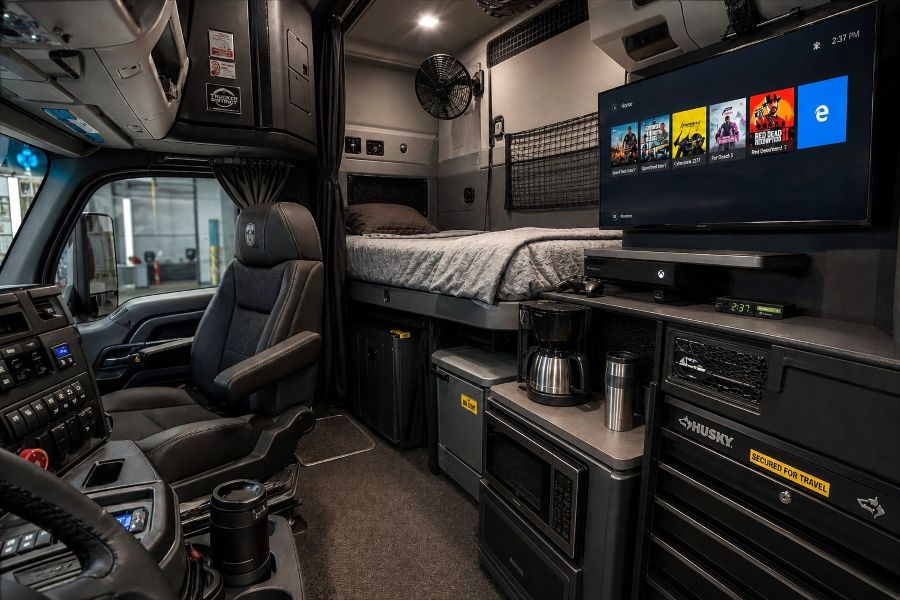
When you're on the road for long hours, you need to be comfortable. Your truck is your "home away from home". While it may cost something to upgrade, even small improvements can go far in making long trips feel shorter. When your rig becomes your office, dining room, bedroom, and your living room, it's important to fill it with practical items that will help you sleep better, stay organized, eat healthier, and reduce fatigue. Here are some of the best comfort accessories recommended by veteran truck drivers, along with important safety considerations.
Get quality sleep!
Some truck drivers say they can actually sleep better in their truck than at home due to some of the accessories they've purchased. Many recommend a memory foam mattress topper, high quality pillows like MyPillow, comfortable sheets, lightweight blankets for summer, and heavy comforters for winter. Blackout curtains can help block sunlight. Earplugs, a white noise machine, a small fan, and or noise-canceling headphones can cancel loud noises allowing you to sleep better even during the day.
Soft LED lighting makes the sleeper more inviting so many drivers install reading lights, LED strip lights, and motion-sensor lights for nighttime. Avoid lighting that reflects on the windshield or that will distract you while the vehicle is in motion.
Keep a comfortable cabin
Lumbar support cushions, cooling seat covers for summer and heated seat cushions for winter, premium truck seats, and heavy-duty suspension seats can help reduce back and hip pain, as well as fatigue and leg soreness. Making sure your seat is properly adjusted will also help improve posture and visibility.
Even with air conditioning, a small fan helps circulate air inside the cabin. This can help you have better airflow, lower humidity, keep you cool while parked, and give you white noise for sleeping. Choose fans designed for vehicle use and secure them well.
A clean cabin can provide a calming atmosphere and reduce allergens and unpleasant odors. Some helpful things to have on hand include: disinfecting wipes, glass cleaner, paper towels, trash bags, hand sanitizer, a small vacuum, and air freshener. Along with keeping the cabin clean, try to keep things organized. Many truck drivers recommend a pen organizer for your sun visor, under-bunk storage bins, car seat organizers, hanging closet organizers, and small containers to keep things close at hand and accessible.
Ensure accessories do not interfere with the mirrors, windows, vents, emergency exits, access to safety equipment, seat belts, airbags, steering, pedals, or driver controls. Keep the walkways and the sleeper area free of clutter to reduce slip and trip hazards.
Stay fresh
Having changes of clothes that fit the weather can go a long way to staying fresh. In winter, consider packing wool socks, thermal underwear, insulated gloves, knit caps, and waterproof boots. You don't want to get caught outside in an emergency without the proper clothing and a change for when you've resumed your ride. In summer, consider moisture-wicking shirts, cooling towels, breathable sleepwear, lightweight shorts and flip-flops for when you're off-duty. If you'll be crossing multiple states with different weather patterns, it may be wise to layer your clothing or bring a variety of different clothes.
Home-cooked meals on the road
Making your own food can give you a feeling of independence on the road, help you eat healthier, and save time. Popular accessories that can help are a 12-volt refrigerator, electric or ice cooler, microwave, Hot Logic oven, 12-volt lunch box stove, crock pot, and coffee maker. Many drivers also like to have simple seasonings on hand so food tastes like it does at home. Just because you are away from home doesn't mean you can't have home-cooked meals.
Safety Tip: Only operate cooking appliances according to the manufacturer's instructions. Avoid overloading electrical circuits, and never leave heating appliances unattended while operating.
Increasing your comfort in your off-duty hours
It's important to be comfortable not just when you're on the road, but also in your off-duty hours. Stretching and doing simple exercises can help reduce stiffness and fatigue, as well as aid your mental health. Some compact fitness gear you can purchase include resistance bands, a yoga mat, foam roller, massage gun, and hand grip exerciser. Even just a few minutes of stretching makes a difference.
Hobbies can also help you reduce stress, combat loneliness, and stay sharp. To make it easier to engage in hobbies on the road, some drivers install a television, video game consoles, and streaming devices. Others bring a laptop, tablet, E-readers, and noise-canceling headphones for more portable options.
Safety Tip: FMCSA regulations prohibit drivers from holding a mobile phone while operating a commercial motor vehicle. Mounts should never obstruct the driver's view of the roadway or vehicle controls. Secure all electronics before driving so they cannot move around the cab.
At CDL Direct, we don’t just prepare you to pass the exam. Our course is designed to prepare you for real-world situations—inspections, roadside stops, accidents, and the decisions and driving techniques that protect your livelihood.
5 Tips to Maximize Fuel Efficiency in a Big Rig
Fuel is one of the biggest operating costs in trucking and fuel prices seem to continue to rise with no end in sight. Whether you are a company driver trying to improve your performance score or an owner-operator watching every dollar, small changes behind the wheel can add up to thousands of dollars in savings each year. A skilled CDL driver knows getting out in front of fuel costs is about driving smarter. Here are some proven fuel-saving habits you can master.
1. Protect Fuel Efficiency Through Proper Maintenance
A fuel-efficient truck is a well-maintained truck. Things you especially want to pay attention to are: dirty air filters, engine warning lights, fuel leaks, exhaust issues, poor tire conditions, and incorrect fluid levels. A driver’s daily inspection can catch small problems before they become expensive repairs or roadside breakdowns.
Maintenance that improves fuel economy shows professionalism, responsibility, and attention to detail— qualities top carriers look for.
2. Plan Ahead
Fuel efficiency and safety go together. Drivers who manage their time correctly are less likely to rush, speed, or make aggressive driving decisions. Experienced drivers plan ahead before they leave the yard and while on the road so they are not waiting until the last second to react. This can include building momentum before climbing hills when safe, avoiding unnecessary gear changes, reducing speed before going downhill to avoid relying heavily on the brakes, and checking weather and traffic conditions before leaving. Good trip planning will also help you avoid wasted miles, unnecessary detours, and fuel-consuming delays.
A professional CDL driver knows that being efficient does not mean pushing limits—it means planning better.
3. Keep Your Tires Properly Inflated
Underinflated tires increase rolling resistance, forcing the engine to work harder. Proper tire maintenance improves fuel economy, handling, and safety. The best way to make sure your tires are working properly is during your pre-trip inspection to check for any damage, leaks, or abnormal wear, and to verify tire pressure according to the manufacturer’s recommendations. If you do notice something unusual, report it before it becomes an issue that affects fuel or even causes a breakdown.
FMCSA requires commercial motor vehicle tires to meet safety standards, including proper condition and inflation requirements under 49 CFR 393.75.
4. Use Modern Technology to Save Fuel
One example of how modern technology can help save fuel is with an idling CMV. You may already know that an idling truck burns fuel, and increases engine hours and maintenance costs. Besides shutting down the engine when permitted and making sure to follow your company policy and local laws on idling, now more than ever you have the opportunity to make use of the modern technology. Auxiliary power units (APUs) can help you stay comfortable in the cabin without requiring you to run the engine. Automatic engine shut down features can also help reduce engine idling.
Here are other examples of modern technology you can utilize to help improve fuel economy on the road:
- Automated manual transmissions (AMTs)
- Adaptive cruise control
- Predictive engine controls
- Telematics and fuel-monitoring systems
- Aerodynamic equipment such as trailer skirts and roof fairings
While many modern trucks include idle-management and other fuel-saving technology, drivers must understand their equipment and follow carrier requirements.
5. Maintain a Steady Speed
One of the easiest ways to improve fuel economy is to avoid unnecessary speed changes. Rapid acceleration, hard braking, and constantly changing speeds force the engine to work harder and burn more fuel. Therefore it’s always best to accelerate smoothly rather than aggressively, maintain a consistent following distance to reduce the need to brake, use cruise control when circumstances allow, and anticipate needs to slow down early on.
Many fleets use driver scorecards that monitor harsh acceleration, braking, and speeding because these behaviors directly affect fuel consumption and vehicle wear.
At CDL Direct, we don’t just prepare you to pass the exam. Our course is designed to prepare you for real-world situations—inspections, roadside stops, accidents, and the decisions and driving techniques that protect your livelihood.
How to Handle a CMV Breakdown
You're driving your big rig along the highway and all of a sudden you hear a loud pop and the steering wheel starts to pull. You remember your training for a blown tire and keep a firm grip on the steering wheel and maintain control until you can safely pull over. But now you have a new problem. Do you change the tire or get help? Whether it's a blown tire, a dead battery, an air leak, or an engine warning light, it's not if your CMV will break down, but when. Here are some tips to keep you safe and reduce down time.
Put Safety First
The moment you realize something is wrong, stay calm and avoid making sudden movements. If possible signal early to alert other drivers, then gradually reduce your speed when safe to do so, and pull completely onto the shoulder. Once safely out of traffic, immediately turn on your hazard flashers and set your emergency brakes. One of the biggest dangers during a breakdown is being struck by another vehicle. Therefore, stay in your seat belt until safe to exit and when exiting, do so on the side away from traffic. If you have to inspect the vehicle or wait for roadside assistance, always be alert to traffic and stay as far away from passing vehicles as possible.
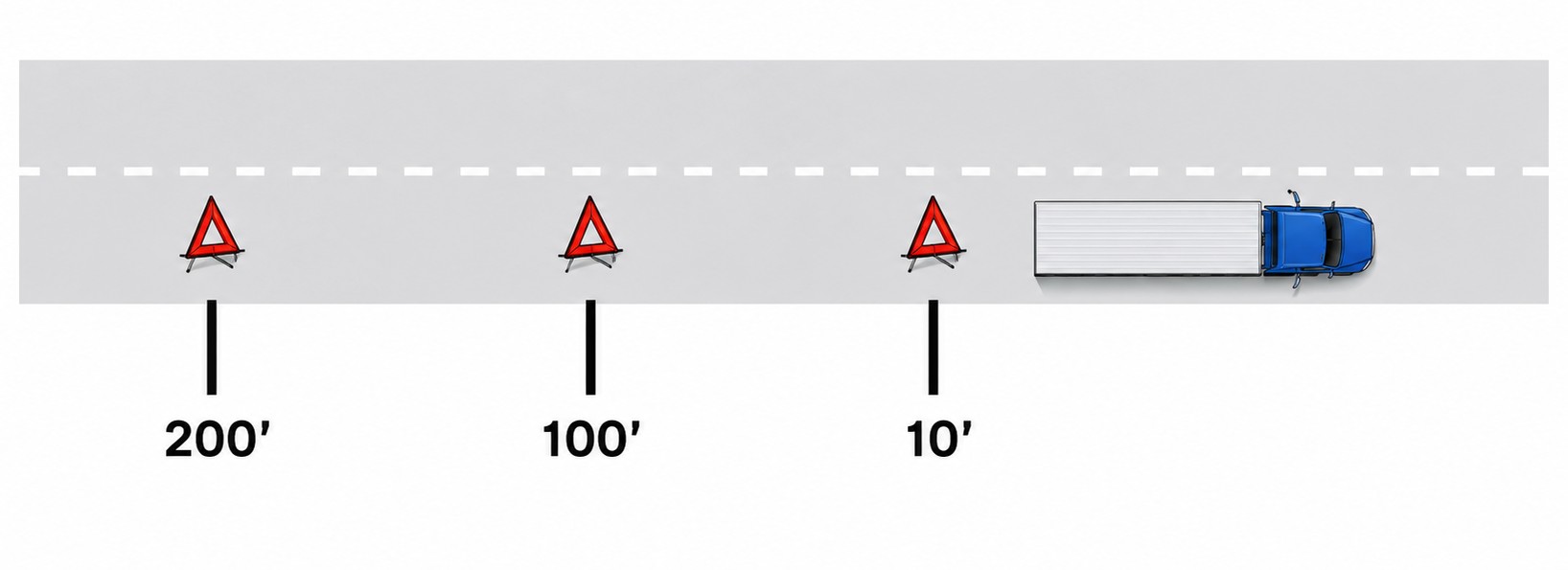
FMCSA regulations require most commercial motor vehicles to place emergency warning devices within 10 minutes. On most divided highways or one-way roadways, place one warning device approximately 10 feet behind the vehicle, one about 100 feet behind, and one about 200 feet behind. On two-way roads, place one approximately 10 feet behind, one about 100 feet behind, and one about 100 feet in front of the vehicle. On hills, curves, or areas with limited visibility, adjust the placement to give approaching traffic adequate warning.
Communicate Your Location Clearly
A driver with more than 16 years of OTR experience recommends making a habit of noting your location every 30 to 50 miles by checking the highway number, mile marker, nearby exits, county roads, cities passed, and major landmarks. Avoid relying only on your satellite location. That way, if you break down, you can give dispatch or roadside assistance a much more accurate location and help roadside assistance reach you more quickly. For example clear directions may sound something like, "I'm approximately 3 miles west of County Road 28 on Interstate 80, parked on the right shoulder."
Many fleets also use GPS and electronic logging systems that can assist dispatch in locating you quickly.
Notify the Right People
Once you're safely stopped contact your dispatcher or fleet manager. Some companies may allow you to make minor repairs yourself, while others may require you to accept assistance for even minor breakdowns, such as changing a windshield wiper or bulb. Therefore, contacting dispatch will allow you to follow your company's breakdown procedures. When talking with them, explain what happened, share your precise location, and describe any warning lights, noises, smells, or visible damage.
Before attempting any repair, know exactly what your company permits.
Carry a Basic Emergency Kit
If allowed to make minor repairs, many experienced CDL drivers keep a small maintenance kit in their truck. This can save your hours of downtime waiting for roadside assistance. Common items include basic tools, screwdrivers, adjustable wrench, socket set, pliers, flashlight with extra batteries, work gloves, safety vest, electrical supplies, spare fuses, replacement bulbs, electrical tape, wire connectors, zip ties, duct and hose tape, spare alternator belt, gear or hub oil, spare trailer light, and basic electrical repair tools. Some drivers carry a 50-ft air hose that connects to the tractor's emergency (red) glad-hand connection (if equipped) for inflating tires. You may also want to keep a gallon of engine oil with your vehicles specifications, a gallon of coolant approved for your engine, and spray grease or lubricant like WD-40.
Remember that temporary repairs are only if allowed by your company and meant to get you safely to a repair facility when permitted—not to replace proper maintenance.
Complete Your Required Inspections
One of the best ways to prevent roadside breakdowns is by performing thorough inspections. A proper pre-trip inspection can help identify problems before you leave the yard, including low tire pressure or damaged tires, fluid leaks, loose hoses, worn belts, inoperative lights, brake issues, and air system leaks. Also, during your inspections or on the road, never ignore unusual engine noises, vibrations, rising engine temperatures, oil pressure warnings, charging system warnings, or burning smells. Reporting these issues early on can help avoid downtime on the road and more expensive repairs later on.
Federal regulations require drivers to be satisfied that the commercial motor vehicle is in safe operating condition before driving.
Know When Not to Repair It Yourself
Many experienced drivers are comfortable replacing a starter, alternator, or other components. However, if the repair involves bigger issues like your brakes, steering, suspension, major engine problems, fuel system issues, or complicated electrical systems, it is safest and often required to wait for qualified maintenance workers. Trying to save time with an unsafe repair can put your job at risk, slow you down even further, and create much bigger problems.
Protect Yourself While Waiting
If it is safe to do so, move well away from traffic while waiting for roadside assistance. Stay visible by wearing a reflective safety vest, especially at night or during poor weather. Never stand between your truck and passing traffic or remain in a position where another vehicle could push your truck into you.
At CDL Direct, we don’t just prepare you to pass the exam. Our course is designed to prepare you for real-world situations—inspections, roadside stops, accidents, and the decisions and driving techniques that protect your livelihood.

CDL Tips for Sharing the Road with Four-Wheelers
There’s a lot of advice out there for four-wheelers on how they should conduct themselves around big rigs. Yet, at times it seems many just don’t get the memo. While it may be frustrating that you can’t control what others do on the road, you do have control over the situation. You can choose to stay calm and patient, recognize hazards early, and make safe driving decisions even if other drivers make mistakes. In fact, your predictable driving can reduce confusion and gives other motorists more time to react. Along those lines, here are some tips to keep yourself and others safe while sharing the road with four-wheelers.
1. Expect Four-Wheelers to Make Mistakes
Many four-wheelers don't understand how commercial vehicles operate or how their actions affect you behind the wheel. Stay positive by not taking their mistakes personal. If you expect four-wheelers to cut you off, tailgate, linger in your blind spots, honk unnecessarily, brake suddenly, change lanes without signaling, and drive aggressively, then you can drive proactively.
Rather than letting the poor decisions of others ruin your day, if you expect the unexpected it can help you stay calm, maintain a safe speed, and focus on preventing crashes—not "teaching another driver a lesson." Defensive driving often means letting someone else's poor decision stay their mistake instead of becoming yours.
2. Stay Focused
No matter how much your phone may seem to be calling your name or you’re feeling hungry behind the wheel, don’t let anything take your eyes and mind off of driving. It’s better to pull over and make a phone call or grab a bite than taking the risks associated with distracted driving. Staying focused allows you to keep your attention where it’s needs to be, on: traffic conditions, your mirrors, road signs, work zones, weather, pedestrians and cyclists, and other vehicles entering from ramps and intersections.
3. Watch Your Blind Spots Constantly
Commercial vehicles have much larger blind spots than four-wheelers. Remember you can stay in control by regularly checking and rechecking your mirrors especially before lane changes, signaling early before changing lanes, and being especially alert for motorcycles and small cars in your line of movement.
The FMCSA recommends checking your mirrors every 8 to 10 seconds while also scanning well ahead of your vehicle for developing hazards. This helps you identify vehicles entering your blind spots before changing lanes or making turns.
4. Leave Plenty of Following Distance
Professional drivers know that space equals safety. A fully loaded tractor-trailer requires much longer to stop than a passenger vehicle. Leaving adequate following distance gives you time to react if traffic suddenly slows.
The FMCSA recommends using a following distance based on vehicle length and increasing that distance in poor weather, heavy traffic, or reduced visibility.
5. Be Patient During Wide Turns
Many passenger vehicle drivers don't realize trucks need additional room to turn safely. Therefore, you can be proactive by signaling well in advance, positioning your vehicle properly, continuously monitoring your mirrors, watching for vehicles trying to squeeze between your truck and the curb, and completing the turn smoothly without rushing. Wide turns are a normal part of operating combination vehicles, and patience helps prevent crashes.
6. Expect Unsafe Merges
One of the most common hazards CDL drivers face is four-wheelers merging too closely in front of your truck. When that happens, your goal is to recreate the space cushion—not to "hold your position." Here are some steps to follow when a car enters your safe cushion:
- Ease off the accelerator if needed.
- Re-establish a safe following distance.
- Avoid sudden braking whenever possible.
- Continue scanning for additional hazards.
At CDL Direct, we don’t just prepare you to pass the exam. Our course is designed to prepare you for real-world situations—inspections, roadside stops, accidents, and the decisions and driving techniques that protect your livelihood.