How to Handle a CMV Breakdown
How to Handle a CMV Breakdown
You're driving your big rig along the highway and all of a sudden you hear a loud pop and the steering wheel starts to pull. You remember your training for a blown tire and keep a firm grip on the steering wheel and maintain control until you can safely pull over. But now you have a new problem. Do you change the tire or get help? Whether it's a blown tire, a dead battery, an air leak, or an engine warning light, it's not if your CMV will break down, but when. Here are some tips to keep you safe and reduce down time.
Put Safety First
The moment you realize something is wrong, stay calm and avoid making sudden movements. If possible signal early to alert other drivers, then gradually reduce your speed when safe to do so, and pull completely onto the shoulder. Once safely out of traffic, immediately turn on your hazard flashers and set your emergency brakes. One of the biggest dangers during a breakdown is being struck by another vehicle. Therefore, stay in your seat belt until safe to exit and when exiting, do so on the side away from traffic. If you have to inspect the vehicle or wait for roadside assistance, always be alert to traffic and stay as far away from passing vehicles as possible.
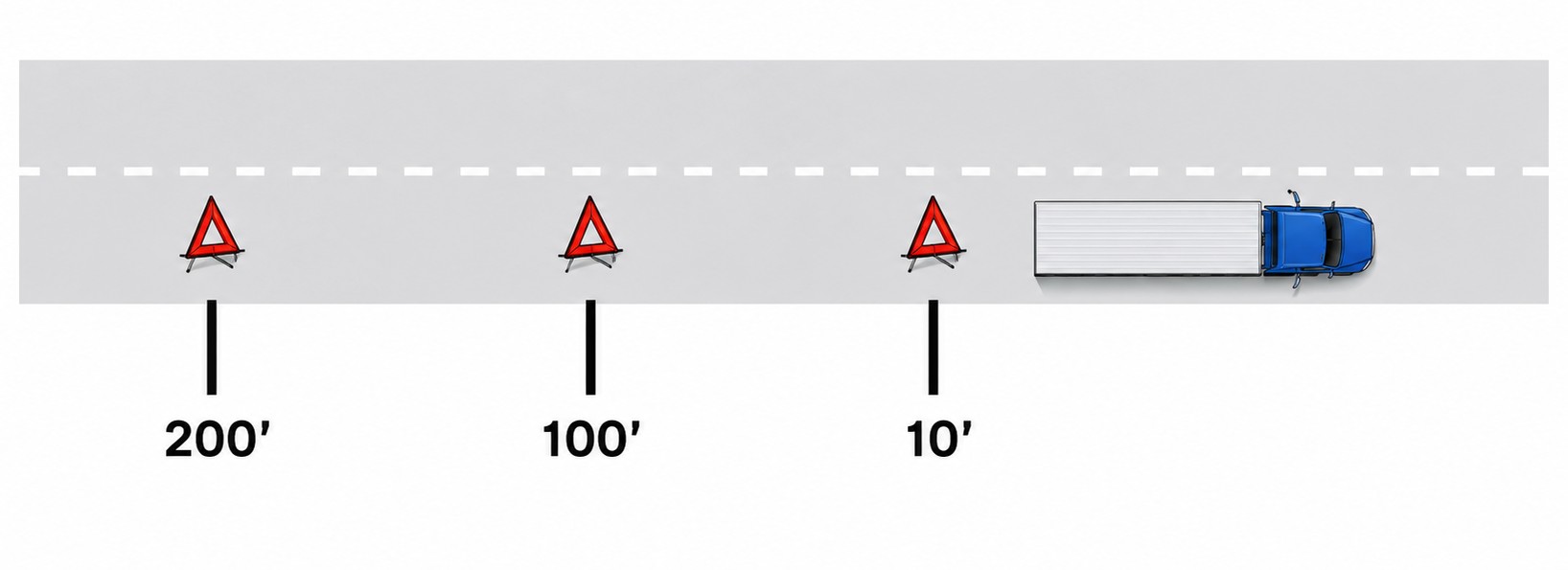
FMCSA regulations require most commercial motor vehicles to place emergency warning devices within 10 minutes. On most divided highways or one-way roadways, place one warning device approximately 10 feet behind the vehicle, one about 100 feet behind, and one about 200 feet behind. On two-way roads, place one approximately 10 feet behind, one about 100 feet behind, and one about 100 feet in front of the vehicle. On hills, curves, or areas with limited visibility, adjust the placement to give approaching traffic adequate warning.
Communicate Your Location Clearly
A driver with more than 16 years of OTR experience recommends making a habit of noting your location every 30 to 50 miles by checking the highway number, mile marker, nearby exits, county roads, cities passed, and major landmarks. Avoid relying only on your satellite location. That way, if you break down, you can give dispatch or roadside assistance a much more accurate location and help roadside assistance reach you more quickly. For example clear directions may sound something like, "I'm approximately 3 miles west of County Road 28 on Interstate 80, parked on the right shoulder."
Many fleets also use GPS and electronic logging systems that can assist dispatch in locating you quickly.
Notify the Right People
Once you're safely stopped contact your dispatcher or fleet manager. Some companies may allow you to make minor repairs yourself, while others may require you to accept assistance for even minor breakdowns, such as changing a windshield wiper or bulb. Therefore, contacting dispatch will allow you to follow your company's breakdown procedures. When talking with them, explain what happened, share your precise location, and describe any warning lights, noises, smells, or visible damage.
Before attempting any repair, know exactly what your company permits.
Carry a Basic Emergency Kit
If allowed to make minor repairs, many experienced CDL drivers keep a small maintenance kit in their truck. This can save your hours of downtime waiting for roadside assistance. Common items include basic tools, screwdrivers, adjustable wrench, socket set, pliers, flashlight with extra batteries, work gloves, safety vest, electrical supplies, spare fuses, replacement bulbs, electrical tape, wire connectors, zip ties, duct and hose tape, spare alternator belt, gear or hub oil, spare trailer light, and basic electrical repair tools. Some drivers carry a 50-ft air hose that connects to the tractor's emergency (red) glad-hand connection (if equipped) for inflating tires. You may also want to keep a gallon of engine oil with your vehicles specifications, a gallon of coolant approved for your engine, and spray grease or lubricant like WD-40.
Remember that temporary repairs are only if allowed by your company and meant to get you safely to a repair facility when permitted—not to replace proper maintenance.
Complete Your Required Inspections
One of the best ways to prevent roadside breakdowns is by performing thorough inspections. A proper pre-trip inspection can help identify problems before you leave the yard, including low tire pressure or damaged tires, fluid leaks, loose hoses, worn belts, inoperative lights, brake issues, and air system leaks. Also, during your inspections or on the road, never ignore unusual engine noises, vibrations, rising engine temperatures, oil pressure warnings, charging system warnings, or burning smells. Reporting these issues early on can help avoid downtime on the road and more expensive repairs later on.
Federal regulations require drivers to be satisfied that the commercial motor vehicle is in safe operating condition before driving.
Know When Not to Repair It Yourself
Many experienced drivers are comfortable replacing a starter, alternator, or other components. However, if the repair involves bigger issues like your brakes, steering, suspension, major engine problems, fuel system issues, or complicated electrical systems, it is safest and often required to wait for qualified maintenance workers. Trying to save time with an unsafe repair can put your job at risk, slow you down even further, and create much bigger problems.
Protect Yourself While Waiting
If it is safe to do so, move well away from traffic while waiting for roadside assistance. Stay visible by wearing a reflective safety vest, especially at night or during poor weather. Never stand between your truck and passing traffic or remain in a position where another vehicle could push your truck into you.
At CDL Direct, we don’t just prepare you to pass the exam. Our course is designed to prepare you for real-world situations—inspections, roadside stops, accidents, and the decisions and driving techniques that protect your livelihood.