Hazmat Cargo - How to Avoid the Risks and Hazards
Hazmat Cargo — How to Avoid the Risks and Hazards
Spilt milk can be an embarrassing mess to clean up. On the other hand, hazardous material spills can be deadly! That is why hauling hazardous materials is one of the most demanding jobs in the trucking industry. Hazmat drivers often earn higher pay and have access to specialized opportunities, but they also carry a greater level of responsibility. Hazmat CDL drivers must follow strict nationwide regulations set by federal agencies. Here’s what every CDL driver should know about safely reducing risks while hauling Hazmat cargo.
What Counts as Hazardous Materials?
Hazardous materials (Hazmat) include substances that could pose a risk to: health, safety, property, and the environment. Common Hazmat loads include: gasoline and diesel fuel, propane, industrial chemicals, corrosive liquids, explosives, radioactive materials, as well as certain batteries and lithium products.
Drivers hauling placarded Hazmat loads must hold: a valid CDL, a Hazmat endorsement (HME), and TSA background clearance.
Pre-Trip Inspections Matter Even More with Hazmat
Every CDL driver should perform pre-trip inspections but Hazmat loads require extra attention. Check the tires and brakes, lights and reflective markings, coupling systems and hoses, placards and markings, and cargo securement. Inspect carefully for leaks or unusual odors. Even a small equipment issue can become a major emergency when hazardous materials are involved.
Understand Placards and Shipping Papers
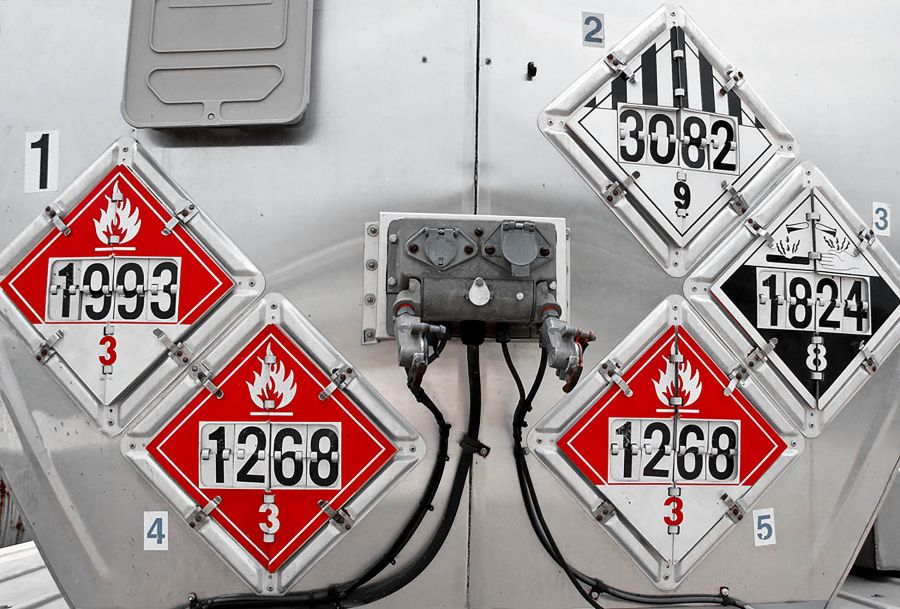
Hazmat drivers must know exactly what they’re hauling. Federal law requires properly placards displayed on the vehicle as well as accurate shipping papers that should be readily visible or properly stored in the driver-side door holder. Shipping papers contain critical information such as the hazard class, UN/NA identification numbers, and emergency response information. Why is this so important? Because emergency responders rely on this information if there is a crash or spill.
Railroad Crossing Requirements
Hazmat drivers transporting certain placarded loads must stop at railroad crossings unless an exception applies. Remember to also look and listen for trains that may be coming.
Smoking? Nope!
Never smoke near Hazmat cargo, loading areas, or fueling operations. Open flames and sparks can ignite flammable vapors instantly.
Stay Alert
Federal regulations prohibit CDL drivers from texting or using handheld mobile phones while operating a CMV. When hauling Hazmat, even a few seconds of distraction can have catastrophic consequences.
Route Planning
Some roads, tunnels, and bridges restrict hazardous materials. Therefore, never rely entirely on standard GPS systems. Truck-specific routing is essential. Professional Hazmat drivers plan routes carefully before departure, follow approved Hazmat routes when required, watch for restricted tunnels and urban areas, and monitor weather and road closures.
Safe Parking Rules for Hazmat Loads
Hazmat CDL drivers should remain alert for suspicious activity, cargo tampering, and unauthorized access attempts. Security is a major part of Hazmat transportation.
Certain hazardous materials cannot simply be parked anywhere. Always follow your carrier's policies, local restrictions, and federal regulations. When possible, use secure, well-lit truck parking areas. Depending on the cargo, parking near open flames or populated areas may be restricted and certain high-risk hazardous materials may require attendance or additional parking restrictions.
Know What to Do During an Emergency
If despite your best efforts a crash or spill occurs:
1. Secure the area safely
2. Call 911 immediately
3. Notify your carrier
4. Reference emergency response information from shipping papers
5. Avoid touching or inhaling spilled substances unless you are properly trained and equipped
At CDL Direct, we don’t just prepare you to pass the exam. Our course is designed to prepare you for real-world situations—inspections, roadside stops, accidents, and the decisions and driving techniques that protect your livelihood.