Driving a Big Rig in Wind and Bad Weather: Safety Tips for CDL Drivers
Driving a Big Rig in Wind and Bad Weather: Safety Tips for CDL Drivers
One driver recalls, "I remember being high in the mountains during a time a stretch of mountain road was experiencing dangerous wind gusts. Most cars had already pulled over to the shoulder to wait it out. But one big rig decided to keep moving. Not long after entering the exposed section of road, a powerful gust caught the trailer and pushed the entire truck onto its side. The driver climbed out and struggled to walk to safety while the wind nearly knocked him over too. This could have been especially dangerous as the road dropped off on both sides. Thankfully, he made it to safety okay, although no doubt a bit shooken up and disappointed he had to leave his rig behind."
For CDL drivers, situations like this are a reminder that weather is one of the biggest hazards on the road. Strong winds, heavy rain, snow, and ice can turn a routine drive into a dangerous one fast. Knowing how to handle these conditions—and when to stop—is a key skill every professional driver must learn. Here are important safety tips every CDL driver should know.
Understand How Wind Affects Big Rigs
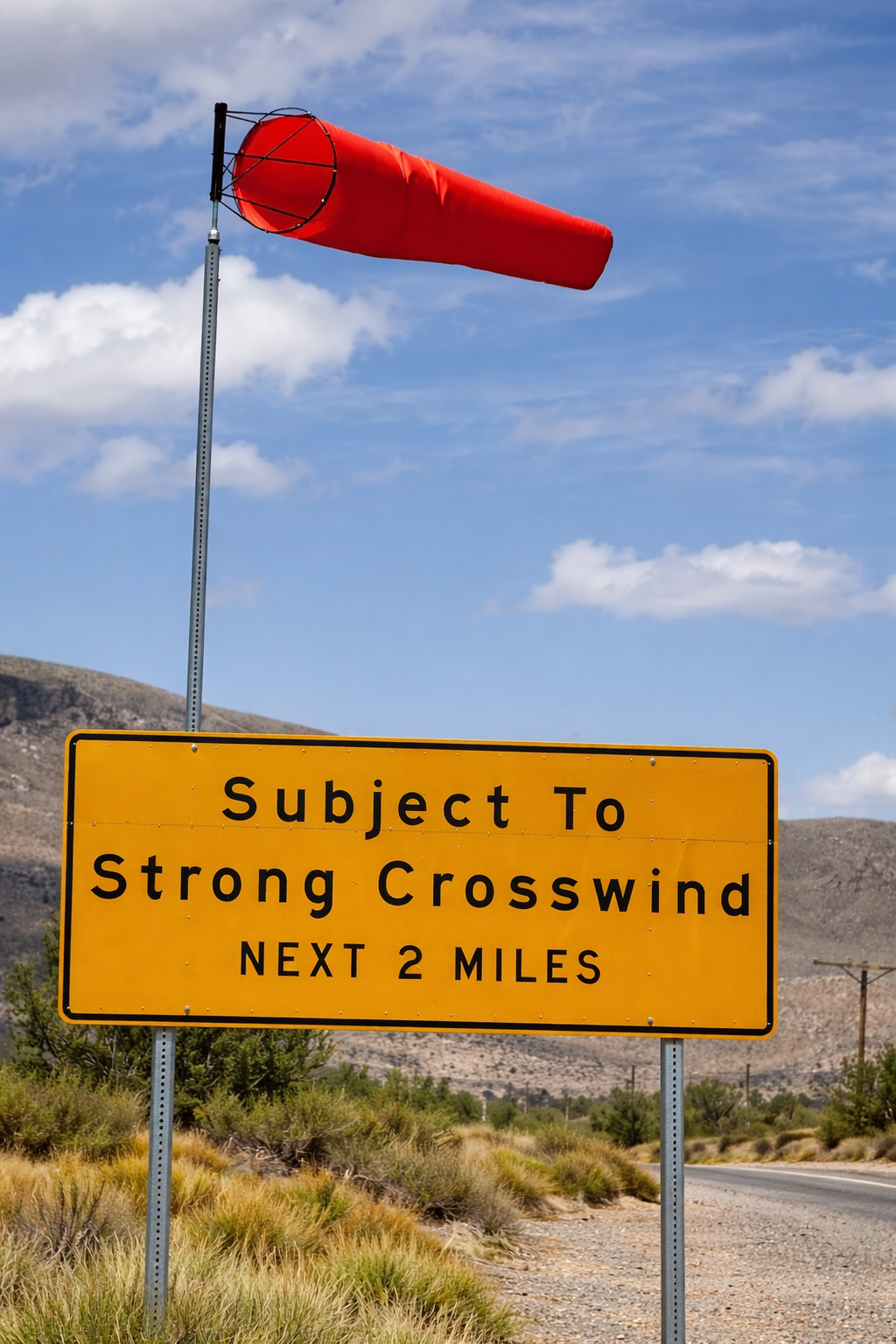
Large trucks have a lot of surface area, especially with empty or lightly loaded trailers. That makes them vulnerable to crosswinds. Strong gusts can:
- Push trailers into another lane
- Cause steering instability
- Increase the risk of a rollover, particularly on bridges, open highways, and mountain passes
High-profile vehicles are especially vulnerable when winds exceed 40–50 mph, and many states post warnings or restrictions when gusts become dangerous. Professional drivers constantly monitor weather forecasts and wind advisories before and during a trip.
Slow Down and Increase Following Distance
Bad weather means less traction and longer stopping distances. Safety guidelines from the Federal Motor Carrier Safety Administration recommend reducing speed in hazardous conditions and increasing following distance. In rain, snow, or wind:
- Reduce speed below the posted limit if necessary.
- Increase following distance to at least 7–8 seconds or more.
- Brake earlier and more gradually.
- Avoid sudden steering movements.
- Slower, smoother driving gives you time to react if a gust pushes the trailer or traffic slows suddenly.
Watch for High-Risk Areas
As the above real-life experience illustrates, certain areas are much more dangerous during high winds. These areas often create sudden wind tunnels or powerful crosswind bursts. Keep both hands firmly on the wheel and be ready for sudden gusts. CDL drivers should be especially cautious on:
- Bridges and overpasses
- Mountain passes and ridgelines
- Open plains or desert highways
- Gaps between buildings in cities
Be Extra Careful with Empty Trailers
An empty or lightly loaded trailer is more likely to be affected by wind. Without cargo weight, strong gusts can push the trailer sideways much easier. Experienced drivers treat empty trailers with extra respect when the wind picks up. Drivers hauling empty trailers should:
- Reduce speed further than normal.
- Avoid exposed highways during wind advisories.
- Be especially cautious while passing other vehicles.
Adjust for Rain, Snow, and Ice
Bad weather isn’t just about wind. Rain and winter conditions create additional hazards. Black ice is especially dangerous because it’s nearly invisible. Bridges and shaded areas freeze first. Drivers should:
- Turn on headlights during reduced visibility.
- Avoid cruise control in slippery conditions.
- Watch for hydroplaning during heavy rain.
- Reduce speed drastically on snow or ice.
Know When to Pull Over
One of the hardest lessons for new drivers is knowing when not to keep driving. If winds become too strong or visibility drops too low, the safest choice may be to pull over in a safe area such as a: truck stop, rest area, or a wide shoulder away from traffic. If parked, aim your tractor trailer into the wind.
Professional drivers, and their companies, understand that delayed freight is better than a wrecked truck.
Plan Ahead with Weather and Route Awareness
Modern trucking relies heavily on planning, as preparation is one of the best defenses against bad weather. Many fleets now use real-time weather monitoring to help drivers avoid dangerous conditions. Before starting a trip, drivers should check:
- Weather forecasts along the route
- Wind advisories or road restrictions
- Mountain pass conditions
- Alternate routes if needed
At CDL Direct, we don’t just prepare you to pass the exam. Our course is designed to prepare you for real-world situations—inspections, roadside stops, accidents, and the decisions and driving techniques that protect your livelihood.