How to Navigate Roundabouts
How to Navigate Roundabouts
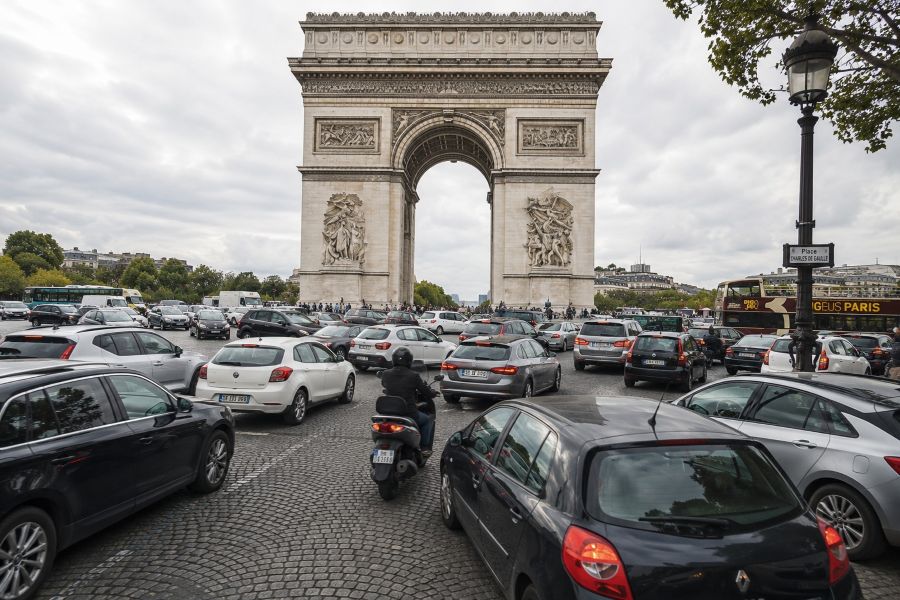
For many drivers, the word roundabout may bring to mind the famously chaotic traffic circle surrounding the Arc de Triomphe in Paris, where 12 major avenues meet. Take heart! That is an extreme example—and it is not the same as the modern roundabouts you will encounter on U.S. roads.
Note the following steps to take when approaching a roundabout.
Slow down and observe vehicles around you
- Reduce speed as you approach the roundabout. Watch for pedestrians in the crosswalk, bicyclists, traffic signs, pavement markings, and vehicles already in the roundabout.
- Look to your left for traffic already circling the roundabout. Look for road signs and lane markings showing which exit you need to be in.
- Communicate to other drivers by using your car's turn signals.
- Yield if necessary. If the roundabout is clear and no pedestrian or other road user requires you to yield, you do not need to stop. Proceed at a safe speed.
Yield to traffic already in the roundabout
Yield the right-of-way to vehicles already circulating in the roundabout.
Choose your lane before entering
At a multilane roundabout, use the signs and pavement arrows to choose the correct lane for your destination. The right lane is often used for a right turn or straight movement, while the left lane may be used for straight or later exits. However, lane assignments vary, so always follow the posted signs and pavement markings.
Stay in your lane
Stay in your lane while traveling through the roundabout. Do not change lanes unless the roundabout's markings direct or permit you to do so and the maneuver can be made safely. If you realize you are in the wrong lane, follow that lane rather than making a sudden lane change.
Exit carefully
- Check your mirrors and blind spots.
- Use your right turn signal as you prepare to exit the roundabout so other road users know where you intend to leave. Follow any additional signaling requirements in your state.
- Watch for pedestrians, cyclists, and vehicles alongside you.
- Leave the roundabout smoothly without braking suddenly.
Caution near trucks
Give large vehicles extra room. Trucks and buses may need more than one lane or may use the raised truck apron around the center island. Never drive alongside a large truck through a roundabout.
Why even use roundabouts?
Roundabouts can improve both safety and traffic flow. Their curved design encourages drivers to slow down, while one-way circulation reduces the number of places where vehicles can cross paths. This greatly reduces the risk of severe head-on and angle crashes that can occur at traditional intersections. Because drivers can often enter without coming to a complete stop when traffic is clear, roundabouts can also reduce delays, idling, and fuel use. That's why you see more and more roundabouts in the United States.
At NHSA, our goal is to provide online driver education courses that equip all drivers with what they need to be safe drivers. Whether you are a teen seeking a learner’s permit, or an adult driver seeking a basic driver safety course, check us out online to see what courses are available in your state!