How to Pass a DOT Roadside Inspection as a CDL Driver
How to Pass a DOT Roadside Inspection as a CDL Driver
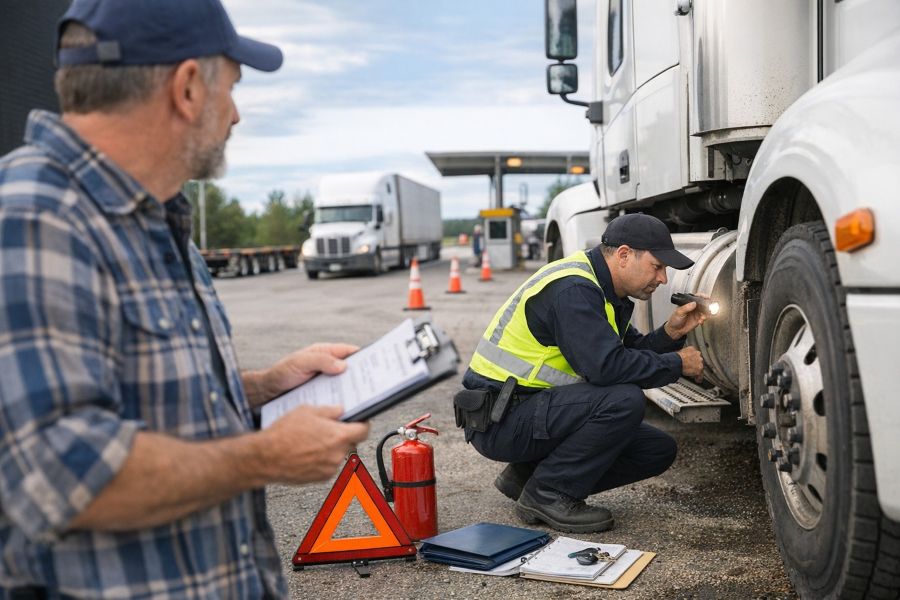
The purpose of a DOT roadside inspection is to keep roads safe by ensuring commercial motor vehicles (CMVs) and drivers meet federal safety standards. By removing unsafe commercial vehicles from the road, accidents and loss of life is greatly reduced. So how can you contribute to safety on the road? If you know your equipment, stay compliant, and remain professional, passing a DOT roadside inspection will be a breeze.
Pre-Trip Inspections and Maintenance
Keeping your CMV in safe working condition is one of your most important responsibilities.
- Perform pre-trip and post-trip inspections.
- Review and sign your Driver Vehicle Inspection Report (DVIR).
- Focus on High-Risk Violation Areas.
Inspectors frequently place vehicles Out-of-Service (OOS) for:
- Brakes (out of adjustment, air leaks, worn components)
- Tires (low tread depth, damage, improper inflation)
- Lights (inoperative or missing lamps/reflectors)
- Cargo securement (loose or improperly tied-down loads)
- Suspension & steering components
Also ensure: emergency equipment is present (fire extinguisher, triangles, and fuses if applicable), there are no air or fluid leaks, and that you have no cracked frames or major structural issues.
While cleanliness is not a formal requirement, it helps make inspection points easier to access and demonstrates professionalism and attention to detail. A well-maintained truck can contribute to a smoother inspection, but compliance—not appearance—is what determines the outcome.
Fact: Brake violations are consistently the #1 cause of OOS orders during inspections.
Have Documentation Ready
Be prepared to provide the following:
- Commercial Driver’s License (CDL)
- Medical Examiner’s Certificate (Med Card)
- Record of Duty Status (ELD or logbook)
- Vehicle registration
- Proof of insurance
- Annual/periodic inspection report
- IFTA credentials (if applicable, electronic or paper)
- Shipping papers / Bill of Lading
- Current day and previous 7 days (if operating under HOS logging requirements)
- Logs must be accurate and up to date
- Additional (if applicable)
- Hazardous materials paperwork
- Skill Performance Evaluation (SPE certificate)
- Lease agreement (owner-operators)
Fact: Logbook/ELD violations and form & manner errors are among the most common citations.
During the Inspection: Stay Professional
Your attitude won’t override violations—but it does affect the interaction. Best practices include:
- Follow instructions carefully.
- Keep your seatbelt fastened until told otherwise.
- Answer questions clearly and honestly.
- Avoid arguing during the inspection.
If you are aware of a minor issue, being upfront can help build trust. If the inspector knows you are aware of the issue and working to fix it, they may show leniency when possible. However, be aware, inspectors must still enforce OOS criteria when applicable and necessary.
Last Word
Passing a DOT roadside inspection comes down to a safe and well maintained vehicle, accurate and complete documentation, and professional conduct. Do those consistently, and inspections become routine instead of stressful.
At CDL Direct, we don’t just prepare you to pass the exam. Our course is designed to prepare you for real-world situations—inspections, roadside stops, accidents, and the decisions and driving techniques that protect your livelihood.