July is National Picnic Month - Tips for Drivers
July is National Picnic Month - Tips for Drivers
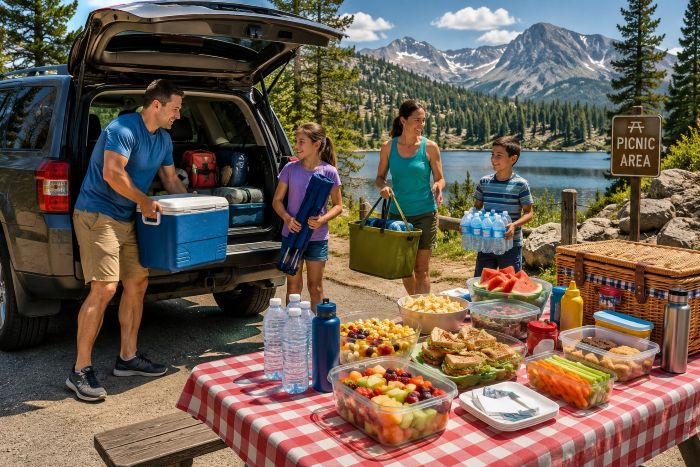
July is National Picnic Month, which means millions of people will pack sandwiches, fruit, potato salad, chips, a cooler full of tasty beverages, and at least one item that mysteriously leaks before they arrive. Some bring everything in the fridge. Others just toss some trailmix in their backpack and fill up a water bottle. No doubt you have your own picnicing style, complete with your favorite foods and your own brand of relaxation.
Whether you're heading to a neighborhood park, a scenic overlook, a river or lake, or a national park, here are a few driving tips to make the day safe and enjoyable.
Pack your vehicle wisely
A cooler sliding around the cargo area may not seem like a big deal—until you make a quick stop and hear ominous noises as everything shifts forward. Secure your coolers, folding chairs, grills, and sports equipment so they don't become dangerous projectiles during sudden braking.
Bring water! Summer weather often includes high temperatures. Make sure that you load up plenty of water to stay hydrated!
Watch for crowded parking areas
Picnic destinations often have busy parking lots filled with excited families, children, bicyclists, dogs, and people carrying their gear for a fun day outdoors.
Drive slowly and be patient. Someone may suddenly step out from between parked vehicles, and children may not always remember to look before running toward a playground.
National parks have special challenges
Many people visit national parks during July, and the roads can be very different from city streets. Narrow lanes, sharp curves, steep grades, and limited shoulders require extra attention. Wildlife may also appear without warning. Never stop in the middle of the road just to take a photo if it creates a hazard for other drivers.
The speed limit isn't there to ruin your vacation. It's there because a 700-pound elk doesn't always check for traffic before crossing the road!
Stay inside your vehicle when required, obey park rules, and never feed wildlife. Animals that become dependent on people often end up creating dangerous situations for everyone.
Prepare your vehicle and tell someone where you are going
Before heading out, check your fuel level, tire pressure, engine oil, coolant, and windshield washer fluid. Cell service can be limited in many recreation areas, so it's also smart to carry water, a flashlight, a first-aid kit, and a paper map as a backup to your GPS.
If you're traveling a long distance, let someone know where you're going and when you expect to return.
Have a safe trip, enjoy the fresh air, and share your chips!
At NHSA, our goal is to provide online driver education courses that equip all drivers with what they need to be safe drivers. Whether you are a teen seeking a learner’s permit, or an adult driver seeking a basic driver safety course, check us out online to see what courses are available in your state!