Big Rigs - Nighttime Driving
Big Rigs - Nighttime Driving
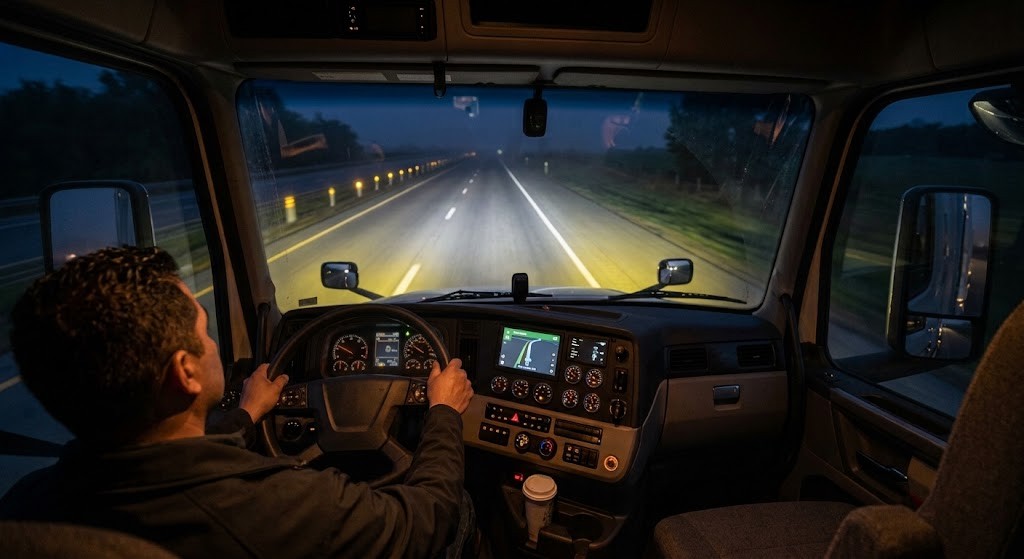
There are both rewards and challenges for nighttime driving as a CDL driver. You may prefer driving when the roads are less crowded, you may get higher pay, experience faster turnaround times, and have zero-delays. While these rewards are very attractive, they aren’t the only consideration for nighttime driving.
Challenges include reduced visibility, greater fatigue risks, glare, and more difficulty spotting hazards. For CDL drivers, learning how to safely operate a big rig after dark is an essential professional skill. The following preparation and habits can help make nighttime driving safer, so you can enjoy the rewards without falling victim to the pitfalls.
1. Start With Your Lights
Federal regulations require commercial motor vehicles to have specific lamps and reflective devices, and drivers cannot operate a CMV when required lamps or reflective material are obscured by dirt, cargo, or other equipment. Make it a habit to check your headlights, taillights, brake lights, turn signals, clearance lights, and reflective devices, before heading out. When cleaning your headlights, mirrors, windshield, and camera lenses, keep in mind, dirt, bugs, and streaks can make nighttime glare worse and reduce visibility.
Pro tip: Keep dashboard lights dimmed to maximize outer night-vision responsiveness.
2. Slow Down for What You Can See
At night, you simply cannot see as far ahead as you can during the day. Your speed should allow you enough time and distance to recognize a hazard and react safely. FMCSA reminds drivers that large trucks have long stopping distances and that drivers should operate at a safe speed for the road, weather, and traffic conditions and not just at the posted speed limit.
Pro tip: Standard low-beam headlights project roughly 250 feet. At 65 mph, a fully loaded 80,000 lb tractor-trailer requires over 500 feet to stop. Therefore, keep extra space around your trailer and never outrun your headlights.
3. Stay Alert to Fatigue
Night driving can work against your body's natural sleep cycle. FMCSA identifies the period between midnight and 6 a.m. as a time when many people are naturally more drowsy and less alert. Know the warning signs, including frequent yawning, heavy eyes, blurred vision, wandering thoughts, or difficulty staying focused. If you become too tired to drive safely, find a safe place to stop and rest. Some may try turning up the radio or opening a window to stay awake, but these cannot substitute for sleep.
Pro tip: Maintain strict daylight sleeping habits with blackout curtains and consistent sleep hygiene.
4. Know Your Hours of Service
Night driving does not change the federal Hours-of-Service limits. For most property-carrying CDL drivers, HOS rules limit driving time and require qualifying off-duty periods and breaks. Your ELD records your driving and duty time, but you are still responsible for planning your trip and staying within the applicable limits. While these rules may seem to hold you back, they are designed help drivers get the rest needed to remain alert and keep you and others safe.
Pro tip: Plan ahead for fuel, rest breaks, and safe parking. Don't wait until you're almost out of available hours to start looking for a place to stop.
5. Watch for Nighttime Hazards
After dark, hazards can appear with less warning. Watch carefully for pedestrians, cyclists, wildlife, disabled vehicles, work zones, and drivers who may be impaired or fatigued. FMCSA recommends regularly checking mirrors and looking ahead for developing traffic problems, work zones, and other hazards. Make sure to give yourself extra following distance so you have more time to react.
Pro tip: Many newer trucks have thermal night-vision sensors to give night drivers maximum situational awareness.
6. Keep Distractions Out of the Cab
Nighttime requires even more concentration. Set your GPS and route before moving, put away your phone, and avoid activities that take your attention away from driving. Federal regulations prohibit commercial drivers from texting while driving and restrict the use of handheld mobile phones.
Pro tip: If something needs your attention, pull over safely before dealing with it.
At CDL Direct, we don’t just prepare you to pass the exam. Our course is designed to prepare you for real-world situations—inspections, roadside stops, crashes, and the decisions and driving techniques that protect your livelihood.