CDL Direct Blog
Blog posts of '2026' 'November'
Know Your Clearance Before the Bridge Reminds You
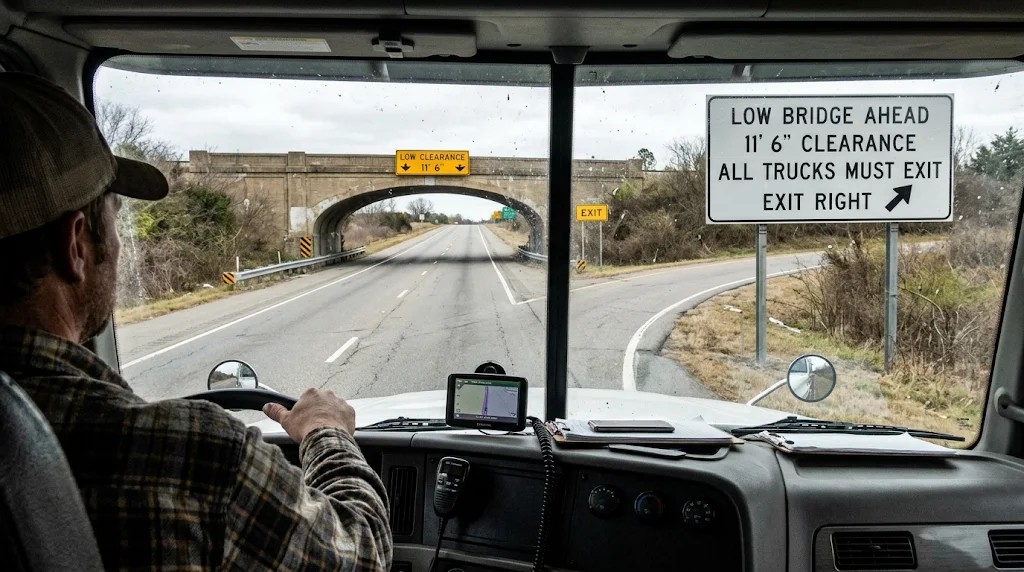
Most of us have seen it at some point on a highway or side road: a truck that tries to fit beneath a bridge but gets stuck or does damage. A missed height restriction can damage a truck or the bridge, destroy cargo, block traffic, and put lives at risk. On top of everything else, it can cost you your job. The good news? With the right measurements, route-planning tools, and habits, many of these situations can be avoided.
1. Know the Actual Height of Your Truck
Before hitting the road, know the total height of your vehicle and load. Rather than relying on a standard truck height or assuming every trailer is the same, the best practice is to measure from the ground to the highest point of the loaded vehicle. Make sure to account for roof-mounted equipment, antennas, refrigeration units, and other accessories. If you make changes to your trailer or equipment, it's best to recheck the height to make sure the height hasn't changed as well. Remember, a few inches can make the difference between clearing a bridge and striking it.
Make sure your truck's height information is accurate in your GPS profile. However, never assume your GPS knows whether your truck can fit.
2. Use Truck-Specific GPS and Navigation Apps
A regular car GPS may send you down roads that are unsuitable or prohibited for commercial vehicles. Therefore, make it a habit to use navigation designed for trucks and enter your actual vehicle dimensions, weight, axle information, trailer configuration, and hazmat details when applicable. Here are some options worth exploring:
- Hammer Truck GPS: Offers truck-specific routing based on vehicle dimensions, weight, load, and trailer configuration. It also supports offline maps.
- Trucker Path: Provides truck-safe routing and information about low bridges, weight restrictions, and truck-restricted roads. Its route-checking tools also incorporate driver-reported restrictions.
- CoPilot Truck: Uses vehicle dimensions and road restrictions to help avoid unsuitable routes, including low-clearance bridges and truck-restricted roads.
- Garmin dēzl: Dedicated truck navigation devices allow drivers to create vehicle profiles and route around known restrictions based on entered vehicle characteristics.
Keep in mind that app information can be outdated and temporary restrictions may not appear immediately. Use these tools to help plan your route, but never let them replace road signs or your own judgment..
3. Check Official Road Information Before You Go
Your route may cross several states, each with different truck restrictions. Before departure, check local DOT websites for bridge clearance information and road restrictions; consult 511 travel information for current road conditions, closures, and detours; and review local truck-route maps, especially when traveling through cities. Your dispatcher or carrier can also provide useful information about low bridges, restricted roads, and approved routes, especially when you’re traveling an unfamiliar route.
Under FMCSA law, commercial motor vehicles must follow the applicable laws, ordinances, and regulations of the jurisdictions where they operate. That includes state and local road restrictions.
4. What Experienced Drivers Recommend
Seasoned truckers emphasize the need for a few habits that technology alone cannot replace.
- Double-check your route. Some drivers compare information from two truck-specific navigation tools rather than trusting just one.
- Use satellite views. Looking at an unfamiliar delivery entrance or road ahead of time can help identify tight turns and potential trouble spots.
- Ask other drivers. Experienced drivers, dispatchers, and local drivers may know about problem bridges or difficult approaches that aren't obvious on a map.
- Pay attention to signs. Never ignore a posted clearance warning just because your GPS says the road is safe.
- Don't force a bad route. If you're unsure, stop somewhere safe and legal, then contact your dispatcher or find a verified alternative.
At CDL Direct, we don’t just prepare you to pass the exam. Our course is designed to prepare you for real-world situations—inspections, roadside stops, accidents, and the decisions and driving techniques that protect your livelihood.
Essential Took Kits for the CDL Driver
"If I only had a screwdriver!"
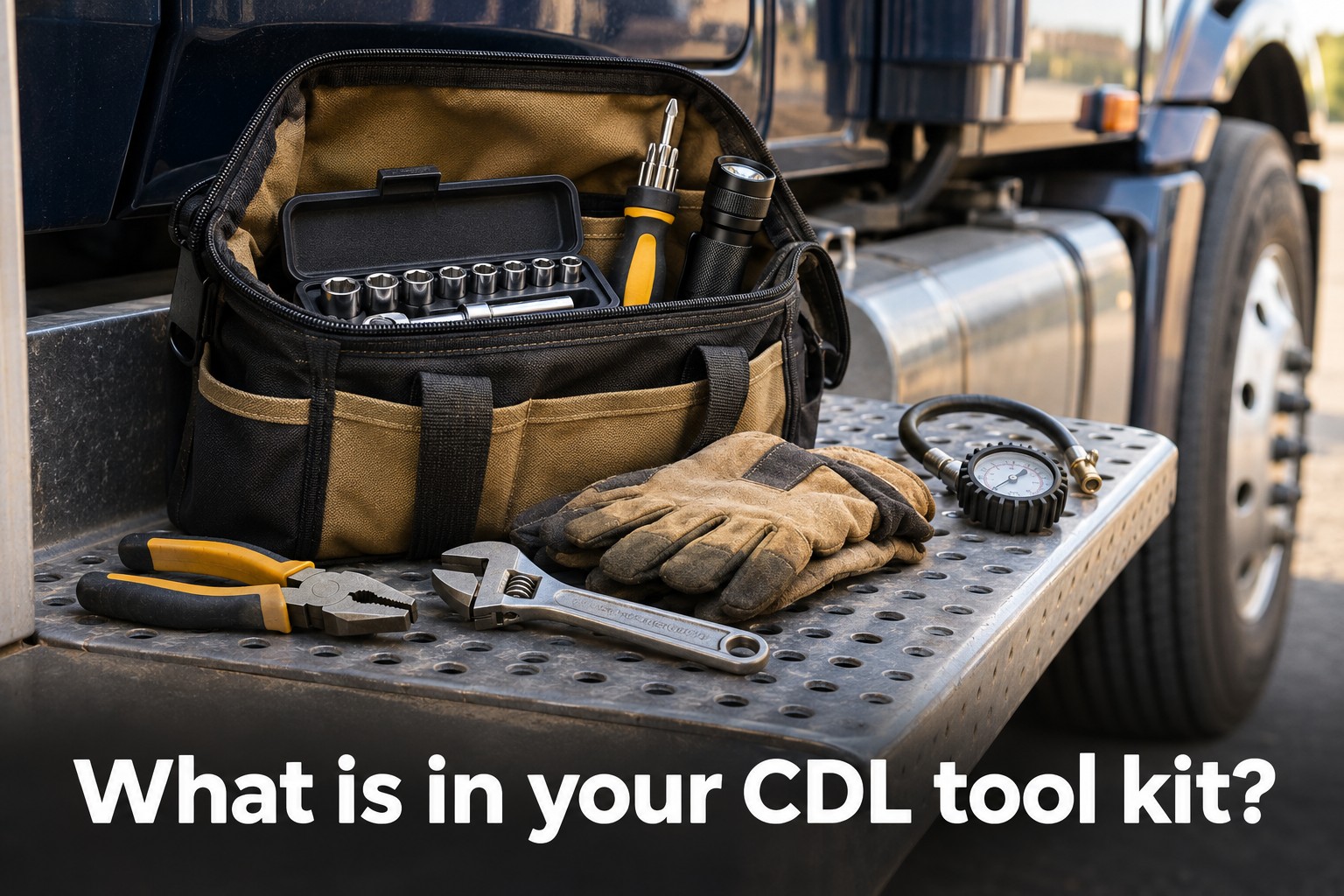
Whether you're a new CDL holder or an experienced driver, having the right tools in your truck can make life on the road a lot easier. A loose mud flap, a hard-to-reach light, or a minor problem inside the cab can become an unnecessary delay if you aren't prepared. You don't need to carry a full mechanic's toolbox, but a few dependable tools can help you handle small issues, complete inspections, and stay organized. Here are some practical items worth considering for your truck.
1. Start With a Basic Tool Kit
You don't need to spend a fortune or buy everything at once. Start with tools that are useful for everyday adjustments and minor issues.
- Screwdrivers: A multi-bit screwdriver with Phillips, flathead, and Torx bits
- Pliers: Standard, needle-nose, and locking pliers
- Adjustable wrench: Useful for minor tightening and adjustments
- Socket and wrench set: A compact set with commonly used sizes
- Hammer or rubber mallet: Helpful for stubborn pins or minor adjustments when appropriate
- Flashlight and headlamp: Keep one within reach, along with spare batteries or a charging cable
- Tape and zip ties: Duct tape, electrical tape, and heavy-duty zip ties to help with temporary, non-safety-critical fixes
One practical suggestion from experienced drivers is to buy a modest starter kit and add items when you encounter a situation where a particular tool would have helped. Your needs will depend on whether you drive local, regional, or OTR, the equipment you operate, and what your employer provides.
2. Include Roadside and Inspection Supplies
Some of the most useful items aren't traditional tools. Consider keeping the following in your cab:
- Tire pressure gauge
- Work gloves and safety glasses
- Reflective safety vest
- Small first-aid kit
- Shop towels or cleaning rags
- Extra flashlight
- Spare gladhand seals, if appropriate for your equipment and company policy
- Extra charging cable and portable phone charger
FMCSA requires specific emergency equipment on commercial trucks, that are not optional, including: a properly rated and securely mounted fire extinguisher and either three reflective emergency triangles or the required number of fusees. Certain hazardous-materials operations have different requirements and restrictions.
3. Know When Not to Make the Repair
Having tools doesn't mean you should attempt every repair yourself. Problems involving brakes, tires, wheels, steering, air systems, or other safety-critical components should be handled by qualified personnel. Never use a temporary fix to put an unsafe truck back on the road.
FMCSA requires drivers to be satisfied that key vehicle components, including brakes, tires, steering, lights, coupling devices, and emergency equipment, are in good working order before operating the vehicle. If something isn't right, report it and follow your carrier's maintenance procedures.
The federal requirements apply nationwide, although employers, carriers, and particular equipment types may have additional requirements.
At CDL Direct, we don’t just prepare you to pass the exam. Our course is designed to prepare you for real-world situations—inspections, roadside stops, accidents, and the decisions and driving techniques that protect your livelihood.
How to Prepare for a Job Search as a New CDL Driver
You've studied hard, you've practiced hard, and now you finally have your CDL! Your next step is turning your new license into your first driving job. For many new CDL drivers, that means knowing where to look, preparing your paperwork, and being realistic about starting at an entry-level position.
1. Know What Employers Are Looking For
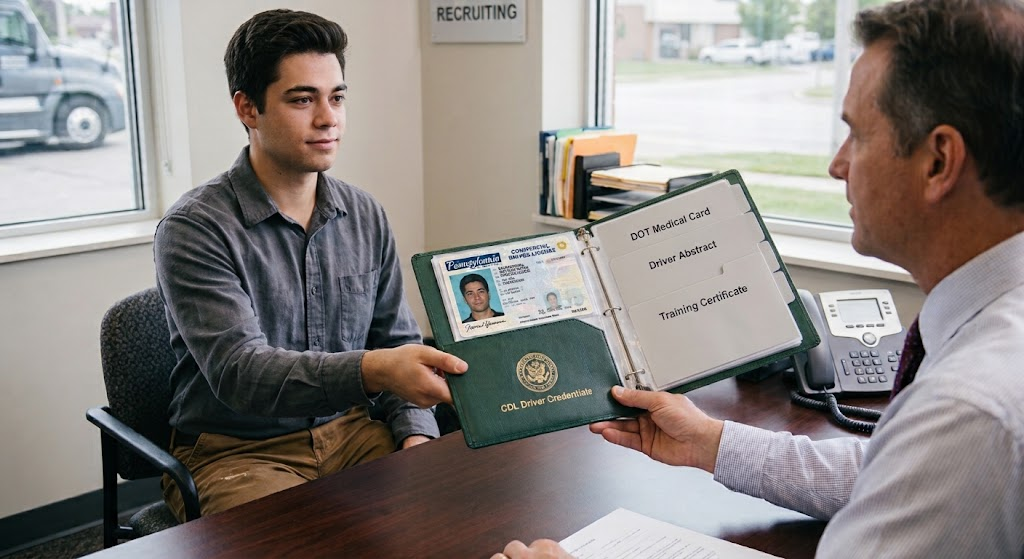
Before applying, make sure you have the basics ready, including your CDL, medical certification (if required), endorsements, driving record, and proof of training. For new Class A or Class B CDL applicants, applicable Entry-Level Driver Training (ELDT) must be completed before taking the skills test. It’s important to note that your state may also have additional requirements.
If you earned your CDL through federally required ELDT, your training provider reports your completion to FMCSA's Training Provider Registry (TPR).
2. Apply Where New Drivers Can Actually Get Started
Don't limit your search to the biggest trucking companies. It can also be beneficial to look at local, regional, over-the-road (OTR), private-fleet, and specialized employers that hire drivers with limited experience. Successful new drivers frequently recommend applying consistently to many companies, talking directly with recruiters, using connections made through CDL school, and being willing to start in an entry-level position.
Don't be discouraged if your first job isn't your dream job. Your first goal may simply be to gain safe, verifiable experience. More opportunities can open up as your experience grows.
3. Make Your Application Work for You
New drivers often hear, "You need experience to get experience." Don't let that mindset discourage you. Your resume doesn't need to be complicated. Clearly list your CDL class, endorsements, training, previous work experience, safety-related experience, and any equipment or driving experience you have. If you don't have professional truck-driving experience, highlight transferable skills and qualities such as reliability, customer service, equipment operation, safety awareness, punctuality, and the ability to work independently.
Federal regulations require motor carriers to investigate a prospective driver's driving and employment history, and to conduct a pre-employment query of the FMCSA Drug & Alcohol Clearinghouse before hiring.
4. Be Ready for the Interview
It's always important to do your homework before the interview. This includes making sure you understand the type of freight, equipment, routes, schedule, pay structure, training period, and home-time expectations at the company you are applying for. Once at the interview, don't be afraid to ask questions. A job that pays well on paper may not be a good fit if the schedule or training arrangement doesn't work for you.
Be prepared to discuss your approach to safety, handling difficult situations, managing tight schedules, inspecting vehicles, managing fatigue, and following regulations.
At CDL Direct, we don’t just prepare you to pass the exam. Our course is designed to prepare you for real-world situations—inspections, roadside stops, accidents, and the decisions and driving techniques that protect your livelihood.