Know Your Clearance Before the Bridge Reminds You
Know Your Clearance Before the Bridge Reminds You
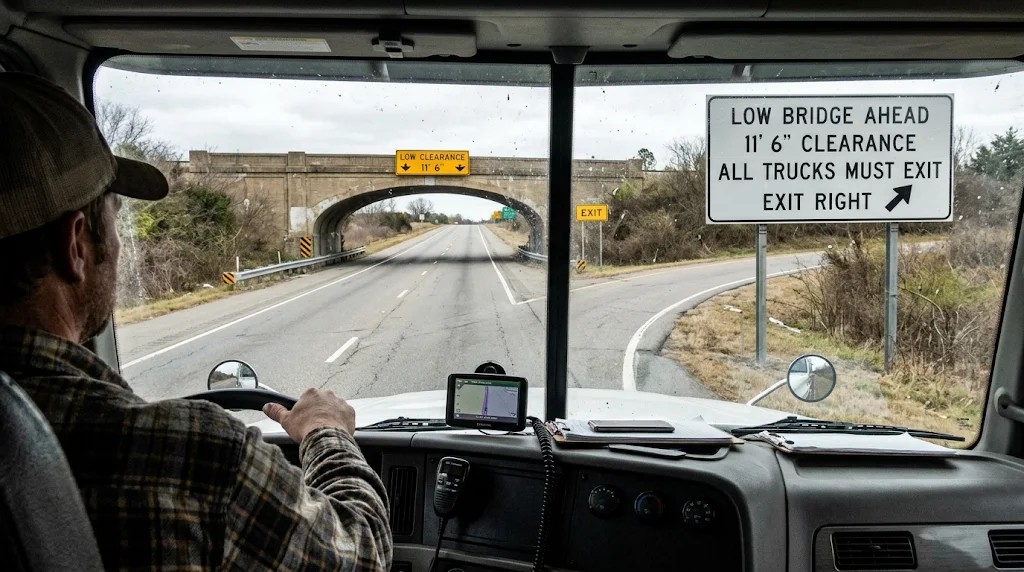
Most of us have seen it at some point on a highway or side road: a truck that tries to fit beneath a bridge but gets stuck or does damage. A missed height restriction can damage a truck or the bridge, destroy cargo, block traffic, and put lives at risk. On top of everything else, it can cost you your job. The good news? With the right measurements, route-planning tools, and habits, many of these situations can be avoided.
1. Know the Actual Height of Your Truck
Before hitting the road, know the total height of your vehicle and load. Rather than relying on a standard truck height or assuming every trailer is the same, the best practice is to measure from the ground to the highest point of the loaded vehicle. Make sure to account for roof-mounted equipment, antennas, refrigeration units, and other accessories. If you make changes to your trailer or equipment, it's best to recheck the height to make sure the height hasn't changed as well. Remember, a few inches can make the difference between clearing a bridge and striking it.
Make sure your truck's height information is accurate in your GPS profile. However, never assume your GPS knows whether your truck can fit.
2. Use Truck-Specific GPS and Navigation Apps
A regular car GPS may send you down roads that are unsuitable or prohibited for commercial vehicles. Therefore, make it a habit to use navigation designed for trucks and enter your actual vehicle dimensions, weight, axle information, trailer configuration, and hazmat details when applicable. Here are some options worth exploring:
- Hammer Truck GPS: Offers truck-specific routing based on vehicle dimensions, weight, load, and trailer configuration. It also supports offline maps.
- Trucker Path: Provides truck-safe routing and information about low bridges, weight restrictions, and truck-restricted roads. Its route-checking tools also incorporate driver-reported restrictions.
- CoPilot Truck: Uses vehicle dimensions and road restrictions to help avoid unsuitable routes, including low-clearance bridges and truck-restricted roads.
- Garmin dēzl: Dedicated truck navigation devices allow drivers to create vehicle profiles and route around known restrictions based on entered vehicle characteristics.
Keep in mind that app information can be outdated and temporary restrictions may not appear immediately. Use these tools to help plan your route, but never let them replace road signs or your own judgment..
3. Check Official Road Information Before You Go
Your route may cross several states, each with different truck restrictions. Before departure, check local DOT websites for bridge clearance information and road restrictions; consult 511 travel information for current road conditions, closures, and detours; and review local truck-route maps, especially when traveling through cities. Your dispatcher or carrier can also provide useful information about low bridges, restricted roads, and approved routes, especially when you’re traveling an unfamiliar route.
Under FMCSA law, commercial motor vehicles must follow the applicable laws, ordinances, and regulations of the jurisdictions where they operate. That includes state and local road restrictions.
4. What Experienced Drivers Recommend
Seasoned truckers emphasize the need for a few habits that technology alone cannot replace.
- Double-check your route. Some drivers compare information from two truck-specific navigation tools rather than trusting just one.
- Use satellite views. Looking at an unfamiliar delivery entrance or road ahead of time can help identify tight turns and potential trouble spots.
- Ask other drivers. Experienced drivers, dispatchers, and local drivers may know about problem bridges or difficult approaches that aren't obvious on a map.
- Pay attention to signs. Never ignore a posted clearance warning just because your GPS says the road is safe.
- Don't force a bad route. If you're unsure, stop somewhere safe and legal, then contact your dispatcher or find a verified alternative.
At CDL Direct, we don’t just prepare you to pass the exam. Our course is designed to prepare you for real-world situations—inspections, roadside stops, accidents, and the decisions and driving techniques that protect your livelihood.