CDL Direct Blog
Know Your Clearance Before the Bridge Reminds You
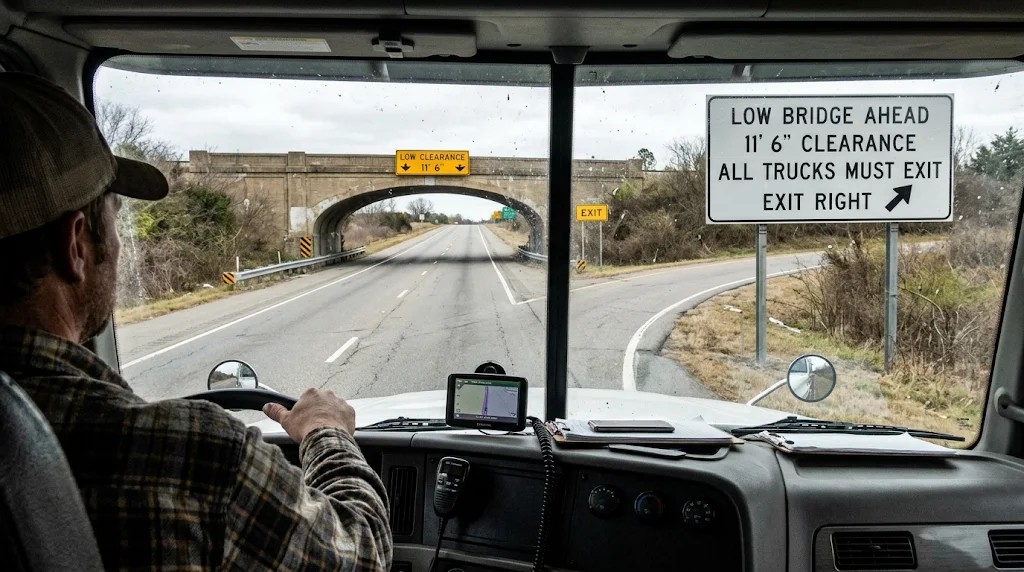
Most of us have seen it at some point on a highway or side road: a truck that tries to fit beneath a bridge but gets stuck or does damage. A missed height restriction can damage a truck or the bridge, destroy cargo, block traffic, and put lives at risk. On top of everything else, it can cost you your job. The good news? With the right measurements, route-planning tools, and habits, many of these situations can be avoided.
1. Know the Actual Height of Your Truck
Before hitting the road, know the total height of your vehicle and load. Rather than relying on a standard truck height or assuming every trailer is the same, the best practice is to measure from the ground to the highest point of the loaded vehicle. Make sure to account for roof-mounted equipment, antennas, refrigeration units, and other accessories. If you make changes to your trailer or equipment, it's best to recheck the height to make sure the height hasn't changed as well. Remember, a few inches can make the difference between clearing a bridge and striking it.
Make sure your truck's height information is accurate in your GPS profile. However, never assume your GPS knows whether your truck can fit.
2. Use Truck-Specific GPS and Navigation Apps
A regular car GPS may send you down roads that are unsuitable or prohibited for commercial vehicles. Therefore, make it a habit to use navigation designed for trucks and enter your actual vehicle dimensions, weight, axle information, trailer configuration, and hazmat details when applicable. Here are some options worth exploring:
- Hammer Truck GPS: Offers truck-specific routing based on vehicle dimensions, weight, load, and trailer configuration. It also supports offline maps.
- Trucker Path: Provides truck-safe routing and information about low bridges, weight restrictions, and truck-restricted roads. Its route-checking tools also incorporate driver-reported restrictions.
- CoPilot Truck: Uses vehicle dimensions and road restrictions to help avoid unsuitable routes, including low-clearance bridges and truck-restricted roads.
- Garmin dēzl: Dedicated truck navigation devices allow drivers to create vehicle profiles and route around known restrictions based on entered vehicle characteristics.
Keep in mind that app information can be outdated and temporary restrictions may not appear immediately. Use these tools to help plan your route, but never let them replace road signs or your own judgment..
3. Check Official Road Information Before You Go
Your route may cross several states, each with different truck restrictions. Before departure, check local DOT websites for bridge clearance information and road restrictions; consult 511 travel information for current road conditions, closures, and detours; and review local truck-route maps, especially when traveling through cities. Your dispatcher or carrier can also provide useful information about low bridges, restricted roads, and approved routes, especially when you’re traveling an unfamiliar route.
Under FMCSA law, commercial motor vehicles must follow the applicable laws, ordinances, and regulations of the jurisdictions where they operate. That includes state and local road restrictions.
4. What Experienced Drivers Recommend
Seasoned truckers emphasize the need for a few habits that technology alone cannot replace.
- Double-check your route. Some drivers compare information from two truck-specific navigation tools rather than trusting just one.
- Use satellite views. Looking at an unfamiliar delivery entrance or road ahead of time can help identify tight turns and potential trouble spots.
- Ask other drivers. Experienced drivers, dispatchers, and local drivers may know about problem bridges or difficult approaches that aren't obvious on a map.
- Pay attention to signs. Never ignore a posted clearance warning just because your GPS says the road is safe.
- Don't force a bad route. If you're unsure, stop somewhere safe and legal, then contact your dispatcher or find a verified alternative.
At CDL Direct, we don’t just prepare you to pass the exam. Our course is designed to prepare you for real-world situations—inspections, roadside stops, accidents, and the decisions and driving techniques that protect your livelihood.
Essential Took Kits for the CDL Driver
"If I only had a screwdriver!"
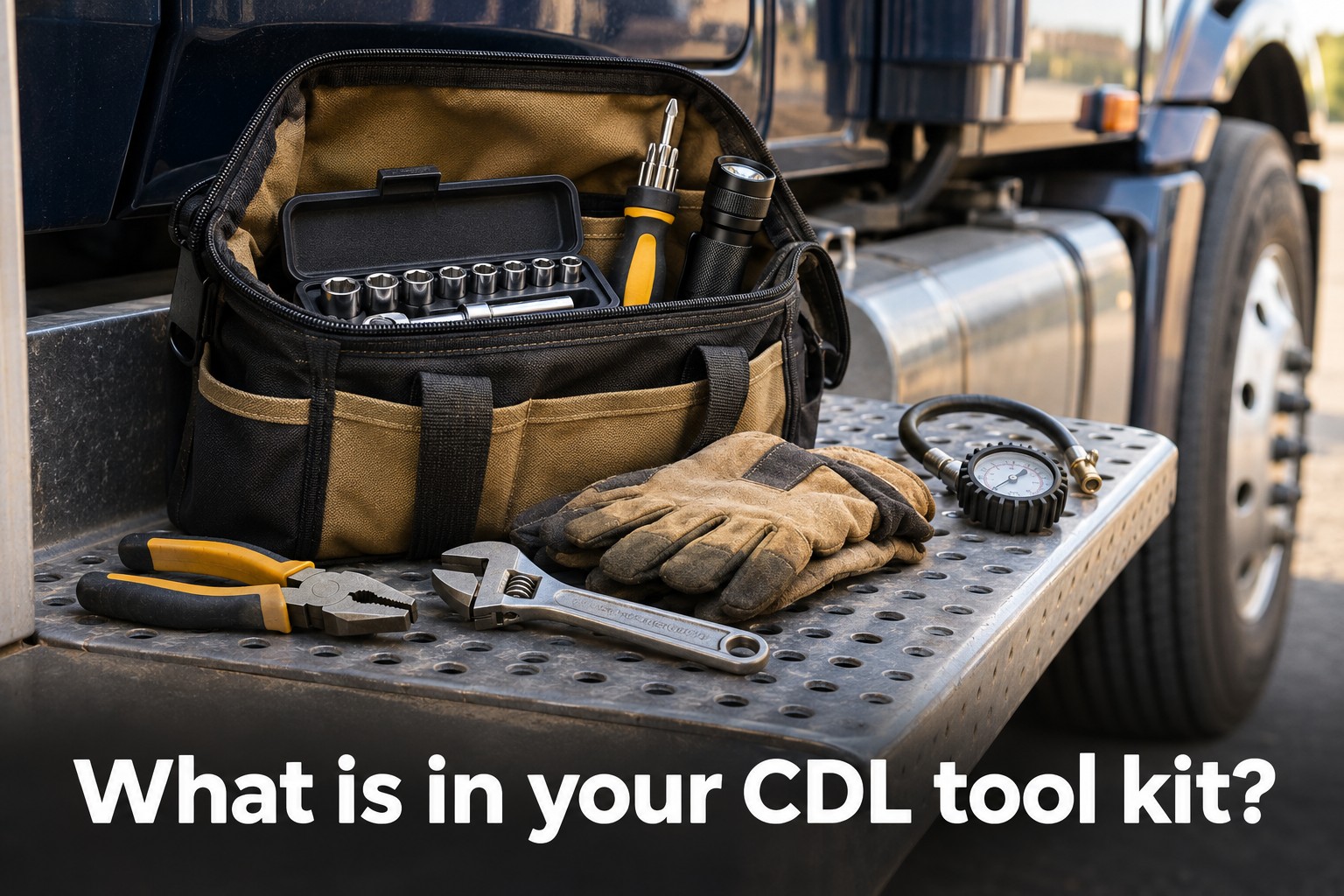
Whether you're a new CDL holder or an experienced driver, having the right tools in your truck can make life on the road a lot easier. A loose mud flap, a hard-to-reach light, or a minor problem inside the cab can become an unnecessary delay if you aren't prepared. You don't need to carry a full mechanic's toolbox, but a few dependable tools can help you handle small issues, complete inspections, and stay organized. Here are some practical items worth considering for your truck.
1. Start With a Basic Tool Kit
You don't need to spend a fortune or buy everything at once. Start with tools that are useful for everyday adjustments and minor issues.
- Screwdrivers: A multi-bit screwdriver with Phillips, flathead, and Torx bits
- Pliers: Standard, needle-nose, and locking pliers
- Adjustable wrench: Useful for minor tightening and adjustments
- Socket and wrench set: A compact set with commonly used sizes
- Hammer or rubber mallet: Helpful for stubborn pins or minor adjustments when appropriate
- Flashlight and headlamp: Keep one within reach, along with spare batteries or a charging cable
- Tape and zip ties: Duct tape, electrical tape, and heavy-duty zip ties to help with temporary, non-safety-critical fixes
One practical suggestion from experienced drivers is to buy a modest starter kit and add items when you encounter a situation where a particular tool would have helped. Your needs will depend on whether you drive local, regional, or OTR, the equipment you operate, and what your employer provides.
2. Include Roadside and Inspection Supplies
Some of the most useful items aren't traditional tools. Consider keeping the following in your cab:
- Tire pressure gauge
- Work gloves and safety glasses
- Reflective safety vest
- Small first-aid kit
- Shop towels or cleaning rags
- Extra flashlight
- Spare gladhand seals, if appropriate for your equipment and company policy
- Extra charging cable and portable phone charger
FMCSA requires specific emergency equipment on commercial trucks, that are not optional, including: a properly rated and securely mounted fire extinguisher and either three reflective emergency triangles or the required number of fusees. Certain hazardous-materials operations have different requirements and restrictions.
3. Know When Not to Make the Repair
Having tools doesn't mean you should attempt every repair yourself. Problems involving brakes, tires, wheels, steering, air systems, or other safety-critical components should be handled by qualified personnel. Never use a temporary fix to put an unsafe truck back on the road.
FMCSA requires drivers to be satisfied that key vehicle components, including brakes, tires, steering, lights, coupling devices, and emergency equipment, are in good working order before operating the vehicle. If something isn't right, report it and follow your carrier's maintenance procedures.
The federal requirements apply nationwide, although employers, carriers, and particular equipment types may have additional requirements.
At CDL Direct, we don’t just prepare you to pass the exam. Our course is designed to prepare you for real-world situations—inspections, roadside stops, accidents, and the decisions and driving techniques that protect your livelihood.
How to Prepare for a Job Search as a New CDL Driver
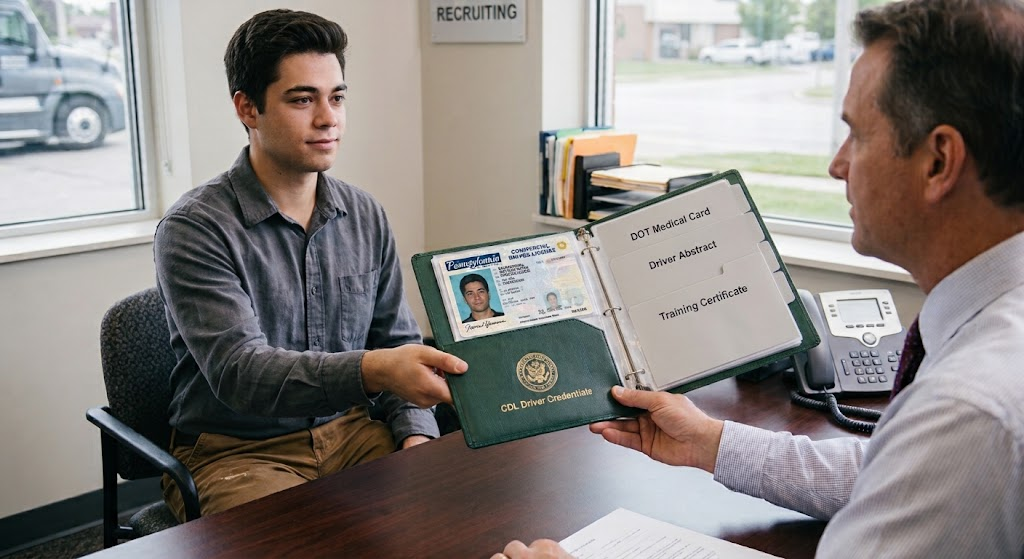
You've studied hard, you've practiced hard, and now you finally have your CDL! Your next step is turning your new license into your first driving job. For many new CDL drivers, that means knowing where to look, preparing your paperwork, and being realistic about starting at an entry-level position.
1. Know What Employers Are Looking For
Before applying, make sure you have the basics ready, including your CDL, medical certification (if required), endorsements, driving record, and proof of training. For new Class A or Class B CDL applicants, applicable Entry-Level Driver Training (ELDT) must be completed before taking the skills test. It’s important to note that your state may also have additional requirements.
If you earned your CDL through federally required ELDT, your training provider reports your completion to FMCSA's Training Provider Registry (TPR).
2. Apply Where New Drivers Can Actually Get Started
Don't limit your search to the biggest trucking companies. It can also be beneficial to look at local, regional, over-the-road (OTR), private-fleet, and specialized employers that hire drivers with limited experience. Successful new drivers frequently recommend applying consistently to many companies, talking directly with recruiters, using connections made through CDL school, and being willing to start in an entry-level position.
Don't be discouraged if your first job isn't your dream job. Your first goal may simply be to gain safe, verifiable experience. More opportunities can open up as your experience grows.
3. Make Your Application Work for You
New drivers often hear, "You need experience to get experience." Don't let that mindset discourage you. Your resume doesn't need to be complicated. Clearly list your CDL class, endorsements, training, previous work experience, safety-related experience, and any equipment or driving experience you have. If you don't have professional truck-driving experience, highlight transferable skills and qualities such as reliability, customer service, equipment operation, safety awareness, punctuality, and the ability to work independently.
Federal regulations require motor carriers to investigate a prospective driver's driving and employment history, and to conduct a pre-employment query of the FMCSA Drug & Alcohol Clearinghouse before hiring.
4. Be Ready for the Interview
It's always important to do your homework before the interview. This includes making sure you understand the type of freight, equipment, routes, schedule, pay structure, training period, and home-time expectations at the company you are applying for. Once at the interview, don't be afraid to ask questions. A job that pays well on paper may not be a good fit if the schedule or training arrangement doesn't work for you.
Be prepared to discuss your approach to safety, handling difficult situations, managing tight schedules, inspecting vehicles, managing fatigue, and following regulations.
At CDL Direct, we don’t just prepare you to pass the exam. Our course is designed to prepare you for real-world situations—inspections, roadside stops, accidents, and the decisions and driving techniques that protect your livelihood.
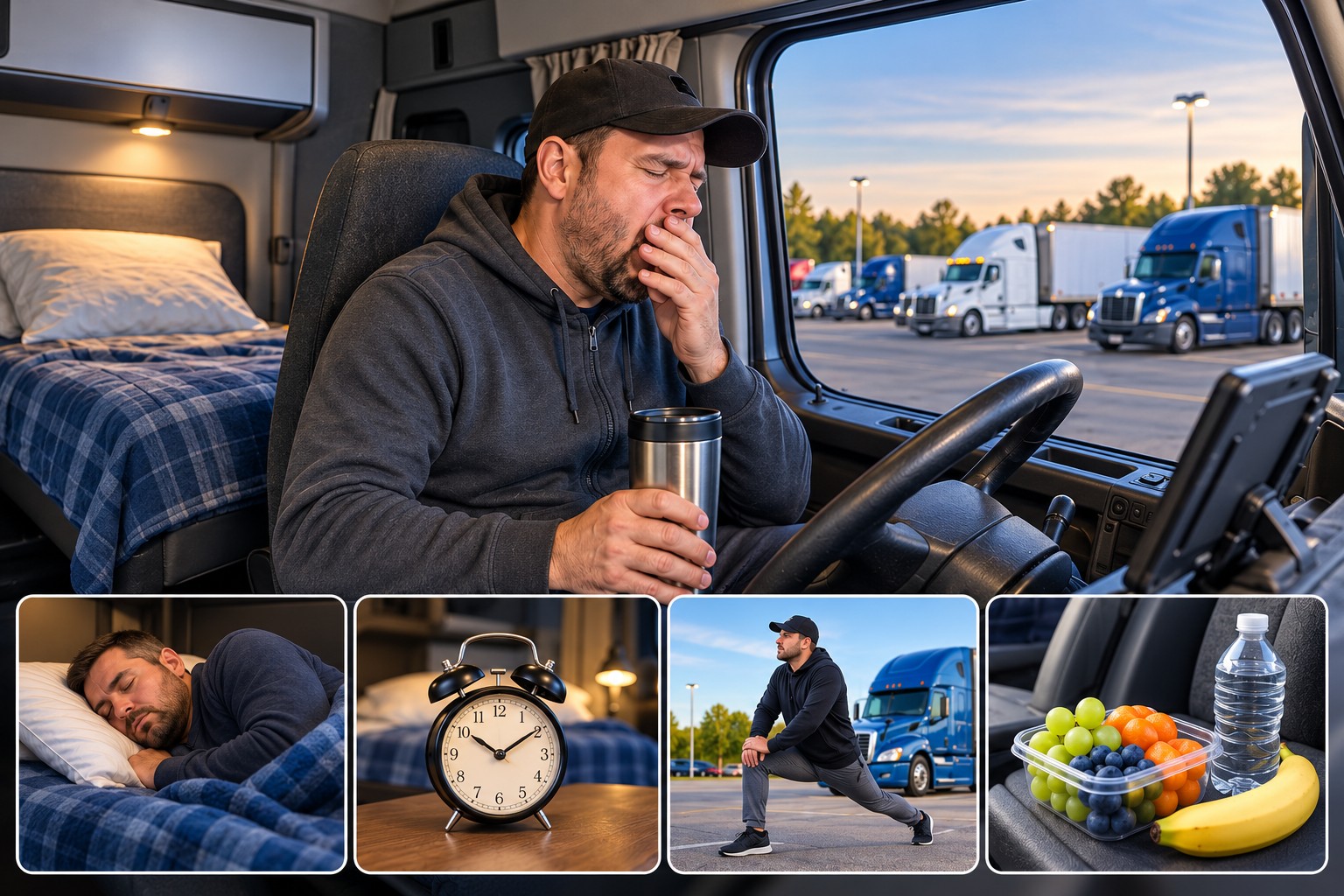
OTR Drivers – How to Combat Driver Fatigue
Long hours, changing schedules, nighttime driving, and life on the road can make fatigue one of an OTR driver's biggest challenges. Knowing how to recognize fatigue and what to do about it is an essential part of being a safe and professional CDL driver. The goal isn't to find a trick that lets you drive while tired, but to get enough rest so you can drive safely. Here are some practical tips to stay sharp on the road.
1. Start With Quality Sleep
The best defense against fatigue is getting enough sleep before you drive. FMCSA notes that drivers are naturally more prone to drowsiness during certain times of the day, particularly from midnight to 6 a.m. and from 2 p.m. to 4 p.m. When possible, plan your schedule around your body's natural sleep cycle.
Pro Tip: Make your sleeper as comfortable and dark as possible, maintain a consistent sleep schedule when your work allows, and avoid sacrificing sleep just to make up miles.
2. Follow Your Hours of Service Rules
The Hours-of-Service (HOS) rules are designed in part to help prevent fatigued driving. For most property-carrying drivers, federal rules generally allow up to 11 hours of driving after 10 consecutive hours off duty, within a 14-consecutive-hour driving window. Drivers must also take a 30-minute break after 8 cumulative hours of driving if they have not had at least a 30-minute interruption from driving.
Pro Tip: Your ELD helps track your duty status, but it can't tell you when you're too tired to drive. If you're struggling to stay awake, don't try to "beat the clock." Find a safe place to stop and rest.
3. Use Breaks to Actually Recover
Fatigue doesn't always begin with falling asleep. Watch for frequent yawning, heavy eyelids, difficulty focusing, wandering thoughts, slower reactions, or drifting within your lane. FMCSA warns that fatigue can reduce attention, reaction time, judgment, and awareness, so it’s important to take these warning signs seriously. Experienced drivers often recommend using breaks to get out of the cab, stretch your legs, walk around, eat something light, and reset before continuing.
Pro Tip: If you're genuinely sleepy, a nap is one of the most useful tools available. Keep in mind that you may experience “sleep inertia,” or temporary grogginess, after waking. FMCSA recommends allowing time to become fully alert before getting back behind the wheel.
4. Learn From Drivers Who Do This Every Day
Experienced OTR drivers develop routines that help them recognize when they're reaching their limits. Common suggestions from include planning sleep around the shift you'll actually be driving, combining fuel and meal stops with short breaks, keeping healthy snacks and water available, and pulling over when fatigue starts affecting concentration.
5. Don't Depend on "Wake-Up Tricks"
Cold air, energy drinks, opening the window, or turning up the radio may make you feel more stimulated temporarily, but they don't replace adequate sleep. If you're fighting to keep your eyes open, the safest solution is to stop driving and rest.
6. Watch for Medications That Cause Drowsiness
Some prescription and over-the-counter medications can make you sleepy or affect your ability to drive safely. Cold and allergy medications are common examples. Read medication warnings carefully and talk with your healthcare provider or pharmacist if you're unsure how a medication may affect your driving.
Pro Tip: “Over the counter” doesn't automatically mean “safe behind the wheel.” Check the label before taking a medication when you know you'll be driving.
At CDL Direct, we don’t just prepare you to pass the exam. Our course is designed to prepare you for real-world situations—inspections, roadside stops, accidents, and the decisions and driving techniques that protect your livelihood.
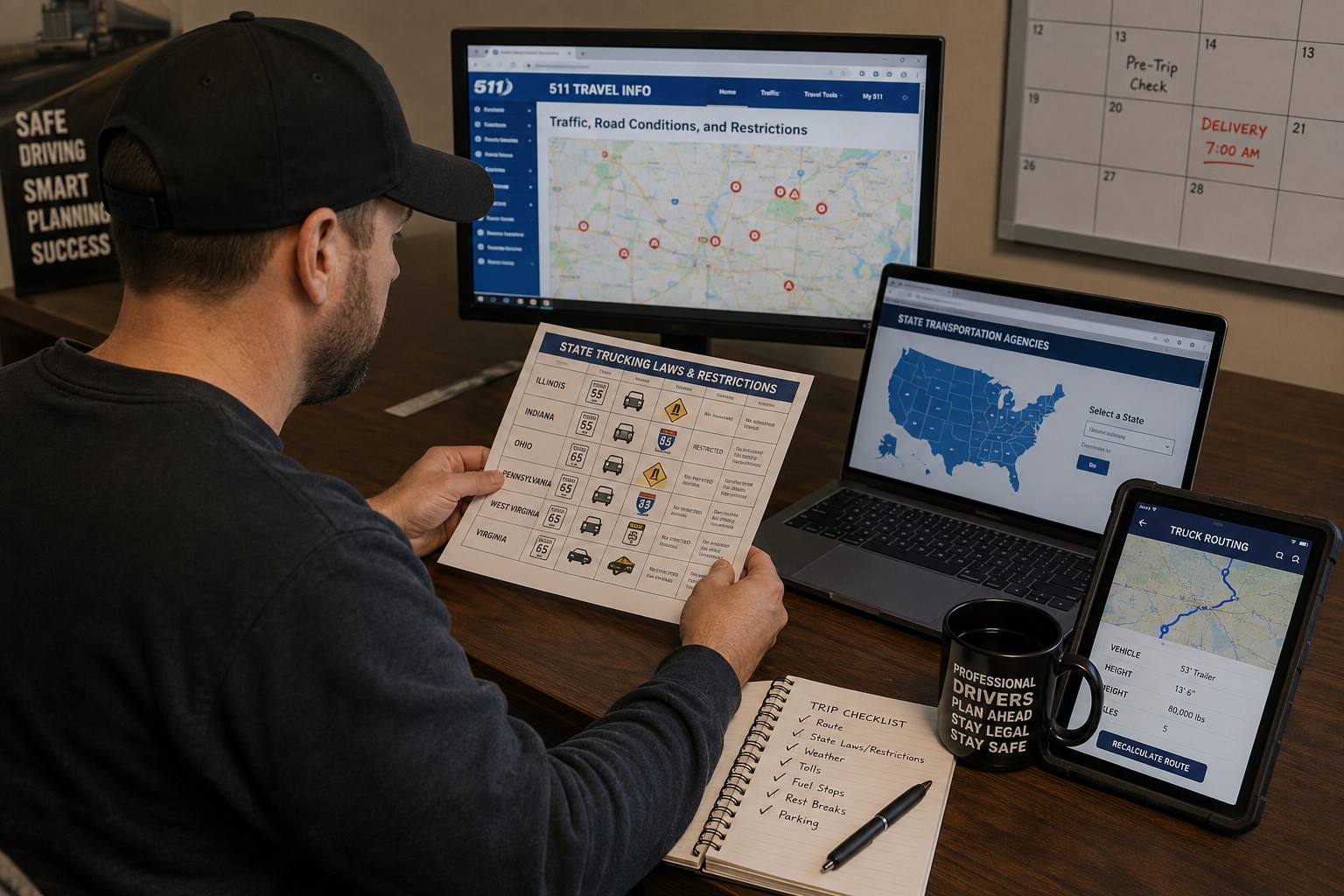
OTR Drivers – Adapting to Changing Laws Along Your Route
Crossing state lines means more than watching the scenery change. It can also mean adapting to different laws, restrictions, and operating requirements. For OTR drivers, planning a trip isn't just about choosing the fastest route. It's about knowing what rules may affect your truck before you enter the next state. From truck routes restrictions, permits, and speed limits to size restrictions and temporary weather requirements, professional drivers need to stay informed and ready to adjust. Here are some tips to help you stay ahead of the changes.
1. Research Your Route Before You Leave
Federal regulations create nationwide standards, but states and local jurisdictions can have additional rules that affect how and where commercial vehicles operate. A route that is legal for your truck in one state may have restrictions after you cross the next state line. Before starting an OTR trip, review every state and major jurisdiction along your planned route. Look for rules and restrictions that could affect your truck, trailer, or cargo. If an FMCSA regulation establishes a higher standard, the federal requirement applies.
Pay attention to:
* Truck-specific speed limits
* Restricted truck routes
* Height, weight, and size restrictions
* Low-clearance roads and bridges
* Toll requirements
* Seasonal or weather-related restrictions
* Temporary road closures and construction restrictions
Pro Tip: Develop the habit of checking the rules that apply to your specific trip before you travel.
2. Check for Changes Before and During the Trip
Rules and restrictions aren't always permanent. Construction, severe weather, emergencies, and seasonal conditions can change how commercial vehicles are allowed to travel. Check for updates before departure and continue monitoring conditions during a long trip. If your original route changes, check the new route before taking it. Don't assume a detour recommended by a regular GPS is appropriate for a tractor-trailer.
Pro Tip: Use reliable sources such as your carrier, dispatcher, commercial navigation system, and official state transportation or enforcement resources when checking restrictions.
3. Pay Attention to Signs Even When Your GPS Says Otherwise
Technology is an important planning tool, but it does not replace the driver's responsibility to follow applicable laws and posted restrictions. Watch for signs involving: height and clearance, weight limits, truck prohibitions, hazardous-material restrictions, chain or traction requirements, and lane restrictions.
Pro Tip: If a sign restricts your vehicle, don't assume your GPS knows better. Stop safely when necessary and contact your dispatcher or carrier for help planning a legal alternative.
4. Plan Enough Time to Stay Compliant
Changing laws and restrictions can mean changing your route, and changing your route can affect your schedule and available driving hours. Therefore, build extra time into your trip. A longer legal route is better than an illegal shortcut, and losing time is never a reason to speed or violate Hours-of-Service rules.
Pro Tip: Plan your route, fuel stops, breaks, and parking around your available HOS time. If changing conditions require a detour, reassess your plan before you run short on legal driving time.
5. Make Staying Informed Part of Being a Professional Driver
The best OTR drivers don't try to memorize every regulation in the country. They know how to find reliable information and when to check for updates. Before every trip, ask yourself: What states am I entering? What restrictions could affect my truck or cargo? Has anything changed since the route was planned?
Pro Tip: Remember FMCSA provides driver and carrier resources to help operators understand applicable federal safety requirements, while state agencies maintain their own state-specific transportation and licensing information.
At CDL Direct, we don’t just prepare you to pass the exam. Our course is designed to prepare you for real-world situations—inspections, roadside stops, accidents, and the decisions and driving techniques that protect your livelihood.
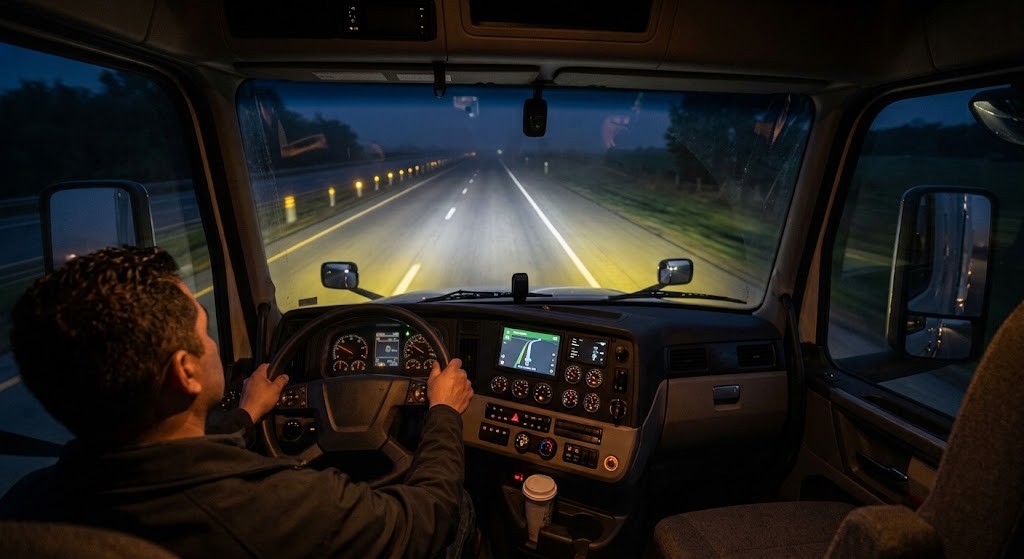
Big Rigs - Nighttime Driving
There are both rewards and challenges for nighttime driving as a CDL driver. You may prefer driving when the roads are less crowded, you may get higher pay, experience faster turnaround times, and have zero-delays. While these rewards are very attractive, they aren’t the only consideration for nighttime driving.
Challenges include reduced visibility, greater fatigue risks, glare, and more difficulty spotting hazards. For CDL drivers, learning how to safely operate a big rig after dark is an essential professional skill. The following preparation and habits can help make nighttime driving safer, so you can enjoy the rewards without falling victim to the pitfalls.
1. Start With Your Lights
Federal regulations require commercial motor vehicles to have specific lamps and reflective devices, and drivers cannot operate a CMV when required lamps or reflective material are obscured by dirt, cargo, or other equipment. Make it a habit to check your headlights, taillights, brake lights, turn signals, clearance lights, and reflective devices, before heading out. When cleaning your headlights, mirrors, windshield, and camera lenses, keep in mind, dirt, bugs, and streaks can make nighttime glare worse and reduce visibility.
Pro tip: Keep dashboard lights dimmed to maximize outer night-vision responsiveness.
2. Slow Down for What You Can See
At night, you simply cannot see as far ahead as you can during the day. Your speed should allow you enough time and distance to recognize a hazard and react safely. FMCSA reminds drivers that large trucks have long stopping distances and that drivers should operate at a safe speed for the road, weather, and traffic conditions and not just at the posted speed limit.
Pro tip: Standard low-beam headlights project roughly 250 feet. At 65 mph, a fully loaded 80,000 lb tractor-trailer requires over 500 feet to stop. Therefore, keep extra space around your trailer and never outrun your headlights.
3. Stay Alert to Fatigue
Night driving can work against your body's natural sleep cycle. FMCSA identifies the period between midnight and 6 a.m. as a time when many people are naturally more drowsy and less alert. Know the warning signs, including frequent yawning, heavy eyes, blurred vision, wandering thoughts, or difficulty staying focused. If you become too tired to drive safely, find a safe place to stop and rest. Some may try turning up the radio or opening a window to stay awake, but these cannot substitute for sleep.
Pro tip: Maintain strict daylight sleeping habits with blackout curtains and consistent sleep hygiene.
4. Know Your Hours of Service
Night driving does not change the federal Hours-of-Service limits. For most property-carrying CDL drivers, HOS rules limit driving time and require qualifying off-duty periods and breaks. Your ELD records your driving and duty time, but you are still responsible for planning your trip and staying within the applicable limits. While these rules may seem to hold you back, they are designed help drivers get the rest needed to remain alert and keep you and others safe.
Pro tip: Plan ahead for fuel, rest breaks, and safe parking. Don't wait until you're almost out of available hours to start looking for a place to stop.
5. Watch for Nighttime Hazards
After dark, hazards can appear with less warning. Watch carefully for pedestrians, cyclists, wildlife, disabled vehicles, work zones, and drivers who may be impaired or fatigued. FMCSA recommends regularly checking mirrors and looking ahead for developing traffic problems, work zones, and other hazards. Make sure to give yourself extra following distance so you have more time to react.
Pro tip: Many newer trucks have thermal night-vision sensors to give night drivers maximum situational awareness.
6. Keep Distractions Out of the Cab
Nighttime requires even more concentration. Set your GPS and route before moving, put away your phone, and avoid activities that take your attention away from driving. Federal regulations prohibit commercial drivers from texting while driving and restrict the use of handheld mobile phones.
Pro tip: If something needs your attention, pull over safely before dealing with it.
At CDL Direct, we don’t just prepare you to pass the exam. Our course is designed to prepare you for real-world situations—inspections, roadside stops, accidents, and the decisions and driving techniques that protect your livelihood.

The Pros and Cons of Driving a School Bus
Some people pursue a CDL due to specific scheduling needs. Perhaps you're a parent who needs to be home with your children at certain times, a student pursuing higher education who needs time for classes and studying, or someone with other responsibilities that require a flexible schedule.
School bus driving can be a surprisingly good fit for people who want professional driving experience while maintaining a more predictable schedule and avoiding weeks at a time on the road. However, it isn't for everyone. Before deciding to become a school bus driver, take a realistic look at both the rewards and the challenges.
The Pros: A CDL Career With a Different Lifestyle
You can often be home every day. School bus routes are usually local and follow the school calendar. Many positions offer morning and afternoon routes, making them attractive to parents, retirees, students, and people looking for part-time work.
Training may be paid. Many school districts and private transportation companies recruit people with no previous bus-driving experience and provide or pay for CDL training. Some employers also offer health insurance, retirement benefits, paid time off, referral bonuses, or opportunities to earn additional money through field trips, athletic events, substitute routes, or summer work.
Sign-on bonuses can be substantial. Incentives vary widely by employer and location. A recent example includes $2,500–$5,000 sign-on bonuses for eligible school bus drivers. Other employers may offer paid training instead or additional retention incentives. Always check the conditions, as bonuses may require completion of training, specific endorsements, or staying employed for a certain period.
You make a difference. You're responsible for getting children to and from school safely every day. For drivers who enjoy working with young people and becoming part of their community, that can be one of the most rewarding parts of the job.
The Cons: It's More Than Just Driving
Student behavior can be the biggest challenge. Kids may get loud, argue, stand while the bus is moving, bully others, get into fights, or even disrespect you. The driver still has to maintain control of the vehicle and keep their attention on the road.
Experienced drivers frequently recommend establishing expectations early, learning students' names, using consistent rules, assigning seats when appropriate, and working with school administrators when behavior becomes a safety issue. One important safety principle should never change: If student behavior becomes unsafe, the driver should prioritize controlling the bus and getting everyone safely stopped rather than trying to manage the situation while driving. Experienced drivers report that consistency and clear boundaries can make difficult routes much more manageable.
The schedule can be split. A typical route may involve an early-morning run followed by several hours before the afternoon route. That can be a benefit if you want flexibility and a part-time schedule, but can also be a disadvantage if you need a traditional full-time, continuous workday.
You are taking on a serious responsibility. A school bus can carry dozens of children, and they and their families are relying on you to get them home safely. You must constantly watch traffic, mirrors, railroad crossings, students entering and exiting the bus, and changing road conditions. Patience and defensive driving aren't optional.
Is School Bus Driving Right for You?
School bus driving may not be the right choice if you become easily distracted by noise, dislike working with children, have difficulty enforcing boundaries, or want long-distance driving and extended time on the road.
However, it could be a great fit if you don't mind a split schedule during the day, are patient and comfortable working with children, can stay calm when things get noisy or unpredictable, and take safety rules seriously. If that sounds like a responsibility you're ready to take on, earning your CDL and the required endorsements can open the door to a career that's local, meaningful, and in demand.
At CDL Direct, we don’t just prepare you to pass the exam. Our course is designed to prepare you for real-world situations—inspections, roadside stops, accidents, and the decisions and driving techniques that protect your livelihood.

5 Steps to Prepare for an OTR Trip
Before you jump in your truck for a long over-the-road (OTR) trip, you might prepare emotionally and mentally by saying your goodbyes to your family. Perhaps you give a round of hugs and reassure them that you will be back before they know it. You promise to call every day.
In addition to getting yourself in the right mindset, there are some steps you can take to prepare. These can mean the difference between a smooth run and hours lost to breakdowns, bad weather, traffic, parking problems, or an avoidable HOS violation. Here are some of the steps experienced drivers use to get ready.
1. Know Your Route Before You Roll
Don't simply enter the destination into your GPS and go. Review the entire trip, including major cities, construction zones, mountain grades, toll roads, truck restrictions, fuel stops, and parking areas before you encounter or need them. There are specialized commercial vehicle GPS apps that you can use to plan your route. This can help you avoid passenger-car navigation apps that may send a CMV onto roads with low bridges, weight restrictions, or other limitations. Many OTR drivers also find it helpful to have a primary route and a backup route to save time if they are faced with last-minute changes.
Professional tip: Carry what your company permits and what you realistically may need on the road such as appropriate clothing for changing weather, food and water, phone chargers, basic personal supplies, and any company-required emergency equipment.
2. Check the Weather Along Your Route
Weather can change dramatically during a multi-state trip. Check conditions along the entire route, especially when traveling through mountain passes, areas prone to snow and ice, severe thunderstorms, flooding, high winds, or extreme heat. Under the FMCSA's "adverse driving conditions exception", qualifying unforeseen adverse conditions can extend the driver's normal driving window by up to two hours. However, this does not automatically give a driver two additional driving hours simply because a trip is running late. The conditions generally must have been unforeseen when the trip began.
Professional tip: Don't use an HOS exception as a trip-planning strategy. If conditions become dangerous, slow down, find a safe location, and communicate with your carrier.
3. Know the Rules of the Road Across State Lines
When driving OTR, you'll cross through multiple states, and some rules can vary by state. Crossing a state line doesn't mean the federal rules disappear but you may have additional state and local requirements to follow. Before your trip, check for state-specific requirements such as speed limits, truck routes, weight restrictions, chain requirements, and road closures. When in doubt, follow the posted restriction and ask your carrier for guidance.
Professional tip: Your carrier, dispatcher, state transportation agency, truck-specific GPS, and official state resources can all be useful to check for current truck restrictions and road conditions before entering a new state.
4. Inspect the Truck and Trailer
A good OTR driver doesn't treat the pre-trip inspection as a formality. Many experienced drivers recommend making sure to "look close" during a thorough walk-around. Make sure to check the tires, wheels, brakes, lights, mirrors, windshield, wipers, coupling equipment, hoses, belts, fluids, emergency equipment, and other required components. FMCSA regulations require drivers to be satisfied that the vehicle and equipment are in good working order before operating it. If you have a specialized load, make sure your cargo is secured according to the applicable requirements.
A written report is not generally required specifically for the pre-trip inspection under §392.7, but defects discovered during operations must be handled according to the applicable inspection and reporting requirements.
5. Know Your Hours of Service (HOS)
Before you start your trip, know how many hours you can legally drive and when you need to take breaks and rest. Plan your trip around your available driving hours and not just the number of miles you'll be driving. Remember to leave enough time for traffic, weather, loading delays, fuel stops, and finding a safe place to park. For most property-carrying drivers, federal HOS rules include an 11-hour driving limit within a 14-hour work window, a 30-minute break after 8 cumulative hours of driving, and at least 10 consecutive hours off duty before starting a new driving period.
Most drivers required to maintain records of duty status must use an FMCSA-registered ELD. Drivers should know how to operate their device, review their logs, make appropriate annotations, and handle an ELD malfunction.
At CDL Direct, we don’t just prepare you to pass the exam. Our course is designed to prepare you for real-world situations—inspections, roadside stops, accidents, and the decisions and driving techniques that protect your livelihood.

Owner-Operator: Steps to Getting Your Business Off the Ground
Perhaps you are just starting out, or maybe you’ve been driving trucks for a while and now want to invest in starting your own business where you are the boss. As an owner-operator, you decide which loads to haul, who you work with, and how you grow your business. This can be one of the most rewarding careers in trucking, but it requires planning, discipline, and a commitment to safety. These key attributes can make the difference between simply owning a truck and building a profitable trucking business. The most profitable owner-operators are business owners first and drivers second. If you're thinking about making the leap, here's a practical roadmap to help you get started.
1. Start With a Strong Foundation
Before investing thousands of dollars in equipment, build your driving experience. Many successful owner-operators recommend spending at least one to three years driving for an established carrier. During that time, pay attention to freight lanes, fuel costs, maintenance expenses, customer service, and how dispatch works. Consider this as part of your training and preperation for owning your own company later on. Experienced drivers often say, "Learn the business while someone else is paying for your mistakes."
Freight markets, technology, FMCSA regulations, insurance costs, and customer expectations continue to evolve. The most successful owner-operators stay current through continuing education, safety training, industry publications, and networking with other professionals.
2. Create a Business Plan
Many new owner-operators underestimate how much cash they need during the first several months. Successful drivers recommend having enough savings to cover several months of operating expenses in case freight slows down or you face unexpected repair costs. When drafting your plan, make sure it includes startup costs to cover monthly operating expenses, insurance premiums, a fuel budget, costs for maintenance and repairs, taxes, and some emergency savings. Then compare all that to your expected revenue.
Also try to have a plan of who you will market to and work for so your work stays relaible. A key to making this process successful is networking with freight brokers, direct shippers, dispatch services, repair shops, tire dealers, fuel discount programs, and factoring companies (if needed). An added benefit is that networking with other experienced drivers can also provide valuable advice on freight markets, maintenance, and avoiding costly mistakes
Many owner-operators operate as an LLC or corporation, although the best choice depends on your individual financial and tax situation. Before filing paperwork, consider speaking with a qualified accountant or business attorney who understands the trucking industry.
3. Obtain Your Operating Authority
Before you can haul freight under your own authority, you'll generally need to:
- Obtain a USDOT Number
- Obtain FMCSA Operating Authority (MC Number), if required
- File proof of insurance
- Designate a process agent (BOC-3 filing)
- Register for Unified Carrier Registration (UCR), when applicable
- Meet state registration requirements such as IRP and IFTA if operating across state lines
New interstate motor carriers also enter FMCSA's New Entrant Safety Assurance Program, which includes a safety audit during the first 12 months of operation. Good recordkeeping from day one makes this process much easier.
4. Understand Your FMCSA Responsibilities
If you operate under your own authority and employ yourself as the CDL driver, you have responsibilities as both the employer and the driver.That means you're responsible for complying with Federal Motor Carrier Safety Regulations (FMCSRs). One area that surprises many new owner-operators is the FMCSA Drug and Alcohol Clearinghouse. FMCSA requires owner-operators to designate a Consortium/Third-Party Administrator (C/TPA) to perform required Clearinghouse functions and drug and alcohol program responsibilities. Besides the Drug and Alcohol Clearinghouse, you will also have to comply with Hours-of-Service regulations, ELD requirements, Driver Qualification Files, all vehicle records, annual inspections, cargo securement regulations, and accident register requirements.
5. Buy the Best Truck For Your Business
Veteran owner-operators consistently recommend purchasing a truck that fits your business model rather than buying the newest or most expensive model available. It is always a good rule of thumb when purchasing a commercial motor vehicle (CMV) to consider fuel economy, maintenance history, parts availability, warranty coverage, payload capacity, reliability, and resale value. A truck that's paid off often generates more profit than an expensive truck with large monthly payments.
6. Stay on Top of the Math
Gross income doesn't equal profit. So while your total income may seem a lot on paper at first, make sure you also track key business metrics like cost per mile, fuel cost per mile, deadhead percentage, maintenance cost, gross revenue, and then net profit. Many experienced owner-operators review these numbers regularly to see how they are managing, rather then just at tax time. This can make a difference in the decisions you make as a company owner and driver.
At CDL Direct, we don’t just prepare you to pass the exam. Our course is designed to prepare you for real-world situations—inspections, roadside stops, accidents, and the decisions and driving techniques that protect your livelihood.
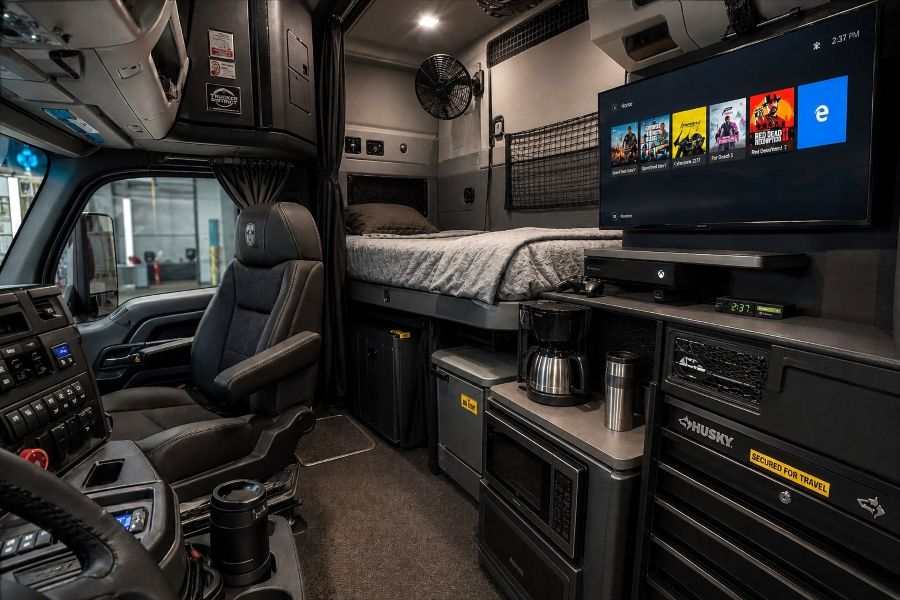
Accessories to make your CMV Comfortable
When you're on the road for long hours, you need to be comfortable. Your truck is your "home away from home". While it may cost something to upgrade, even small improvements can go far in making long trips feel shorter. When your rig becomes your office, dining room, bedroom, and your living room, it's important to fill it with practical items that will help you sleep better, stay organized, eat healthier, and reduce fatigue. Here are some of the best comfort accessories recommended by veteran truck drivers, along with important safety considerations.
Get quality sleep!
Some truck drivers say they can actually sleep better in their truck than at home due to some of the accessories they've purchased. Many recommend a memory foam mattress topper, high quality pillows like MyPillow, comfortable sheets, lightweight blankets for summer, and heavy comforters for winter. Blackout curtains can help block sunlight. Earplugs, a white noise machine, a small fan, and or noise-canceling headphones can cancel loud noises allowing you to sleep better even during the day.
Soft LED lighting makes the sleeper more inviting so many drivers install reading lights, LED strip lights, and motion-sensor lights for nighttime. Avoid lighting that reflects on the windshield or that will distract you while the vehicle is in motion.
Keep a comfortable cabin
Lumbar support cushions, cooling seat covers for summer and heated seat cushions for winter, premium truck seats, and heavy-duty suspension seats can help reduce back and hip pain, as well as fatigue and leg soreness. Making sure your seat is properly adjusted will also help improve posture and visibility.
Even with air conditioning, a small fan helps circulate air inside the cabin. This can help you have better airflow, lower humidity, keep you cool while parked, and give you white noise for sleeping. Choose fans designed for vehicle use and secure them well.
A clean cabin can provide a calming atmosphere and reduce allergens and unpleasant odors. Some helpful things to have on hand include: disinfecting wipes, glass cleaner, paper towels, trash bags, hand sanitizer, a small vacuum, and air freshener. Along with keeping the cabin clean, try to keep things organized. Many truck drivers recommend a pen organizer for your sun visor, under-bunk storage bins, car seat organizers, hanging closet organizers, and small containers to keep things close at hand and accessible.
Ensure accessories do not interfere with the mirrors, windows, vents, emergency exits, access to safety equipment, seat belts, airbags, steering, pedals, or driver controls. Keep the walkways and the sleeper area free of clutter to reduce slip and trip hazards.
Stay fresh
Having changes of clothes that fit the weather can go a long way to staying fresh. In winter, consider packing wool socks, thermal underwear, insulated gloves, knit caps, and waterproof boots. You don't want to get caught outside in an emergency without the proper clothing and a change for when you've resumed your ride. In summer, consider moisture-wicking shirts, cooling towels, breathable sleepwear, lightweight shorts and flip-flops for when you're off-duty. If you'll be crossing multiple states with different weather patterns, it may be wise to layer your clothing or bring a variety of different clothes.
Home-cooked meals on the road
Making your own food can give you a feeling of independence on the road, help you eat healthier, and save time. Popular accessories that can help are a 12-volt refrigerator, electric or ice cooler, microwave, Hot Logic oven, 12-volt lunch box stove, crock pot, and coffee maker. Many drivers also like to have simple seasonings on hand so food tastes like it does at home. Just because you are away from home doesn't mean you can't have home-cooked meals.
Safety Tip: Only operate cooking appliances according to the manufacturer's instructions. Avoid overloading electrical circuits, and never leave heating appliances unattended while operating.
Increasing your comfort in your off-duty hours
It's important to be comfortable not just when you're on the road, but also in your off-duty hours. Stretching and doing simple exercises can help reduce stiffness and fatigue, as well as aid your mental health. Some compact fitness gear you can purchase include resistance bands, a yoga mat, foam roller, massage gun, and hand grip exerciser. Even just a few minutes of stretching makes a difference.
Hobbies can also help you reduce stress, combat loneliness, and stay sharp. To make it easier to engage in hobbies on the road, some drivers install a television, video game consoles, and streaming devices. Others bring a laptop, tablet, E-readers, and noise-canceling headphones for more portable options.
Safety Tip: FMCSA regulations prohibit drivers from holding a mobile phone while operating a commercial motor vehicle. Mounts should never obstruct the driver's view of the roadway or vehicle controls. Secure all electronics before driving so they cannot move around the cab.
At CDL Direct, we don’t just prepare you to pass the exam. Our course is designed to prepare you for real-world situations—inspections, roadside stops, accidents, and the decisions and driving techniques that protect your livelihood.